









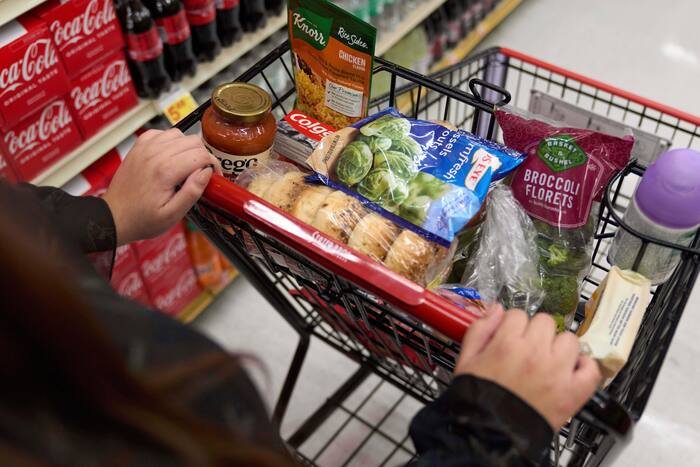
Millions of Americans relying on the Supplemental Nutrition Assistance Program (SNAP) will see an increase in their monthly food benefits starting this month. The U.S. Department of Agriculture’s Food and Nutrition Administration has officially implemented its fiscal year 2027 cost-of-living adjustments, which took effect on Oct. 1.
The changes impact a wide range of metrics, including maximum allotments, income eligibility standards, and various deductions for participants across the 48 contiguous states, the District of Columbia, Alaska, Guam, Hawaii, and the U.S. Virgin Islands. These adjustments are designed to help program benefits keep pace with the evolving economic landscape and the cost of basic necessities.
For the vast majority of the country, the benefit trajectory is positive. In the 48 contiguous states and the District of Columbia, the maximum monthly allotment for a family of four is now set at $1,023. Additionally, the minimum benefit for households in these areas has increased to $25. Hawaii serves as the notable exception to this trend, as the maximum allotment for a family of four in the state has decreased to $1,655.
Beyond payout amounts, the USDA has updated the income eligibility standards that determine who can participate in the program. To qualify, households must meet specific gross and net monthly income thresholds. For residents of the 48 states, D.C., Guam, and the U.S. Virgin Islands, the gross monthly income limit is now $1,729 for a single-person household and $3,575 for a family of four. Households with elderly or disabled members, which are calculated differently at 165% of the poverty level, see a cap of $2,195 per month for a single person in the 48 states.
Recognizing that housing and living expenses consume a significant portion of family budgets, the USDA has also increased key deductions. The standard deduction for households of one to three people in the 48 states and D.C. has risen to $217 per month. Meanwhile, the maximum excess shelter deduction—which accounts for high housing costs—is now $769. The maximum homeless shelter deduction has been set at $205.66, applying uniformly across all covered regions, including Alaska, Hawaii, Guam, and the U.S. Virgin Islands.
While most asset limits remain at $3,000, there is a significant change for vulnerable populations. Households with at least one member who is age 60 or older, or who has a disability, will see their asset limit rise to $4,750. This same threshold will now be used to report substantial lottery or gambling winnings.
Despite these changes, the requirement for reporting income remains the same: households assigned to change reporting must notify their state agency if their income increases by $150 or more per month. State agencies with questions regarding these updates are encouraged to contact their respective USDA regional office representatives.
Disclaimer: This content is auto-generated for informational purposes only.
Source: Read Original News