









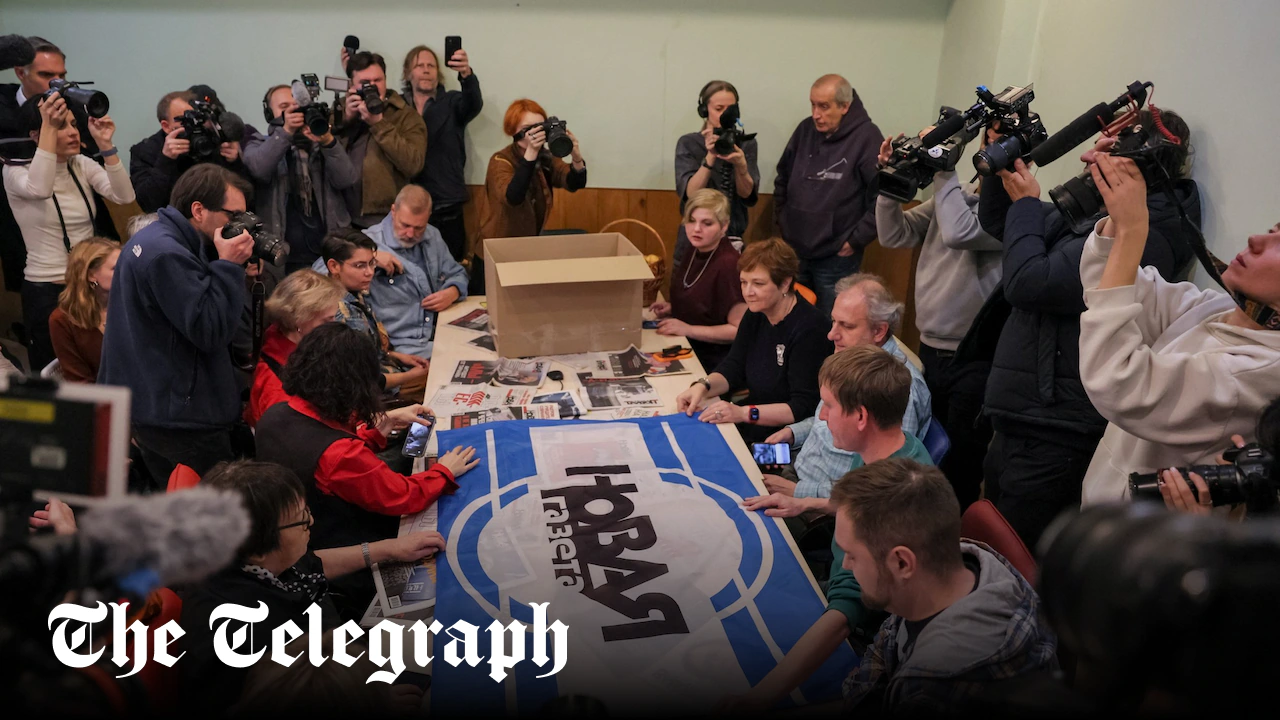
In a poignant final plea, Nobel laureate and veteran editor Dmitry Muratov has drawn a sharp line between the Russian public and the Kremlin’s autocratic machinery, urging the international community not to conflate the two as the latest chapter of his storied publication comes to a crushing close.
Speaking out against the backdrop of his newspaper’s shuttering—a move the Kremlin has dismissed as a “normal, routine process”—Muratov laid the blame for the ongoing war in Ukraine and the systematic erosion of civil liberties squarely at the feet of the state. In a defiant address, he called for an immediate ceasefire and the release of approximately 4,000 political prisoners currently languishing in Russian jails.
“We cannot blame the citizens themselves for this,” Muratov stated, offering a defense of the Russian populace that has been increasingly silenced under strict censorship laws. “Especially the wonderful, truly remarkable younger generation. I urge you to distinguish between the Russian authorities and the Russian people.”
The newspaper, Novaya Gazeta, has long served as one of the last bastions of independent journalism in Russia. Founded in 1993 with the financial support of former Soviet leader Mikhail Gorbachev, it built a legacy of fearless investigative work, pulling back the curtain on high-level corruption and political scandals that others dared not touch.
This commitment to the truth, however, came at a staggering human cost. Throughout its three-decade history, the outlet has seen six of its journalists murdered in retaliation for their reporting. Among those lost was Anna Politkovskaya, the renowned investigative reporter whose life was cut short in 2006 when she was ambushed and shot in the elevator of her Moscow apartment building. Her death remains a haunting symbol of the perilous landscape for press freedom under the current administration.
While Muratov frames the newspaper’s closure as a tragic victory for state suppression, Kremlin spokesman Dmitry Peskov maintained a cold detachment, characterizing the administrative dismantling of the publication as nothing more than a procedural inevitability.
The closure marks the end of an era for the Russian media landscape, silencing a voice that served as a rare check on state power. As the publication ceases operations, Muratov’s final message remains a reminder of the thousands held behind bars for their dissent. His parting words emphasize that while the institution may be forced into silence by decree, the moral distinction between the Kremlin’s policy and the aspirations of the Russian people remains a vital, if embattled, truth.
Disclaimer: This content is auto-generated for informational purposes only.
Source: Read Original News