







India, EU Step Up Ties Ahead of Historic Brussels Summit
As the December visit of Prime Minister Narendra Modi to Brussels approaches, India and the European Union have accelerated efforts to finalize a comprehensive economic roadmap. In a high-level strategic partnership review meeting held in New Delhi on Monday, officials from both sides focused on the final stages of a landmark Free Trade Agreement (FTA), alongside critical investment protection and geographical indication frameworks.
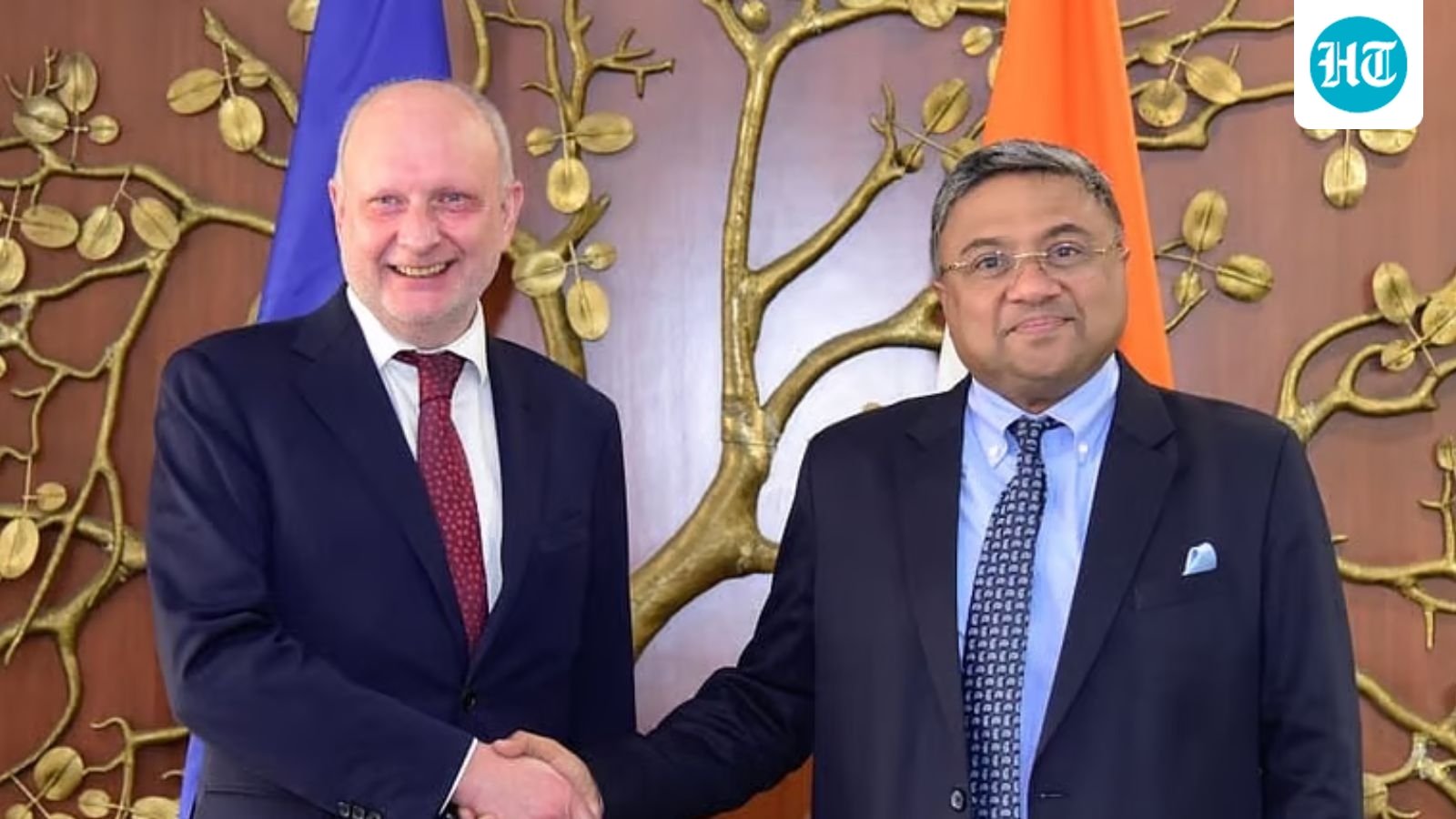
The meeting was co-chaired by Sibi George, Secretary (West) at India’s Ministry of External Affairs, and Matti Maasikas, the Deputy Secretary-General for Geoeconomics and Inter-institutional Issues of the European External Action Service. The dialogue served as a vital precursor to the upcoming summit, where the FTA—having concluded its primary negotiation phase in January—is expected to be formally signed.
Strengthening Economic Security and Technology
Beyond trade, the discussions underscored a shared commitment to stabilizing global supply chains. A significant portion of the meeting was dedicated to the Trade and Technology Council (TTC), a platform designed to foster collaboration in high-stakes sectors. Both delegations identified artificial intelligence, quantum computing, advanced semiconductors, and biotechnology as primary pillars for future cooperation.
Furthermore, India and the EU are looking to synchronize their digital landscapes, with a specific focus on promoting India’s Digital Public Infrastructure (DPI) and ensuring a secure, open digital environment. The partners also noted their satisfaction with India’s recent association with “Horizon Europe,” the EU’s expansive €93.5-billion research and innovation program, which promises to deepen academic and scientific ties between the two regions.
Connectivity and Global Governance
Connectivity remains a cornerstone of the bilateral agenda. During the review, officials highlighted the importance of the India-Middle East-Europe Economic Corridor (IMEC) and the EU’s Global Gateway project. These initiatives are seen as essential for promoting climate resilience, green mobility, and energy security.
“As trusted, predictable, and like-minded partners, they reaffirmed their commitment to deepen the India-EU Strategic Partnership, and to deliver mutually beneficial, concrete and transformative outcomes,” the joint statement noted. The two sides also emphasized the need for closer coordination on the global stage, aiming to shape international governance through a unified approach.
People-to-People Ties and Green Energy
A significant aspect of the deliberations involved expanding human capital mobility. By focusing on education, skill development, and legal pathways for talent movement—supported by the European Legal Gateway Office—the two powers aim to bridge labor and professional gaps.
The meeting also touched upon environmental sustainability. Discussions included plans to integrate more Indian ship recycling facilities into the EU’s approved list, provided they meet the bloc’s stringent safety and environmental regulations. This initiative reflects a broader commitment to the “clean transition,” as both sides look to solidify a comprehensive strategic agenda that addresses climate change while fostering robust economic growth.
With the positive momentum generated by this review, New Delhi and Brussels are now signaling a clear intent to elevate their relationship to a new era of cooperation, setting the stage for decisive outcomes during the Prime Minister’s mid-December visit.
Disclaimer: This content is auto-generated for informational purposes only.
Source: Read Original News