







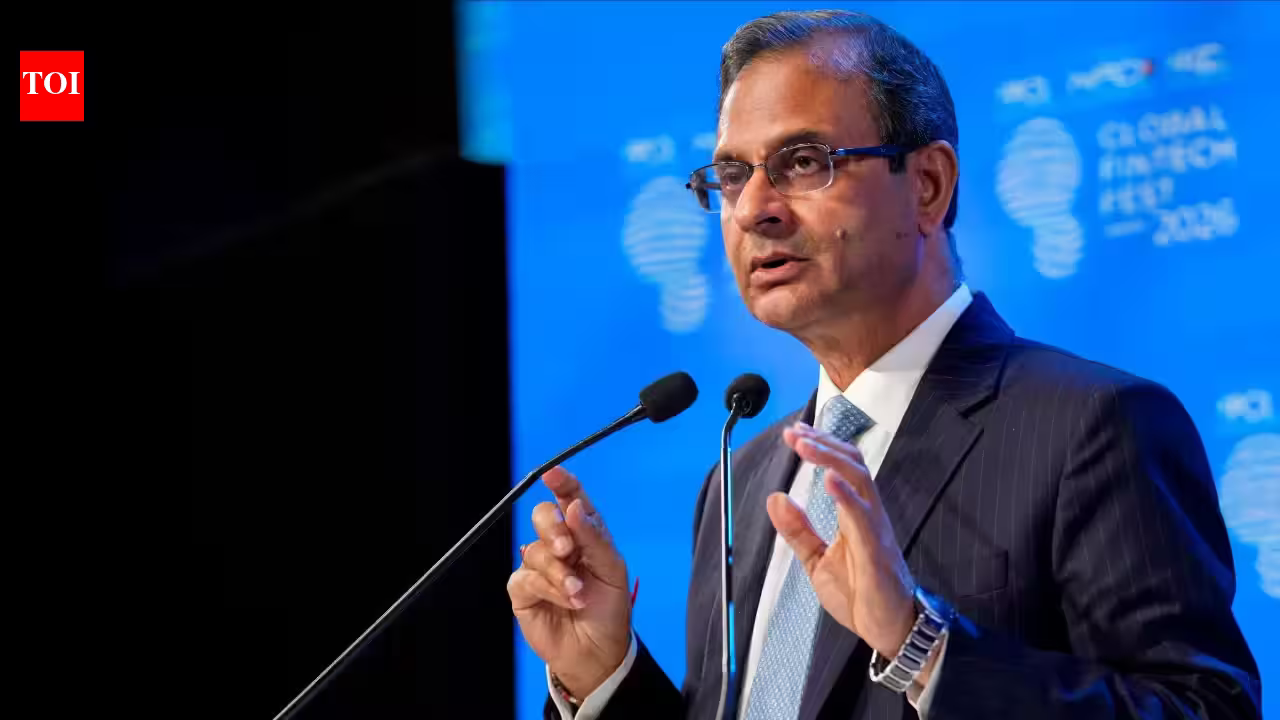

The Imperative of Proactive Financial Stability in a Globalized Economy
The global financial landscape is undergoing a period of profound transformation, marked by rapid technological integration and heightened geopolitical volatility. In this environment, the Reserve Bank of India (RBI), under the guidance of Governor Sanjay Malhotra, has recalibrated its approach to systemic risk. While the current health of the Indian financial sector is robust—characterized by strong capital buffers in banks and non-banking financial companies (NBFCs)—the central bank has issued a critical warning: resilience today is not a permanent state of immunity.
The contemporary economic discourse, particularly as highlighted at the Kautilya Economic Conclave, suggests a shift in paradigm. Policymakers are moving away from the traditional objective of merely trying to prevent systemic shocks. Instead, the current focus is on institutionalizing a system that can absorb, withstand, and continue operating during periods of severe stress. This transition acknowledges that in a globally interconnected economy, exogenous and endogenous shocks are essentially inevitable. The strategy is now to ensure that the “plumbing” of the financial system remains functional even when the broader environment is fractured.
Redefining Systemic Risk in the Digital Age
The nature of systemic threats has evolved significantly over the past decade. Previously, systemic risk was often internal, typically stemming from excessive leverage within banking institutions or failures in credit markets. However, the modern risk profile is increasingly cross-border and digital. Governor Malhotra’s observations suggest that the next financial crisis may not originate within the banking sector at all. Instead, it could be triggered by a significant cyber breach, a collapse in critical technology infrastructure, or geopolitical shifts that disrupt global trade and payment flows.
This shift necessitates a departure from static, bank-centric risk assessment. The modern financial ecosystem is defined by intricate network dependencies. A localized failure in a non-financial sector—such as a data provider or a cloud infrastructure service—can propagate through the financial system via multiple transmission channels. Consequently, regulators are now prioritizing scenario analysis as a fundamental component of risk management. By modeling “what-if” scenarios that include non-traditional disruptions, the central bank aims to identify hidden vulnerabilities before they manifest into liquidity or solvency crises.
The Necessity of Granular Data and Interconnected Monitoring
Effective regulation in the 21st century is inseparable from data architecture. As the financial sector in India becomes more complex, the fragmentation of data regarding non-banking financial institutions (NBFIs), cross-border exposures, and technological dependencies poses a significant hurdle to oversight. The current regulatory challenge lies in closing these information gaps.
To maintain stability, the RBI is advocating for more granular, real-time data collection. When financial systems are deeply interconnected, the quality of a regulator’s risk assessment is directly proportional to the quality of its information. This is particularly relevant for the Indian context, where the rapid growth of the shadow banking sector and digital payment systems requires a more comprehensive view of systemic exposure. By synthesizing data across payment networks, NBFCs, and retail financial intermediaries, policymakers can better track the flow of risks and identify where contagion might take hold. Enhanced monitoring is not merely a tool for surveillance; it is a prerequisite for evidence-based policymaking that avoids stifling growth while mitigating risk.
Building a System-Wide Architecture of Resilience
One of the most vital takeaways from recent central banking discourse is that financial resilience must transcend the banking sector. While commercial banks serve as the core of the financial system, the stability of the broader economy depends on the integrity of NBFIs, payment infrastructure, and third-party technology providers.
Financial stability is essentially a chain, and the strength of that chain is defined by its weakest link. If a critical payment system or a large NBFC encounters a shock, the effects will inevitably cascade into the banking sector, regardless of how well-capitalized those banks are. Therefore, the goal is to cultivate a “system-wide” resilience. This involves holding all critical players, including market infrastructure providers and critical third-party vendors, to high standards of operational continuity. For the Indian market, this means extending regulatory oversight and stress-testing requirements to encompass the broader financial service provider ecosystem, ensuring that “systemic importance” is defined by function rather than just institution size.
Balancing Innovation with Fundamental Trust
The rapid adoption of Artificial Intelligence (AI), tokenization, and decentralized financial intermediation offers a pathway to unprecedented efficiency in the Indian financial system. However, as the RBI has cautioned, innovation must not be pursued at the expense of the foundational elements of trust. The core attributes of money—settlement finality, integrity, and the singleness of the medium of exchange—must remain inviolate.
The temptation to favor speed and cost-efficiency in digital finance must be tempered by the need for robust institutional frameworks. If a new financial technology undermines the trust that users place in the system, its benefits will be rapidly negated by the resulting loss of stability. The regulatory approach advocated by the central bank is one of “proportionate” and “forward-looking” intervention. This means fostering an environment where innovation is encouraged, but within a framework that ensures the basic properties of the financial system remain intact. Regulation in this context serves as a guardrail rather than a barrier, ensuring that as the industry evolves, it remains grounded in security and financial integrity.
The Invisible Measure of Central Banking Success
Ultimately, the goal of financial stability policy is a paradox: when the system is working perfectly, the regulator’s efforts are largely invisible to the public. Stability is often only noticed when it is absent. By preparing for both anticipated and unforeseen shocks, the RBI is shifting towards a proactive model of supervision that aims for this “invisible success.”
The future of the Indian financial sector will rely on a combination of deep, liquid markets, effective resolution mechanisms for distressed firms, and credible safety nets. As India continues to integrate into the global economy, the ability to maintain systemic stability while fostering a culture of technological and financial innovation will be the true test of its regulatory framework. By focusing on systemic resilience rather than mere institution-specific safety, and by leveraging superior data to anticipate interconnected risks, the regulatory architecture will likely remain the backbone of India’s ongoing economic growth story. The shift from reactionary crisis management to forward-looking, comprehensive, and system-wide risk assessment represents a necessary evolution for any economy aspiring to maintain long-term financial health in an unpredictable global environment.
Disclaimer: This content is auto-generated for informational purposes only.
Source: Read Original News