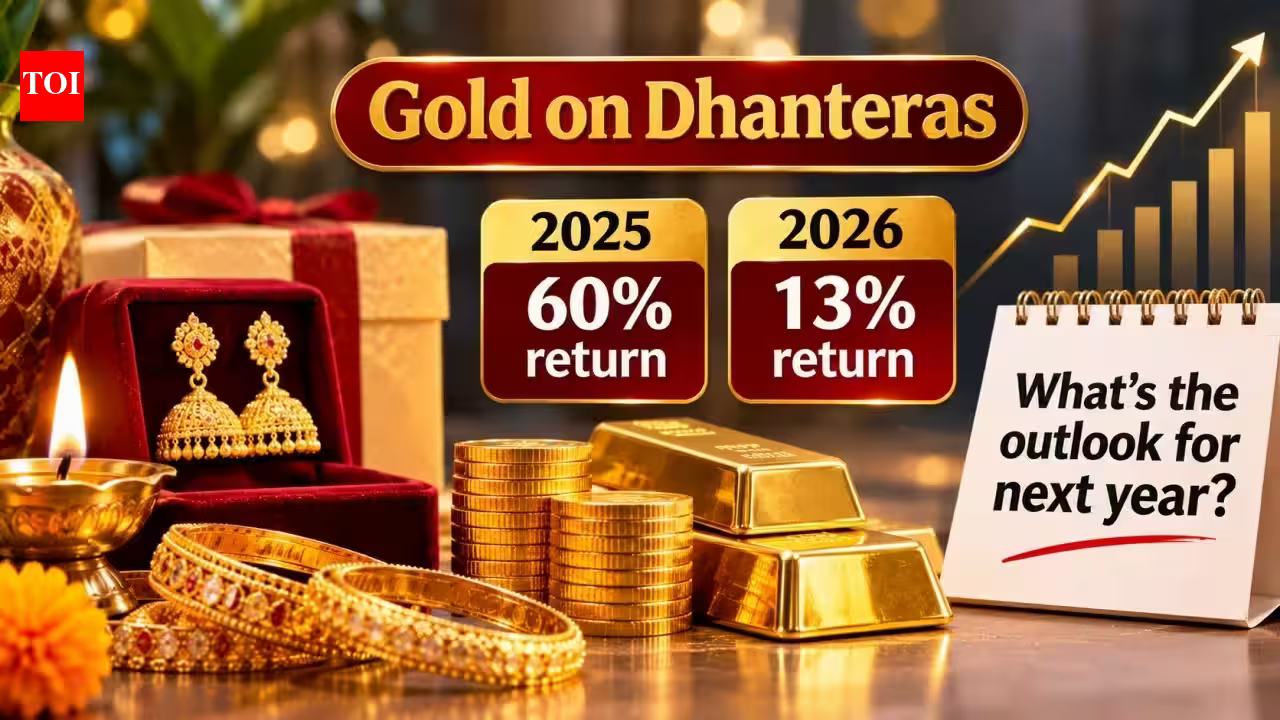









The festive season in India, particularly around Dhanteras and Diwali, is traditionally synonymous with the purchase of gold. While this practice is deeply rooted in cultural sentiment and symbolic of prosperity, modern financial prudence dictates that gold acquisitions should be viewed through the lens of strategic asset allocation rather than mere tradition. With gold prices exhibiting significant volatility—having corrected by approximately 22 percent from January 2026 highs—investors are encouraged to pause and evaluate the role of the yellow metal within their broader wealth management framework.
Assessing the Role of Gold in Modern Portfolios
Financial experts emphasize that gold serves primarily as a hedge against inflation and systemic economic uncertainty rather than as a primary engine for long-term wealth creation. Before committing capital to gold, an investor must determine whether their portfolio truly requires additional exposure. Over-allocation to a single commodity can hinder the growth potential of an investment strategy, especially when compared to the historical performance of equity markets.
For those whose gold holdings have already reached the recommended threshold, it may be more beneficial to rebalance portfolios toward diversified equity mutual funds. The starting point for any investment decision should always be the individual’s long-term financial objective. For small-ticket investments, such as Rs 10,000 or Rs 50,000, physical gold often proves impractical due to high making charges and the spread between buying and selling prices. In such instances, financial products like Gold ETFs provide a more cost-efficient route for market participation without the logistical burden of storage and security.
Evaluating Physical Gold versus Financial Instruments
The Indian market offers a spectrum of choices for gold investment, ranging from traditional physical ownership to modern digital platforms. Each method carries specific cost structures, tax implications, and levels of convenience.
Physical gold, including jewellery, coins, and bars, remains the most popular choice during festivals. However, consumers should be cognizant of the costs involved. Jewellery often carries making charges ranging from 6 to 25 percent, in addition to a 3 percent Goods and Services Tax (GST) on the total bill, which significantly erodes the value of the investment. Coins and bars are generally considered superior for pure investment purposes due to lower premiums and assured purity, though they still require secure storage solutions.
Conversely, Gold ETFs (Exchange Traded Funds) and Gold Mutual Funds allow for investment in bullion without the need for physical handling. ETFs trade on stock exchanges and are favored for their low-cost structure and liquidity, provided the investor has a demat account. Gold Mutual Funds offer an accessible alternative for those without demat accounts by investing in ETFs, though investors should be mindful of the potential for double expenses. Digital gold is another emerging avenue, but because it currently lacks comprehensive oversight from the Securities and Exchange Board of India (SEBI), experts advise verifying the credibility of the service provider before committing funds.
Tax Implications and Regulatory Clarity
Understanding the tax treatment of various gold instruments is essential for effective tax planning. The Indian tax regime classifies gold investments based on their holding period and structure. For physical gold, digital gold, and gold mutual funds, long-term capital gains (LTCG) tax is applicable if the assets are held for more than 24 months. Gold ETFs are treated differently, with a 12-month threshold for long-term classification. Long-term gains are currently taxed at 12.5 percent, while short-term gains are subject to the investor’s applicable income tax slab rate.
While Sovereign Gold Bonds (SGBs) have historically been a preferred avenue due to their interest-bearing nature and tax benefits, the lack of fresh issuance since February 2024 has limited availability. Investors looking to acquire SGBs must now rely on the secondary market via stock exchanges, where price premiums can vary significantly.
Diversification Alternatives Beyond Precious Metals
When the festive urge to purchase assets arises, investors should consider whether there are more effective alternatives to gold that align with their financial goals. A well-rounded portfolio is often built on an 80:20 equity-to-debt split. Within the debt allocation, investors can utilize arbitrage funds or target maturity funds to manage risk and preserve liquidity, depending on their specific tax bracket.
For investors seeking alternatives that provide exposure to real assets, Real Estate Investment Trusts (REITs) and Infrastructure Investment Trusts (InvITs) offer compelling possibilities. These instruments allow for fractional ownership of income-generating real estate and infrastructure projects such as roads and power transmission lines. By providing exposure to physical assets without the requirement of high capital outlay or maintenance, REITs and InvITs can serve as a source of regular cash flow and portfolio diversification. However, as with any market-linked instrument, these carry inherent risks related to interest rate movements and sector-specific performance, and they should ideally be navigated through professionally managed vehicles like mutual funds.
Strategic Portfolio Management for the Festive Season
Ultimately, the most successful investors are those who view their portfolio as an integrated machine rather than a collection of impulsive buys. Experts typically suggest that commodities, including gold and silver, should constitute no more than 5 to 10 percent of an investor’s total portfolio. Maintaining this discipline prevents emotional buying during festive periods from undermining long-term strategy.
Before finalizing any purchase during Diwali or Dhanteras, it is critical to conduct a thorough review of one’s risk profile, investment horizon, and cash flow requirements. If an investor decides that their portfolio is already sufficiently balanced, there is no inherent obligation to add gold simply because of the calendar date. Instead, the focus should remain on maintaining stability and ensuring that all asset classes—whether equities, fixed income, or alternative instruments—are working in harmony to meet clearly defined financial goals. By shifting the focus from the act of purchasing to the impact of the investment on the overall portfolio, investors can ensure that their festive financial decisions are both auspicious and sound.
Disclaimer: This content is auto-generated for informational purposes only.
Source: Read Original News