








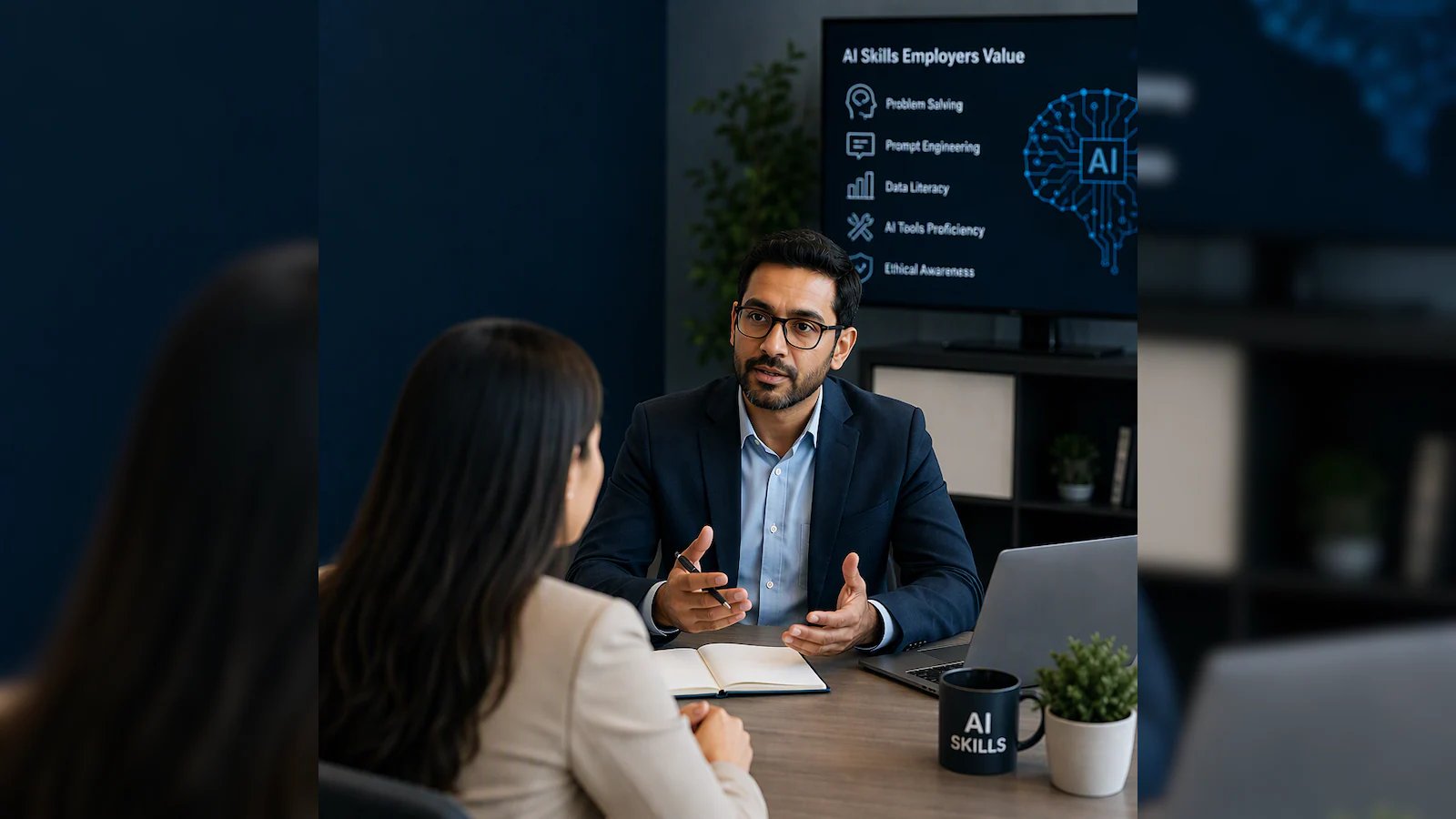
The rapid integration of generative AI into the corporate world has fundamentally shifted the expectations for job seekers. While basic familiarity with tools like ChatGPT, Gemini, or Claude was once considered a “power user” advantage, it has now become a baseline requirement. For today’s hiring managers, the ability to simply type a prompt is no longer a differentiator; instead, the focus has moved toward how candidates synthesize, verify, and ethically apply AI-driven outputs to drive actual business value.
## Moving Beyond Prompt Engineering
Industry experts emphasize that companies are not looking for amateur coders or system architects. The modern employer is hunting for professionals who treat AI as a collaborative partner rather than an automated shortcut. According to Jaspreet Bindra, founder of AI&Beyond, the key to staying relevant through 2026 and beyond is the “human-in-the-loop” approach.
This means that while an AI tool might generate a marketing plan or summarize a complex financial report in seconds, the human element—judgment, domain expertise, and accountability—must be the final gatekeeper. Employers are increasingly wary of candidates who accept AI-generated content at face value, prioritizing those who demonstrate a healthy skepticism for machine outputs.
## The Six Pillars of AI Fluency
To stand out in a competitive job market, candidates should look to demonstrate proficiency across six specific domains. First, instruction precision remains critical; effective workers craft nuanced prompts that include specific context, data constraints, and clear objective criteria. Second, and perhaps most importantly, is verification. The ability to identify hallucinations, bias, and inaccuracies is now a core job skill.
Furthermore, applicants must prove they can apply AI to their specific field. Whether it is an HR manager automating routine compliance documentation or a marketing specialist using AI to identify recurring customer sentiment trends, the focus should be on how the technology solves a pre-existing business problem. Finally, candidates must display an understanding of “Responsible AI.” This includes a deep awareness of data privacy, intellectual property risks, and the ethical implications of using proprietary company data in public-facing large language models.
## How to Ace the AI Interview
When sitting down for an interview, the “show, don’t tell” approach is the most effective strategy. Rather than listing AI tools on a resume—which can look like a static collection of buzzwords—candidates should be prepared to discuss specific case studies.
A high-quality response to an interviewer’s question about AI proficiency should follow a four-part structure: define the specific business challenge, explain the AI strategy utilized, detail the manual verification or refinement process, and present the measurable outcome. For instance, explaining how you used an AI tool to aggregate data, cross-referenced it with verified sources to correct inaccuracies, and ultimately improved the efficiency of a project report will resonate far more than claiming to be an “AI expert.”
As companies continue to integrate sophisticated technology into their daily workflows, the divide between those who can “operate the machine” and those who can “extract value from the machine” will continue to widen. The professionals who thrive in this new landscape will be those who balance technological fluency with the uniquely human capacities for critical thinking, adaptability, and ethical oversight. For the job seeker, the goal is not to master the software, but to master the problem-solving process that the software enables.
Disclaimer: This content is auto-generated for informational purposes only.
Source: Read Original News