








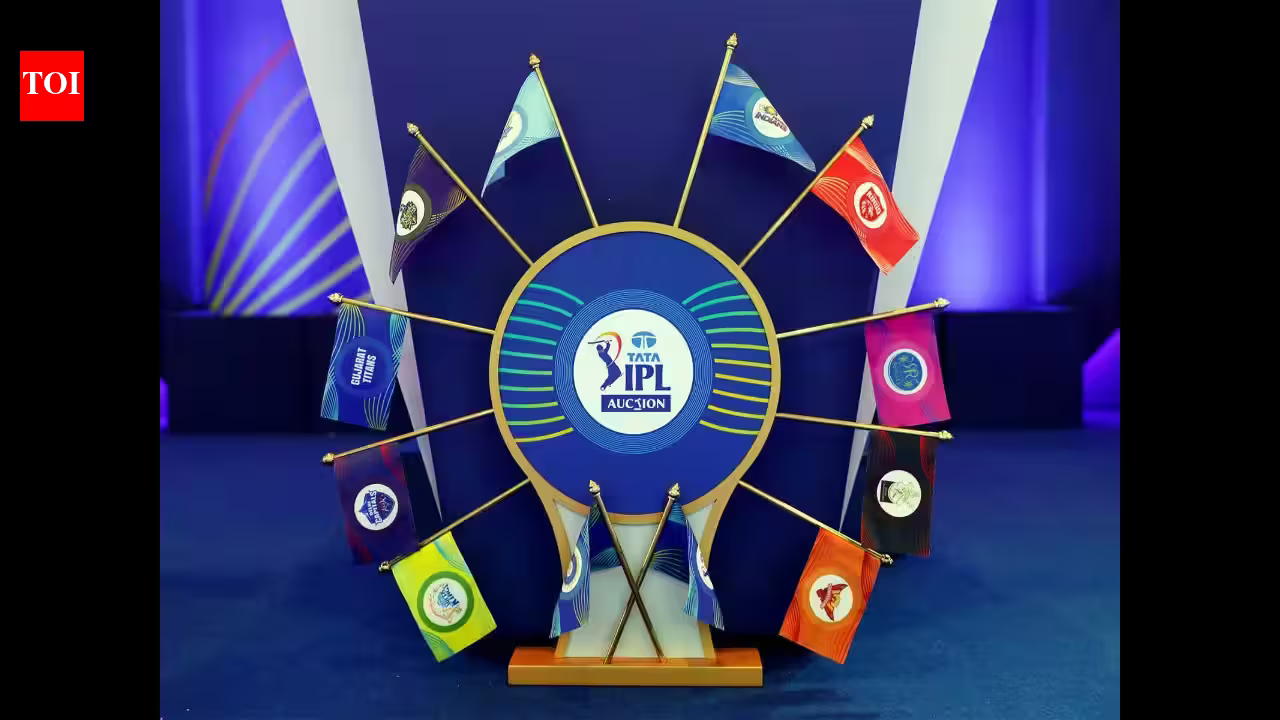
Cricket, a sport that commands the fervent devotion of over a billion people, stands at a pivotal crossroads. As the IPL cements its status as the world’s most valuable domestic cricket property—rivaled only by the NFL in terms of media weight—the industry is beginning to grapple with a sobering reality: the broadcast-led revenue model that fueled its meteoric rise is showing signs of stagnation.
For years, the BCCI and Indian cricket have relied on astronomical media rights deals to sustain growth. However, as renewal bids flatten and the landscape of global streaming shifts, industry experts are sounding a clear alarm. Tony Simpson, a Partner at global management consulting firm Oliver Wyman, argues that if cricket is to transition from a regional juggernaut into a truly global sports business, it must evolve beyond the current reliance on television contracts.
Beyond the Broadcast: A Maturity Test
“Reliance on media rights is really the first phase in the commercial maturity of a sport,” Simpson explained. “Broadcast makes the season, but the stadium, content, and community make a business.”
The Indian Premier League (IPL) is undeniably the “jewel in the crown,” yet its success is currently hyper-localized. While the English Premier League (EPL) derives a significant portion of its income from international broadcasting, the IPL remains heavily dependent on the domestic market. To bridge this gap, Simpson suggests a shift toward the “Premier League model,” which emphasizes global reach, production quality, and the professionalization of the entire fan experience.
“The IPL needs to focus on product quality, reach, and community-building,” says Simpson. “That means investing in production, entering the right markets—such as North America, Europe, and Australia—and, in some cases, prioritizing long-term brand equity over short-term revenue by exploring free-to-air distribution to cultivate new fanbases.”
The Streaming Paradox
A glaring question remains: why have global streaming giants like Netflix, Amazon, and YouTube largely shied away from the IPL? According to Simpson, the answer lies in the league’s footprint.
“Major streaming platforms support properties with a global footprint,” Simpson noted. “The IPL currently over-indexes in India and under-indexes elsewhere.” He points to Formula One’s Drive to Survive as the gold standard for modern sports storytelling, arguing that the IPL must humanize its athletes and build narratives beyond the matchday. Without a concerted strategy to export the sport, the IPL remains a high-value asset trapped by geography, making it a less attractive proposition for global platforms looking to distribute content across multiple territories simultaneously.
Fixing the Foundation: Governance and Grassroots
Perhaps the most critical takeaway from Simpson’s analysis is that money alone cannot build a sporting economy. For international private equity to feel confident investing in Indian sports beyond cricket, the sector requires a radical overhaul of its foundational structures.
“The main barrier to quality investment is the risk profile, particularly governance,” Simpson stated. “Investors need clarity on board terms, professional management, and long-term frameworks.”
This extends to the development of talent. A league that relies on importing players to maintain excitement is fundamentally unsustainable. Simpson stresses that a robust sporting economy requires a pipeline that starts with children having access to safe, local infrastructure.
The statistics are sobering: a recent study cited by Simpson reveals that nearly 49% of Indians under the age of 30 are physically inactive by World Health Organization standards. For a nation that aspires to be a global sporting powerhouse, this is the most immediate hurdle. “The priority over the next decade should be to ensure that every child is within a mile of a safe place to play a sport they enjoy,” he added.
The Untapped Potential of Women’s Sport
While the focus often drifts toward the commercial viability of men’s cricket, Simpson points to an immense, largely unexplored frontier: women’s sport. The success of the ICC Women’s World Cup underscored that the appetite exists, and the social impact of promoting women’s athletics could be the catalyst for the “broader sporting economy” that India seeks.
“Women’s sport is one of India’s biggest opportunities,” Simpson remarked. “It can drive social cohesion in a way few other things can.” By positioning women’s sports as a priority rather than an afterthought, India has the potential to lead a global movement that merges high-performance athletics with social empowerment.
The Road Ahead
As the Indian cricket ecosystem looks toward the next decade, the path is clear, if challenging. The reliance on domestic broadcast windfalls must be replaced by a diversified portfolio of stadium optimization, merchandising, digital engagement, and, above all, a commitment to developing a healthier, more active population.
The “sleeping giant” analogy, once used by Sepp Blatter in 2007, remains a poignant descriptor. India has the energy and the demographics to dominate the global sports economy, but as Simpson suggests, “This cannot happen in one generation.” The transition requires a departure from short-term financial thinking in favor of a strategic, systemic investment in the culture of sport itself. Cricket may be the current king, but the future of Indian sports lies in its ability to build an inclusive, professionalized, and global sporting culture that sustains itself long after the final ball is bowled.
Disclaimer: This content is auto-generated for informational purposes only.
Source: Read Original News