







A massive shift in enterprise technology is currently underway as RAIN RFID (Radio Frequency Identification) technology moves away from bulky, specialized hardware and into the sleek form factor of daily-use mobile devices. Driven by the new Impinj Gen2X standard and robust integration from chipset giants like Qualcomm and MediaTek, this evolution is set to transform how retailers, warehouses, and logistics providers manage their operations.
## The Convergence of Mobile Connectivity and RFID
For years, RFID technology was tethered to dedicated, handheld readers that were often heavy and difficult to integrate into standard business workflows. Today, that barrier is being dismantled. A new ecosystem of mobile devices—ranging from smartphone-style handhelds to ruggedized tablets—now features embedded RAIN RFID capabilities.
This transformation is supported by key industry players including Zebra, UROVO, Chainway, Bluebird, Unitech, and AMobile. By embedding these capabilities directly into devices that already house barcode scanners, high-resolution cameras, and 5G cellular connectivity, manufacturers are providing frontline workers with a “Swiss Army knife” tool. The most significant leap forward is the integration of RFID directly into the device’s processing core. For instance, Qualcomm’s Dragonwing Q-6690 processor now features built-in support for RAIN RFID, allowing for Gen2X-enhanced performance that is faster, more accurate, and more reliable than ever before.
## Boosting Productivity with Gen2X Performance
The “Gen2X” standard is the engine powering this shift. It addresses the historical pain points of RFID deployment, specifically the challenges of read range and accuracy in dense, high-interference environments.
By utilizing Gen2X technology, these mobile devices can significantly improve the speed at which employees perform routine tasks. For example, in retail environments, the ability to pinpoint an individual item of interest—such as a specific size or color requested by a customer—is now up to 100% faster. This is achieved through enhanced tag-re-inventorying capabilities that allow the device to interpret proximity and signal strength with surgical precision.
Furthermore, Gen2X dramatically expands the usable read range for small tags, even when those tags are placed near metal or other signal-blocking materials. Recent testing has shown that Gen2X-enabled readers can identify items from over 1.5 meters away, even in challenging environments, representing a 50% performance increase over previous standards. This allows for continuous, passive inventory tracking as workers naturally move through their shifts, keeping real-time data streams accurate without the need for manual, time-consuming audits.
## Solving Critical Enterprise Challenges: Picking and Security
Beyond simple inventory counts, this technology is revolutionizing how businesses handle the complexities of modern omnichannel fulfillment and anti-counterfeiting measures.
In the warehouse, picking accuracy remains a primary source of operational friction. With Gen2X, mobile devices can better filter through “cluttered” environments, effectively ignoring irrelevant signals and focusing exclusively on the items required for a specific order. This enables a guided, automated workflow that reduces human error and ensures that the right products reach the right customers every time.
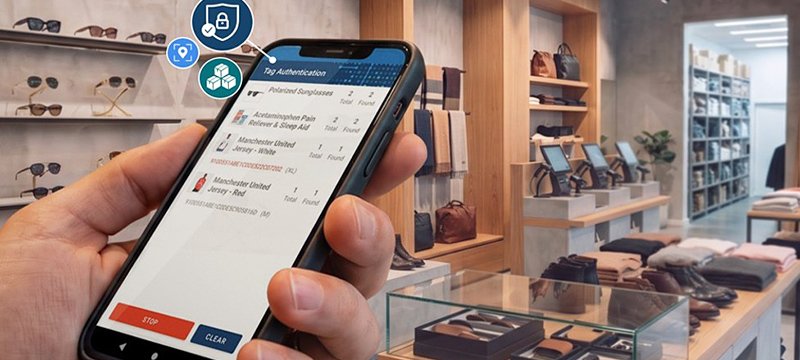
Perhaps most importantly for global brands is the issue of trust. With Gen2X-enabled mobile readers, employees can verify the authenticity of products at any point in the supply chain. By performing an instant chip-level cryptographic authentication at the point of receipt or sale, businesses can achieve near-100% certainty that a product is genuine.
As these devices become standard across the enterprise landscape, the integration of high-performance RFID into mobile hardware represents more than just a hardware update; it marks a new era of data-driven, highly mobile, and hyper-secure operational management. By lowering the barrier to entry for RFID adoption, manufacturers are ensuring that the future of frontline productivity is both portable and intelligent.
Disclaimer: This content is auto-generated for informational purposes only.
Source: Read Original News