








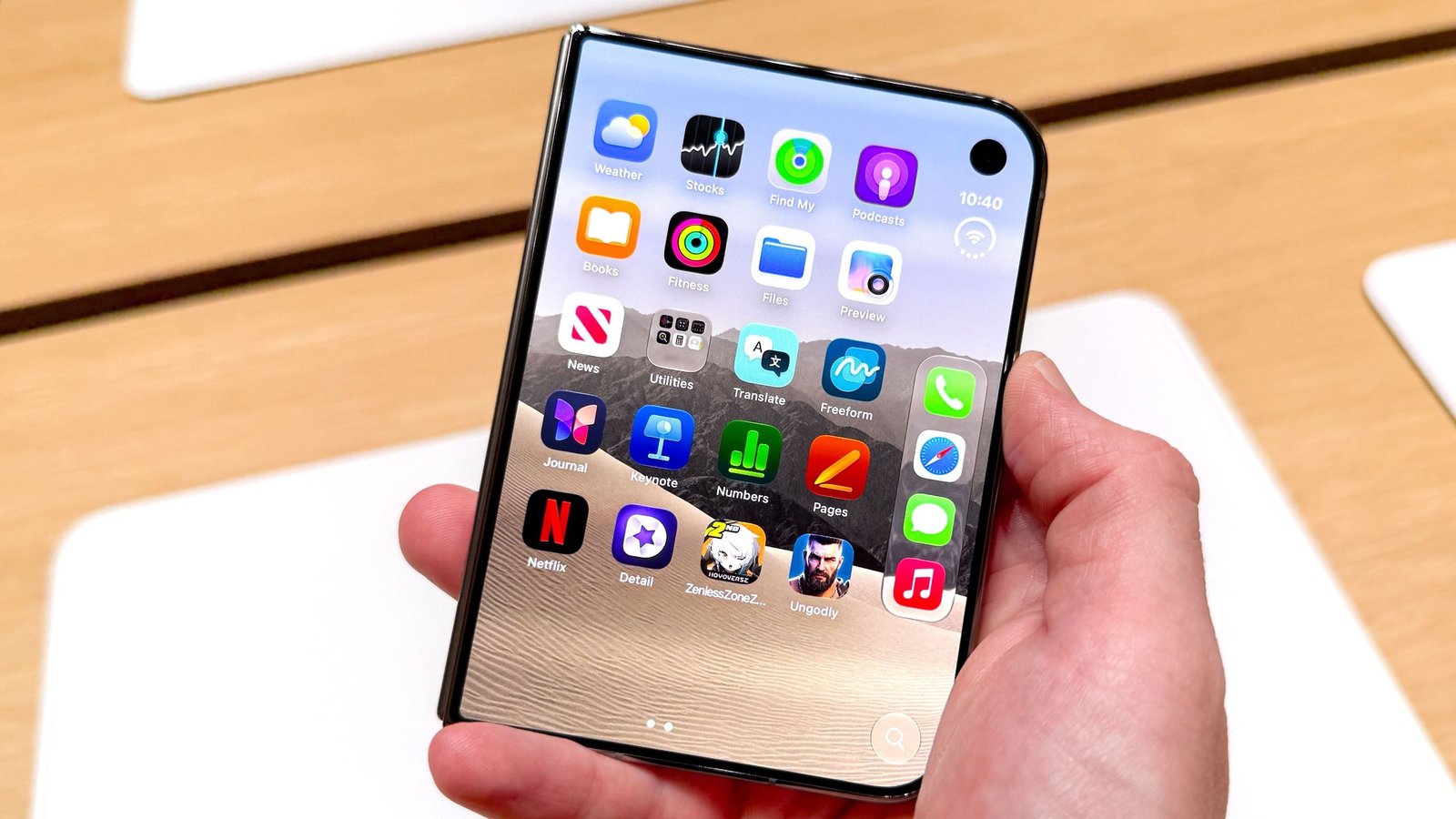
The introduction of the iPhone Duo at the most recent Apple keynote has signaled a significant shift in the smartphone landscape. While the market has been saturated with various folding form factors for several years, Apple’s entry brings a distinct design philosophy that prioritizes structural integrity and user experience. During a recent hands-on demonstration, it became clear that the device is not merely an adaptation of current industry trends, but a re-engineering of the foldable concept to suit the specific standards of the Apple ecosystem.
The Weighting is Perfect
When evaluating foldable handsets, the industry has primarily focused on achieving the thinnest possible profile. While devices such as the Oppo Find N5 offer impressive portability at 4.21mm when open, they often suffer from a lack of physical presence, which can lead to a device feeling flimsy or difficult to handle during extended use.
The iPhone Duo approaches this differently, measuring 5.2mm when open and weighing 254 grams. While these figures may appear high in a technical datasheet, the practical application suggests otherwise. The extra weight provides a grounded, stable feeling that mimics the utility of a dedicated tablet. By avoiding the extreme thinness seen in competitor products, Apple has ensured that the device feels substantial, reducing the likelihood of accidental drops and increasing the comfort of the user during tasks like reading or digital sketching. This balanced weight distribution suggests that longevity and structural confidence were prioritized over raw minimalist metrics.
The Matte Display Advantage
One of the most notable hardware implementations in the iPhone Duo is its Nano-texture inner display. Beyond simple marketing, this finish addresses a frequent pain point in foldable technology: light reflection. In environments with harsh or overhead lighting, traditional glossy screens can become obscured, requiring users to constantly adjust their position.
The matte finish on the iPhone Duo excels at diffusing light, making it exceptionally clear for productivity-focused tasks. Professionals who rely on spreadsheets, long-form reading, or precision annotation will find the texture beneficial, as it minimizes glare and creates a more readable, paper-like surface. Furthermore, Apple has bolstered the display’s durability, claiming a 40 percent increase in stiffness compared to standard foldable screens. This integration of matte texture not only improves visual comfort but also aligns with the device’s purpose as a mobile workstation.
Tactile Considerations and Fingerprint Resistance
The external hardware of the iPhone Duo utilizes a Ceramic Shield back, which offers a premium aesthetic but introduces a practical drawback: susceptibility to fingerprints. In the Night Sky colorway, the high-polish finish becomes a canvas for smudges during regular operation. While this is a minor issue in the context of the device’s overall engineering, it is a point of consideration for users who prefer to use their phones without a protective case.
Conversely, the Star White variant handles surface marks with greater efficacy. Despite the smudge-prone nature of the darker model, the device maintains an IP68 dust and water resistance rating, which is a commendable achievement for a foldable hinge mechanism. For the majority of users who utilize protective covers, these surface material characteristics will be inconsequential, but they remain an important detail for those who appreciate the aesthetic intent of the device’s design.
Future Implications and Market Positioning
The arrival of the iPhone Duo at a $1,999 price point places it firmly in the premium category. Its success will likely hinge not just on the hardware, but on how effectively iOS 27 leverages the expanded display area. The integration of multitasking features and the potential for new workflows with the Apple Pencil suggests that this device is designed for a specific demographic of power users.
The initial impressions indicate that Apple has successfully avoided many of the common pitfalls that plagued early-generation foldables. By focusing on a “passport-style” form factor that balances physical weight with high-end display materials, the company has created a product that feels cohesive. As software updates arrive and real-world usage data begins to accumulate, the role of the iPhone Duo within the broader Apple catalog will become clearer. It is evident that this release is not just a technological demonstration, but a calculated expansion into a new sector of the mobile market, designed to set a new standard for build quality and functional reliability in the folding category.
Disclaimer: This content is auto-generated for informational purposes only.
Source: Read Original News