






The year 2025 saw at least 124 land and environmental defenders murdered for their efforts to protect the Earth’s forests, rivers, and ancestral territories. According to the latest report from the advocacy group Global Witness, titled Collective Power, these killings bring the total number of activists killed or disappeared since 2012 to 2,375, underscoring a persistent and violent power struggle over the world’s dwindling natural resources.
While the 124 recorded deaths represent a decrease from the 142 killings and four disappearances documented in 2024, researchers caution that this statistical decline does not signify a safer environment for activists. Instead, it reflects the increasingly complex and often invisible ways in which opposition to environmental exploitation is being stifled.
“Defenders are the world’s eyes and ears on the ground,” said Toby Hill, lead author of the report. “The violence they face reflects a much broader struggle over the world’s land and resources. Beyond these tragic stories, we cannot forget the thousands of defenders working every day to protect their territories under increasing pressure.”
The report highlights a disproportionate impact on marginalized communities. Indigenous peoples and small-scale farmers accounted for nearly three-quarters of the deaths in 2025. Specifically, 47 small-scale farmers and 44 Indigenous individuals were killed, alongside three Afro-descendant defenders. Many of these victims were targeted while standing against illegal logging, mining projects, and massive land grabs.
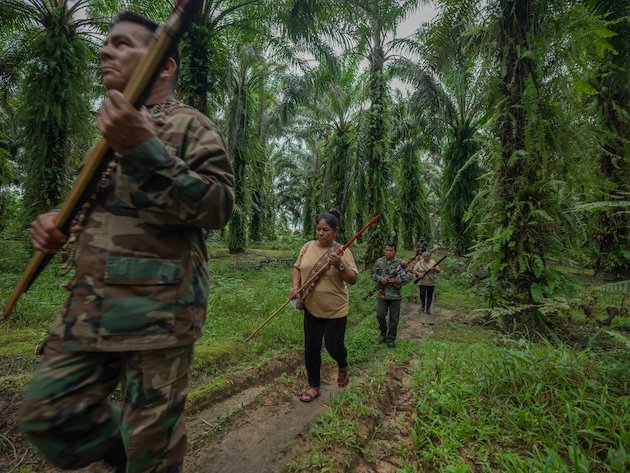
A concerning trend identified by Global Witness is the deepening nexus between environmental conflict and organized crime. Seven of the victims were members of Indigenous guard systems—community-based patrols designed to protect ancestral lands—and investigators identified links to criminal networks in five of those cases.
Beyond lethal violence, the report warns of a “hidden iceberg” of repression. Activists are increasingly subjected to non-lethal attacks designed to intimidate without triggering international outrage. This includes surveillance, smear campaigns, online abuse, and the weaponization of legal systems. In Asia, for instance, there is a marked trend toward the “criminalization” of environmentalism, where defenders in countries like Indonesia and the Philippines face groundless police investigations and court cases intended to drain their resources and discredit their advocacy.
The environment for activism is further restricted by a global deterioration in civic freedoms. Of the 15 countries where killings were documented, 10 are categorized as “repressed” by the CIVICUS Monitor, a global tracker of civil society conditions. Nicaragua was listed in the most restrictive category, labeled as “closed.”
The report also sheds light on the gendered nature of this violence. While the vast majority of the 124 confirmed victims were men, women face pervasive, non-lethal forms of aggression, including psychological abuse and targeted harassment. Data from the Mesoamerican Initiative of Women Human Rights Defenders illustrates the scale of this issue, documenting over 30,000 attacks against women defenders in Mexico and Central America over the last decade.
Exacerbating these risks is a significant reduction in international support. Budget cuts by major donor governments, including the United States, Germany, and the United Kingdom, have resulted in a decline in foreign aid. This retreat leaves human rights organizations and grassroots groups—particularly those operating in remote rainforests and vulnerable ecosystems—with fewer resources to protect their communities and their lives.
Global Witness concludes that the survival of these defenders is essential to the health of the planet. By safeguarding their lands, they are preserving the forests and biodiversity critical to mitigating climate change. The organization is calling for urgent, systemic changes: stronger legal protections for Indigenous land rights, increased accountability for the corporations and criminal syndicates driving land exploitation, and restored financial support for those on the front lines of the global environmental movement.
Disclaimer: This content is auto-generated for informational purposes only.
Source: Read Original News