







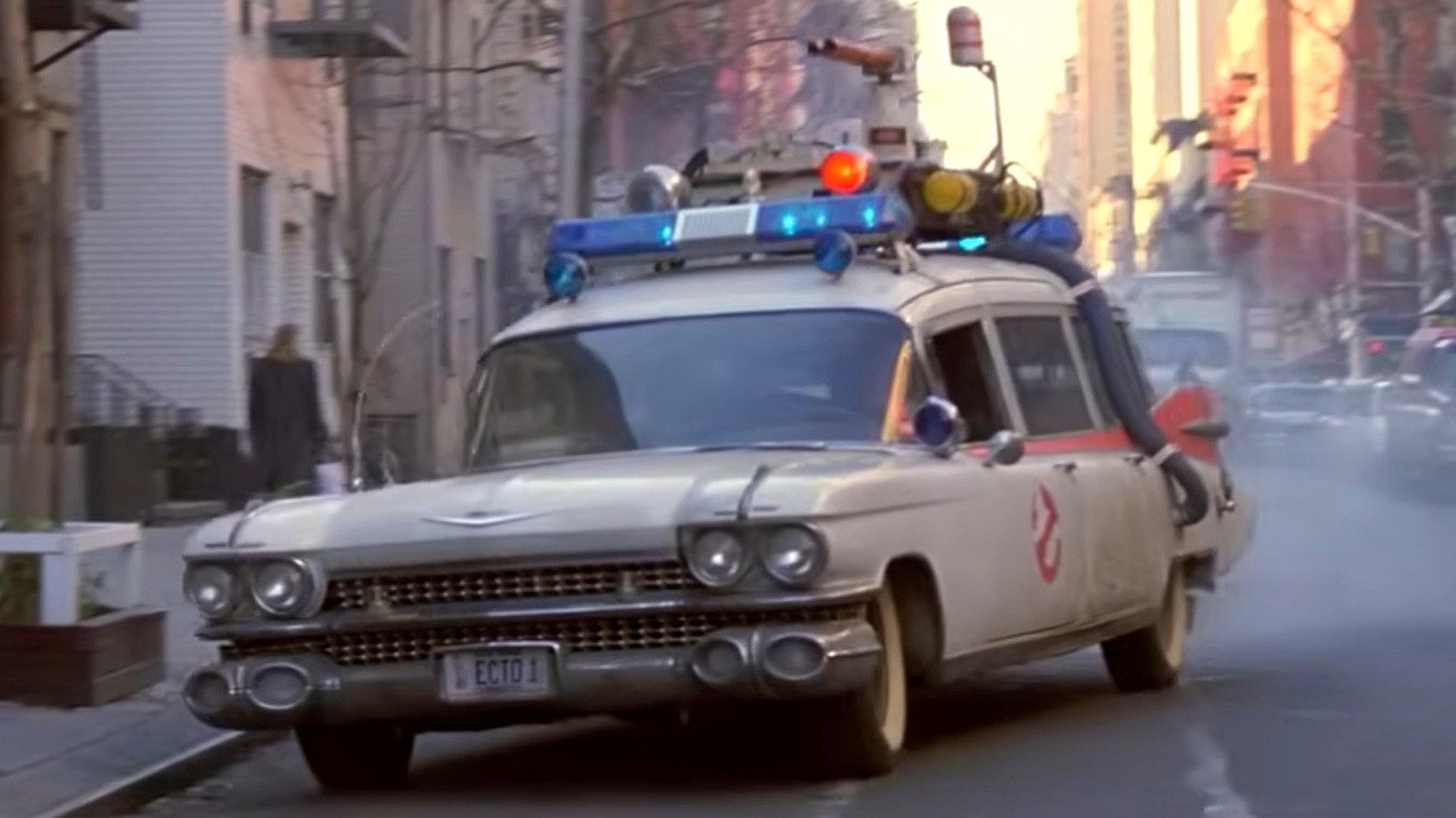
The Ecto-1 stands as one of the most recognizable vehicles in cinematic history, holding a cultural status that rivals the cars of James Bond or the Batmobile. Beyond its role as a prop in the 1984 blockbuster, the vehicle represents a fascinating intersection of 1950s automotive engineering and high-concept prop design. As the vehicle continues to inspire modern technology integrations—such as the recent ghost-themed software modes in premium electric vehicles—it is worth examining the technical reality behind this mechanical icon.
Accept no substitutes: The evolution of the Ecto-1
While fans often perceive the Ecto-1 as a single, consistent character, the production history involved multiple vehicles. The film utilized two distinct Cadillac-based Miller-Meteor chassis. The initial vehicle, which featured prominently in the iconic “Ray’s repair” scene, was a black-painted rental unit that underwent a fictional transformation into the Ghostbusters’ primary response vehicle. In the real world, this donor car was returned, and a secondary chassis was used for the majority of the filming.
The complexity of maintaining such a specialized vehicle became apparent during the production of “Ghostbusters II,” where the primary car suffered mechanical failures, necessitating the introduction of a third donor vehicle to complete filming requirements. Following its cinematic career, the original Ecto-1 faced years of neglect on a studio lot, eventually undergoing a rigorous restoration process by Cinema Vehicles to serve promotional functions for later franchise entries.
Dual-purpose engineering: The Miller-Meteor platform
The foundational machine beneath the iconic ghost-trapping equipment is the 1959 Cadillac Miller-Meteor Futura Duplex. This vehicle was a pinnacle of commercial versatility for its era. The “Duplex” nomenclature identified its core design feature: the ability to transition between a funeral hearse and an emergency ambulance.
This versatility was achieved through modular interior components. The rear compartment featured fold-down ambulance-attendant seating that, when stowed, revealed a set of casket rollers. This clever mechanical packaging allowed a single chassis to serve two distinct functions. The conversion was handled by the Miller-Meteor company, a entity formed by the merger of two major rivals in the professional car market. While the internal layout was custom-built for livery use, the exterior relied on a commercial-grade Cadillac chassis equipped with the legendary tailfins of the 1959 Eldorado, which remain the largest ever produced for a production vehicle.
The economics of the Ectomobile
Within the narrative of the film, the purchase price of the Ecto-1 is a point of contention and dry humor. While the script initially suggested a $1,400 price tag, the filmmakers deemed this figure too low for a vehicle requiring such extensive mechanical overhaul. The final dialogue established a price of $4,800.
Adjusted for inflation, this investment reflects the premium nature of the Cadillac base. The original 1959 factory price for a Miller-Meteor was $10,694, which would exceed $124,000 in current currency. Today, finding an unmodified, authentic 1959 Miller-Meteor is an exercise in futility. The scarcity of these donor cars has driven their market value significantly higher, as collectors often compete for the few remaining survivors to serve as high-fidelity bases for restoration projects.
Design precision and technical documentation
The visual language of the Ecto-1, particularly the complex array of roof-mounted gadgetry, was the brainchild of set designer Stephen Dane. Operating under a restrictive six-week timeline, Dane collaborated with director Ivan Reitman to finalize the functional aesthetic of the vehicle and the associated portable gear like the Proton Packs and P.K.E. Meters.
Unlike modern productions that rely heavily on computer-generated imagery, the Ecto-1 was a practical design feat. Every component on the roof rack was physically engineered and positioned for screen presence. Despite the critical nature of his contribution, the archival credits for the film notably misspelled his name, documenting him simply as “Steven” and reducing his title to “Hardware Consultant.” This documentation oversight contrasts sharply with the technical detail preserved in his original design sketches, which remain a primary reference for historians and builders alike.
The modern market for Ecto-1 recreations
The enduring popularity of the film has fostered a robust secondary market for high-fidelity replicas. While casual enthusiasts might convert station wagons or compact cars, serious collectors seek professional-grade restorations based on period-correct 1959 Cadillac commercial chassis.
The financial investment for these high-end recreations is substantial. At premier collector auctions like Barrett-Jackson, authentic recreations have commanded prices as high as $297,000. These figures are not for mere shells; they represent fully rebuilt mechanical systems, including the original 390-cubic-inch V8 engines and Hydra-Matic transmissions. Such builds often feature upgraded electrical systems to handle the power requirements of lighting, sound systems, and onboard monitoring equipment, effectively transforming a relic of 1959 engineering into a reliable, modern mobile showpiece. These vehicles serve as a testament to the intersection of classic American luxury manufacturing and the specific, creative requirements of 1980s special effects.
Disclaimer: This content is auto-generated for informational purposes only.
Source: Read Original News