







The Evolution of Rockstar Graphics and Visual Fidelity
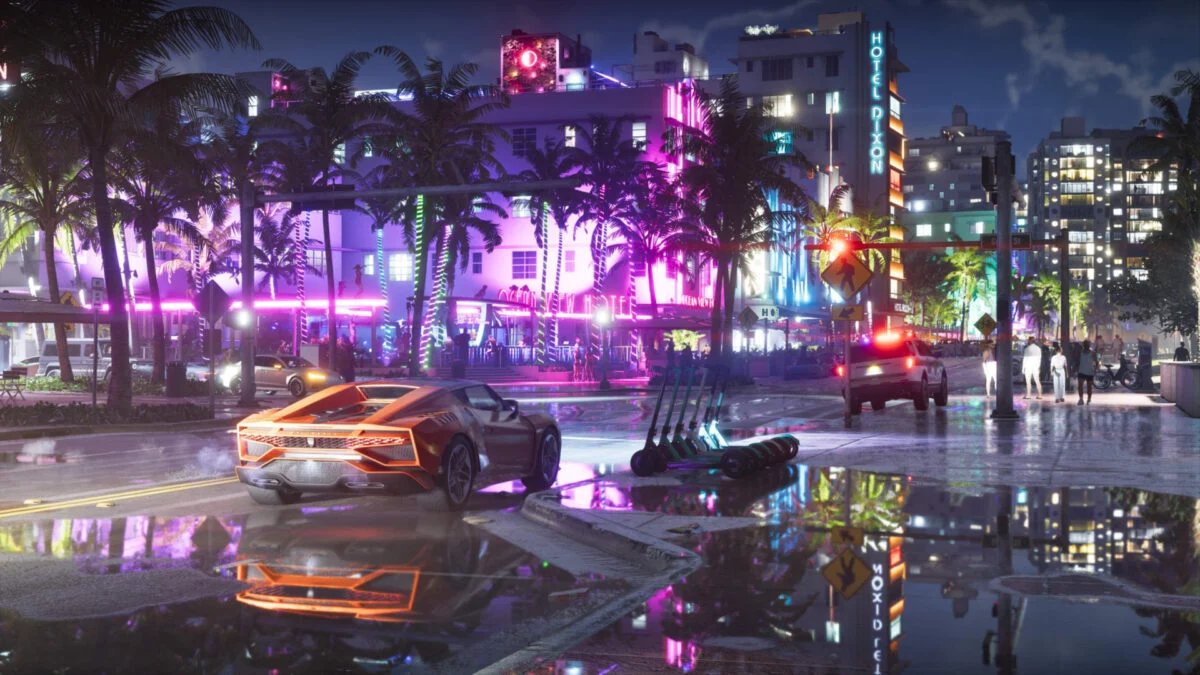
The recent promotional material released by Rockstar Games for Grand Theft Auto 6 has sparked a significant technical debate across the gaming community. As the studio unveiled details regarding the game’s expansive radio landscape, a singular, high-resolution screenshot captured the attention of observers. The image, which depicts a rain-slicked street in Vice City at night, serves as a masterclass in modern rendering techniques, showcasing complex lighting, realistic reflections, and atmospheric depth. While many observers initially questioned whether the visual quality was achievable on consumer hardware, industry experts suggest that the fidelity on display is consistent with current engine capabilities, particularly when considering the potential for high-end console utilization.
Historical context provides clarity on this matter. Rockstar Games has maintained a reputation for releasing promotional imagery that, while occasionally utilizing developer-specific debugging tools to ensure the highest possible output resolution or custom lighting setups, remains representative of the final product’s actual engine performance. From the launch cycles of Grand Theft Auto V to the expansive, detailed environments of Red Dead Redemption 2, these promotional assets have historically acted as a reliable, albeit optimized, indicator of what players can expect from the final console build.
Technical Analysis of the Nighttime Scene
When analyzing the image from a technical perspective, it becomes clear that the scene relies heavily on advanced lighting and surface shaders. The reflections seen on the pavement are not merely simple textures; they exhibit a degree of complexity that suggests sophisticated ray-traced lighting or high-quality screen-space reflections. These elements, combined with the neon illumination of the Ocean View Hotel, demonstrate how the game engine handles light source propagation in wet environments.
However, a closer investigation by industry analysts, including those from Digital Foundry, reveals that the image is not without its limitations. If one examines the mid-field reflections on the semi-gloss road surfaces, the presence of digital artifacts or “dithering” becomes apparent. This specific visual quirk is a common artifact in console rendering, where performance trade-offs necessitate the use of lower-resolution reflection buffers or temporal anti-aliasing techniques. Furthermore, the absence of shadows under distant pedestrians and the appearance of lower-poly character models in the far background provide concrete evidence that the shot is not a pre-rendered cinematic, but an in-game asset rendered in real-time.
The Role of Hardware and Optimization
The speculation surrounding the hardware used to capture these images points toward the PlayStation 5 Pro or similar high-performance devkits. Rockstar appears to be leveraging these platforms to push the boundaries of what is possible in an open-world setting. By using debug capture tools, developers can bypass standard frame-rate limitations to take static, high-fidelity photographs that represent the game’s peak visual potential.
For console players, this raises the question of whether this quality will translate to the standard user experience. It is highly probable that the game will utilize dynamic resolution scaling and variable frame rate technology to maintain performance during intense gameplay sequences. While the “perfect” look seen in the promotional screenshot might be reserved for moments of stillness or specific, high-end hardware, the foundational architecture of the game engine appears capable of delivering a high degree of visual polish even during active play.
The Integration of Immersive Audio Systems
While the visual spectacle occupies the spotlight, the accompanying update regarding radio stations underscores a significant expansion in the game’s technical scope. Rockstar has confirmed that players will be able to access the full array of radio stations via their in-game mobile phone, regardless of whether they are driving a vehicle or exploring on foot. This shift in design suggests a move toward continuous immersion, where the world’s audio landscape is no longer tethered to the physical proximity of a vehicle’s sound system.
Technically, this integration points toward a sophisticated audio-streaming architecture that can handle the seamless transition of high-fidelity music tracks while the game continues to manage complex environmental audio and active dialogue. By engaging high-profile hosts and a diverse tracklist, the studio is focusing on audio as a critical layer of the open-world structure, aiming to make the soundscape as dynamic as the city’s lighting and climate systems.
Impact on Future Open-World Standards
The buzz surrounding these visual assets serves as a reminder of the rising expectations for triple-A titles in the current generation. The ability to render a dense, rainy cityscape with accurate reflections, functional lighting systems, and character density at night is no longer a luxury but a requirement for titles of this scale. Grand Theft Auto 6 is poised to set a new benchmark for how developers utilize current-gen hardware to create living, breathing environments.
Ultimately, while the images may be captured under ideal conditions, they represent a legitimate leap forward in the application of atmospheric shaders and global illumination. Whether on the standard PlayStation 5, the more powerful Pro iteration, or the latest Xbox Series X architecture, the game appears primed to leverage the hardware’s strengths to deliver a high level of graphical detail. While the Xbox Series S may face challenges in maintaining this level of fidelity, the trajectory for the broader console market remains clear: the industry is entering a new chapter of high-definition, immersion-focused open-world design where environmental lighting and user-integrated audio play a central role.
Disclaimer: This content is auto-generated for informational purposes only.
Source: Read Original News