









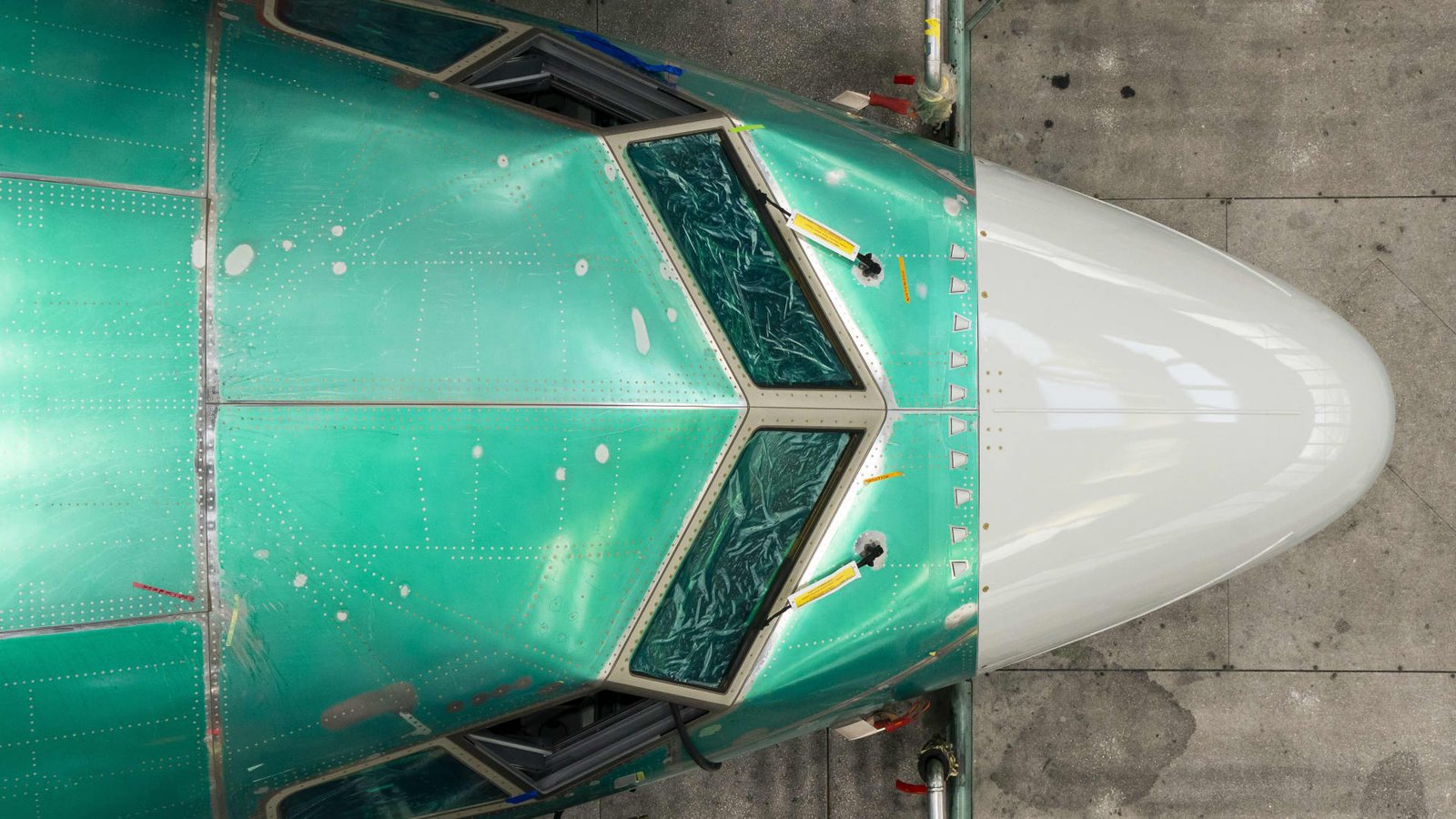
Boeing has disclosed a new software glitch affecting specific models of its 737 Max aircraft, a revelation that arrives at a sensitive moment as the aerospace giant pushes to finalize the certification of its latest jet variants. The defect, identified by the company last month, pertains to automated landing procedures and has prompted immediate scrutiny from federal regulators.
The discovery highlights the ongoing technical challenges facing Boeing’s engineering teams as they work to modernize the software ecosystem across their most popular commercial fleet. While the company maintains that the issue does not pose an immediate danger to existing operations, the news underscores the delicate balance between software-driven aviation efficiency and the rigid safety protocols required for flight certification.
## Understanding the Software Flaw
The technical issue manifests during a “missed approach”—a procedure where a pilot aborts a landing to circle back for another attempt. Boeing engineers discovered that if a pilot modifies a preprogrammed flight path during this maneuver, the software may restrict the automated systems on subsequent approaches.
While Boeing has clarified that pilots are fully trained to execute landings manually without the assistance of automated tools, the glitch creates an operational hurdle for flight crews. The company is currently finalizing a software patch to restore full automated functionality. In the interim, they have disseminated guidance to airline operators reinforcing existing protocols for handling such navigation discrepancies. “Our engineers are working on a software update to permanently address the issue,” the manufacturer stated in a formal release.
## Impact on Airline Operations and Certification
Major U.S. carriers, including Southwest, United, and Alaska Airlines, have confirmed that they are actively monitoring the situation. Several operators noted that their current fleets are not equipped with the specific software version (labeled U.14) tied to the glitch. Many airlines possess the flexibility to revert their systems to older, verified software builds, effectively insulating their day-to-day operations from the immediate impact of the bug.
However, the situation complicates Boeing’s broader roadmap for its 737 Max family. The FAA recently certified the Max 7—the smallest variant—with the newer software integrated. It remains unclear whether that aircraft can move forward with deliveries or flight operations while the patch is under development. Simultaneously, Boeing CEO Kelly Ortberg has expressed optimism regarding the impending certification of the larger Max 10, though the current software investigation will likely undergo a rigorous review by the FAA before regulators grant a final green light.
## Software Reliability and the Future of Aviation
The aviation industry is increasingly reliant on complex algorithms and flight control software, a trend that brings both unprecedented efficiency and new categories of technical risk. The recent 737 Max glitch serves as a reminder of the industry’s heightened sensitivity to software architecture following the historical challenges with the Maneuvering Characteristics Augmentation System (MCAS), which was implicated in the tragic accidents of 2018 and 2019.
Today, companies like Boeing are under extreme pressure to ensure that every line of code in their avionics suites meets “zero-fail” standards. Modern aviation safety now involves an intricate dance between hardware performance and digital oversight. As Boeing works with the FAA to vet their proposed fix, the industry will be watching closely to see how effectively the manufacturer manages these “tech-stack” updates. Ensuring the integrity of flight management systems is not just an engineering requirement; it is a fundamental pillar of public trust in the future of commercial air travel. With over 2,400 Max aircraft currently in service worldwide, the urgency to perfect these digital updates remains a top priority for global aviation safety.
Disclaimer: This content is auto-generated for informational purposes only.
Source: Read Original News