









U.S. Treasury’s Surprise Debt Buyback Sends Yields Tumbling, Sparks Market Debate
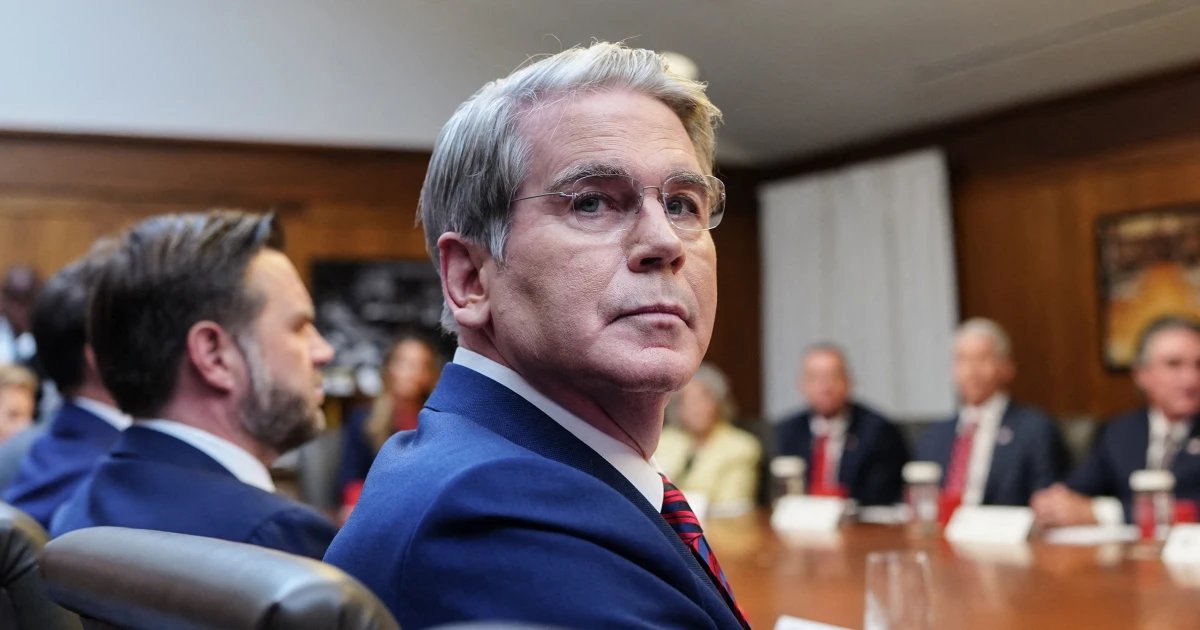
Washington D.C. – In an unexpected move designed to curb soaring borrowing costs, the U.S. Treasury Department announced on Wednesday a significant increase in its government debt repurchase program, sending longer-term Treasury yields sharply lower. The decision, which will see the Treasury at least double its buyback efforts, signals a proactive stance by Secretary Scott Bessent’s department to manage the nation’s burgeoning debt and rising interest expenses.
The immediate impact was evident in the bond markets. The yield on the benchmark 30-year Treasury bond plunged from 5.26% to a low of 5.18%. While less affected, the 10-year Treasury yield, a key influencer of consumer borrowing rates, also saw a notable drop from 4.68% to 4.63%. This decline in yields provided a boost to the stock market, with the S&P 500 climbing 0.6% and the Nasdaq Composite rising 0.5% by late morning.
The Treasury’s announcement effectively positions the agency as a larger buyer of longer-term bonds, which have been experiencing a sustained sell-off. This unexpected alteration to the "tentative buyback schedule" released just two weeks prior underscores the urgency of the situation. The new policy is set to take effect on September 9th.
The move comes amidst growing concerns over the federal government’s interest burden. The 30-year Treasury yield recently hit its highest level since 2007, exacerbating the already massive national debt’s interest costs. When bond prices fall, their yields rise, a trend that typically translates to higher interest rates for consumers on everything from mortgages to car loans.
This latest action by the Treasury appears to be part of a broader strategy by Secretary Bessent to temper the upward trajectory of rates throughout the year. Earlier this summer, the Treasury Department, in collaboration with Japan’s finance ministry, intervened in currency markets to bolster the struggling Japanese yen. In a move that reportedly surprised the European Central Bank, the Treasury sold euros to purchase yen. Market analysts speculated this maneuver might have aimed to dissuade Japan from offloading some of its vast holdings of U.S. Treasury bonds, which would have further amplified yields.
The broader surge in rates over the summer accelerated following Federal Reserve Chairman Kevin Warsh’s press conference on July 29th. KPMG chief economist Diane Swonk, in an August 11th note, lamented that the Fed has "a credibility problem," suggesting Warsh’s lack of clear guidance led the bond market to question the central bank’s commitment to fighting inflation. This skepticism has persisted despite ongoing geopolitical tensions, trade disputes, and a significant spike in energy prices driven by the war with Iran and the Russian invasion of Ukraine.
Energy prices have been a major factor in the current economic climate. Since the war with Iran began in late February, surging energy costs have propelled bond yields higher, particularly for longer-dated instruments, as investors anticipate prolonged inflationary pressures. Crude oil prices are up 50% since the start of the year, while domestic gasoline costs have climbed 37% over the same period, with the national average price for unleaded gas at $4.08 per gallon as of Wednesday.
Despite the immediate market reaction, some investors and analysts remain skeptical about the long-term effectiveness of the Treasury’s buyback initiative. "The market reaction suggests that this is an important tactical move from the Treasury," stated Jim Bullard, former president of the Federal Reserve Bank of St. Louis, on Bloomberg TV, calling it "a little bit unexpected." However, Bullard cautioned, "I don’t think it changes the fundamentals of big fiscal deficits and a Fed on the sidelines, which is what’s driving longer-term yields higher."
Economist Mohamed El-Erian echoed these sentiments, suggesting that while the announcement might offer "short term" relief for mortgage rates, it also "risks collateral damage and unintended consequences." On X, El-Erian wrote, "The effects of this financial engineering are short dated unless followed by fundamental policy adjustments."
Diane Swonk further emphasized the scale of the challenge, telling NBC News, "We’re still issuing an enormous amount of debt." She highlighted that the federal government’s debt "has eclipsed the size of the U.S. economy for the first time since World War II, and interest expense is soaring." This fiscal year alone, the interest expense is nearing $1.2 trillion.
Critics also point out that the Federal Reserve has maintained steady rates this year, unlike central banks in Europe and Japan, which have implemented rate hikes to combat inflation. Peter Boockvar of One Point BFG Wealth succinctly summarized the buyback announcement, stating, "This is NOT a debt paydown. It is just a rearrangement of the maturity schedule of Treasuries."
Wednesday’s move by the Treasury serves as a reminder of the complex interplay between fiscal policy, monetary policy, and global events on financial markets. It harks back to a similar Treasury bond sell-off last year when Secretary Bessent told Bloomberg News that he possessed "a big toolkit that we can roll out," including increased government debt repurchases, if needed. The current action demonstrates a willingness to deploy those tools in the face of persistent economic headwinds. The long-term efficacy, however, remains a subject of intense debate among financial experts.