







The research team analyzed historical logbooks from more than 700 whaling voyages, reconstructing their daily positions and hunting successes.
“We found that whaling in the late 1700s spread rapidly across the Arctic, with whalers reaching all but the most isolated bowhead whale habitats within a century,” said senior author Professor Damien Fordham, from Adelaide University’s Environment Institute.
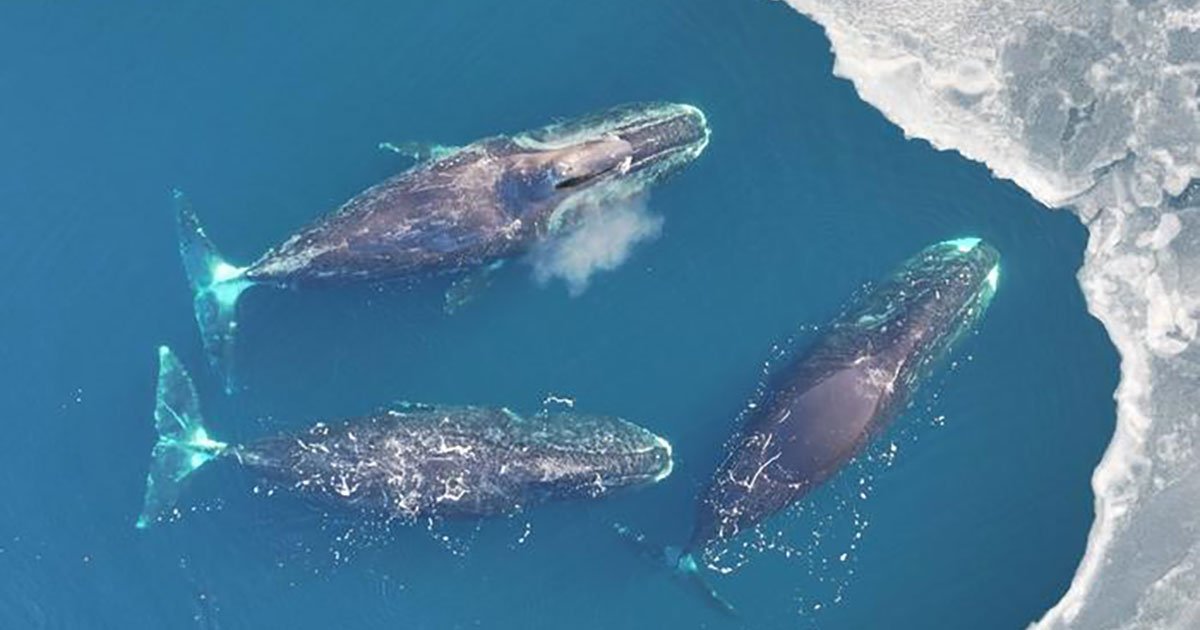
Sea ice barriers that were hazardous to whalers delayed access to some of the most profitable whaling grounds in the Arctic, providing important natural sanctuaries for bowhead whales.
“Our analysis discovered that bowhead whale populations with ancestors who found refuge in these protective zones, hidden behind hazardous sea ice barriers, are recovering more quickly today,” Professor Fordham said.
Bowhead whales have a long history of exploitation by humans. Commercial harvests of bowhead whale blubber by Basque whalers started in the 1530s along the shores of Newfoundland and Labrador in Canada, before later expanding to the Svalbard Archipelago east of Greenland.
“When British and American whalers joined the hunt in the 1700s, bowhead whaling surged and became widespread across the Arctic,” said lead author Dr. Nicholas Freymueller
“Oil rendered from whale blubber was critical for lubricating machines and illuminating industrial factories. However, the profits accrued by whaling came at an expense to population numbers of bowhead whales, which plummeted in response to increases of commercial exploitation.”
This devastating impact of whaling is evident in bowhead whale populations that survive today, despite commercial hunting ceasing in the early 1900s.
“Today, only two of the four stocks of bowhead whales are recovering—populations off the coast of Alaska and West Greenland,” said Dr. Freymueller, whose study was published in PNAS.
“Previous explanations have blamed changing ocean conditions for the lack of recovery in some stocks. However, we show that it is more likely to reflect differences in patterns of past exploitation.
“Bowhead whale populations off East Greenland and in the Sea of Okhotsk, which were harvested more extensively because sea ice conditions were not as protective, have shown little sign of recovery.”
The study offers important lessons for conserving whales and other long-lived marine species facing human pressure.
“It underscores the need to consider historical threats dating back centuries when designing recovery plans for species that were pushed to the brink of extinction and remain vulnerable today,” Professor Fordham said.