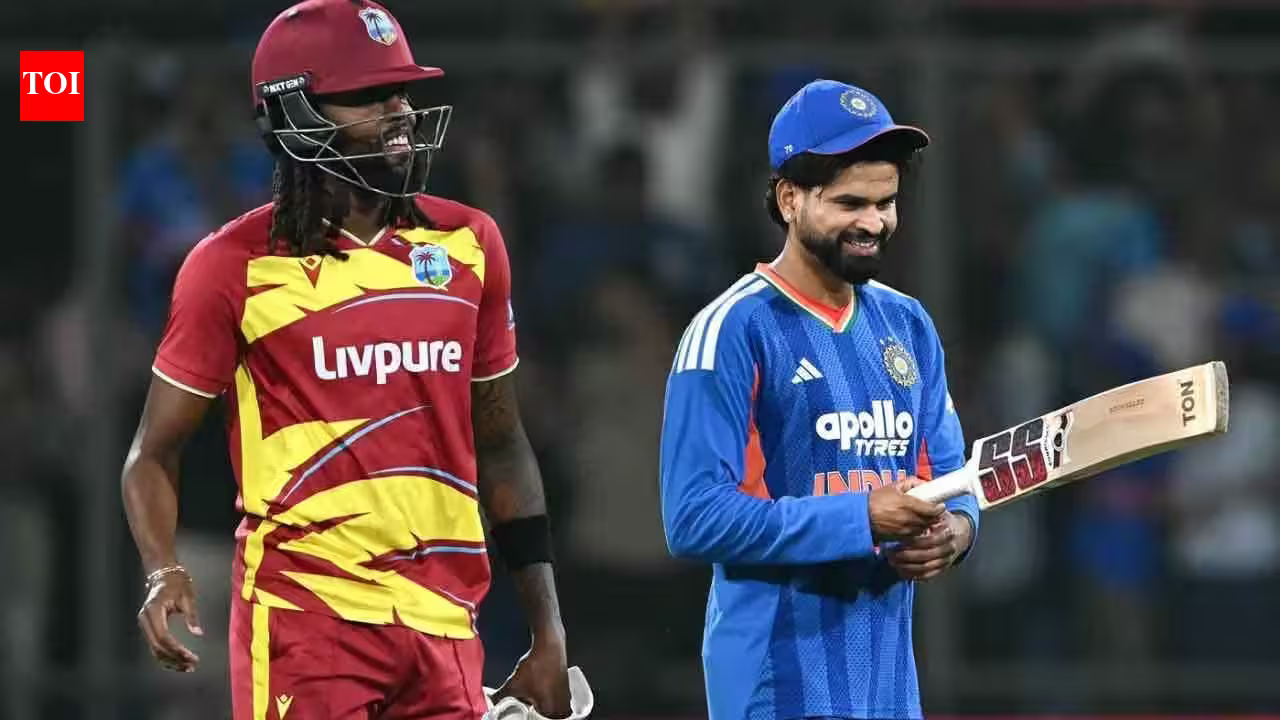







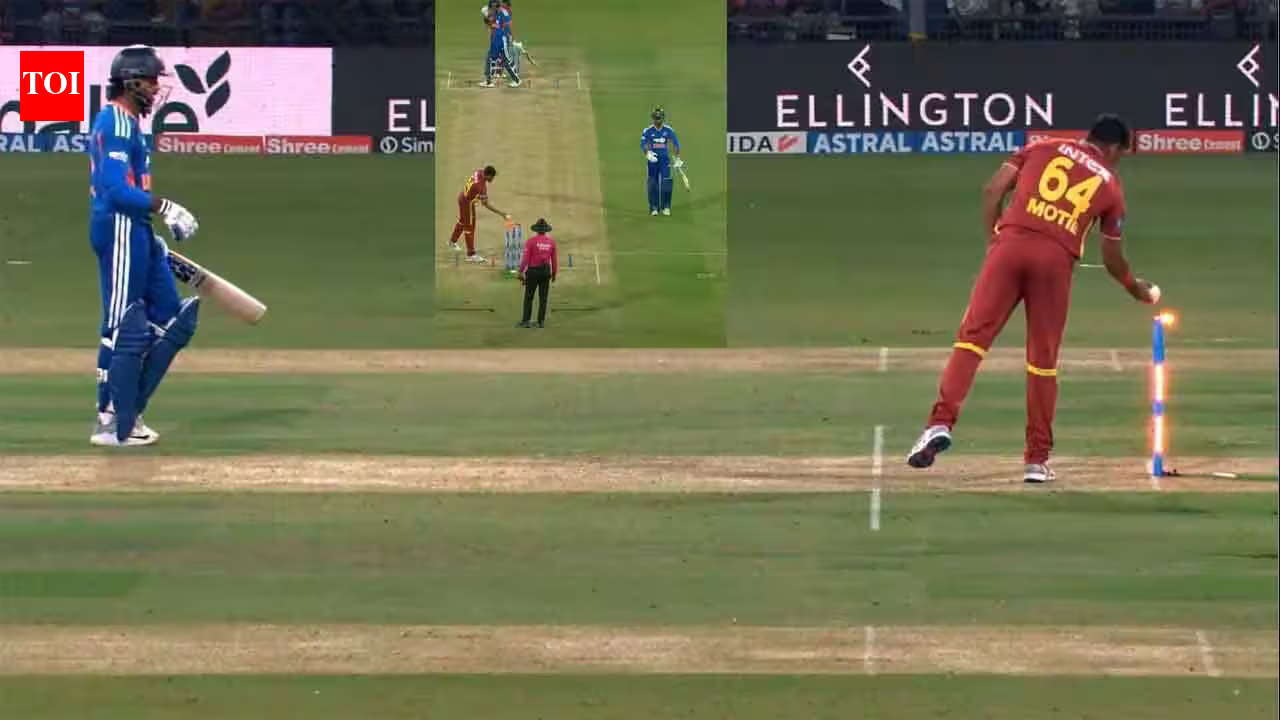
Bizarre scenes unfolded at the center of the pitch during Sunday’s third T20I between India and the West Indies, as a lapse in concentration led to one of the most unconventional dismissals in recent international memory. Tilak Varma, looking in fine touch, found his innings cut short in a moment of utter confusion that left players and spectators alike stunned.
The incident occurred during the 17th over of India’s batting innings, with spinner Gudakesh Motie looking to tie down the Indian pair of Tilak Varma and Axar Patel. Facing a low full toss, Axar flicked the ball toward deep backward square leg. West Indies fielder Kamil Pooran, displaying immense athleticism, sprinted toward the rope and dived, successfully flicking the ball back into play just before his body could make contact with the boundary cushions.
## A Misunderstanding of Massive Proportions
What transpired next will likely be analyzed by fielding coaches and analysts for weeks to come. Both Varma and Patel, standing in the middle of the pitch, appeared entirely convinced that Pooran had touched the boundary rope during his desperate scramble to save the four. Operating under the false impression that a boundary had been signaled, the two batters completed a leisurely single and actually exchanged a friendly fist-bump, fully expecting the umpire to award four runs to the total.
However, the reality on the ground was starkly different. Pooran had successfully kept the ball in play and quickly relayed it back toward the wicketkeeper. As the reality of the live-ball situation dawned on the players, a frantic scramble ensued. Axar Patel, realizing the danger in a split second, dove to ground his bat at the non-striker’s end just in time to beat the throw.
Tilak Varma, unfortunately, was not as fortunate. Still drifting toward the crease under the assumption the ball was dead, he found himself well out of his ground when the throw reached the bowler’s end. Motie coolly collected the ball and removed the bails. Following a swift review by the third umpire to confirm that Pooran’s save had indeed been clean, the decision was finalized: Tilak Varma was out. He departed for an impressive, albeit premature, 28 off 16 balls, a cameo that featured four boundaries but ultimately ended in an avoidable disaster.
## India’s Batting Resilience
Despite the comedy of errors that sent Varma back to the pavilion, India’s batting unit maintained its aggressive tempo. The team posted a formidable total of 223, a score built on the back of a scorching partnership earlier in the innings. Abhishek Sharma was the standout performer, punishing the West Indies attack with a blistering 30-ball 69 that included five massive sixes.
Sharma and Ishan Kishan combined for a whirlwind 108-run stand that lasted just 40 balls, setting the tone for the innings. Kishan chipped in with a vital 37 off 18 deliveries before falling to Roston Chase. Following Kishan’s departure and the subsequent lbw of captain Shreyas Iyer, India faced a nervous period, losing four wickets for just 20 runs to slip to 135/5. However, the deep batting lineup ensured that even with the middle-order wobble, they reached a score that would prove too steep for the visitors to climb.
## The Bowling Response and Series Outlook
Defending 223 was never going to be easy, especially against a West Indies side that had successfully hunted down a massive 250-run target just days prior in Ranchi. The Indian bowling attack, however, looked energized and purposeful this time around.
Arshdeep Singh was the pick of the bowlers, claiming a crucial 3-44. Meanwhile, Naman Dhir provided excellent support, taking 2-39 and dismantling the dangerous middle-order pairing of Pooran and Shimron Hetmyer, who had threatened to build a match-winning partnership. Though Shamar Springer offered a late scare—striking three sixes in the final over off Axar Patel—it was not enough to bridge the gap. The West Indies finished on 209/7, handing India a 14-run victory and a 2-1 lead in the five-match series.
Speaking after the match, captain Shreyas Iyer was quick to credit the tactical clarity of his bowling unit. “It was wonderful to see the bowlers being confident,” Iyer noted. “The clarity was very much visible when I was interacting. They were ready to take up the challenge, and that’s what we want.”
With the series now tilted in their favor, the focus shifts to Hyderabad for the fourth T20I on Wednesday. For India, the win provides significant momentum, though the coaching staff will certainly have a word or two with the team regarding situational awareness during boundary-line saves. If they can replicate their bowling discipline while maintaining their clinical batting form, they will be looking to seal the series in style. For the West Indies, it is back to the drawing board to find a way to contain an Indian side that seems determined to put their opponents under pressure from the very first ball.
Disclaimer: This content is auto-generated for informational purposes only.
Source: Read Original News