






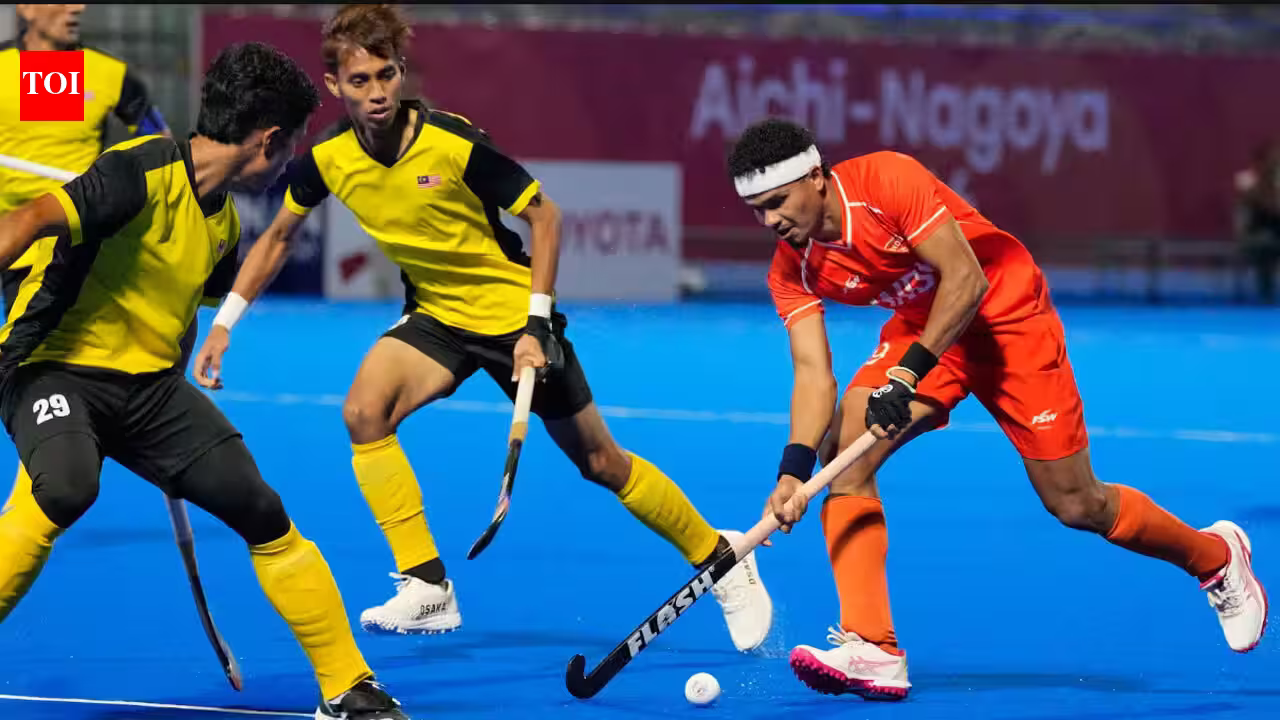
Resilience is often defined not by the absence of failure, but by the magnitude of the recovery that follows. For the Indian men’s hockey team, the stinging memory of a lackluster eighth-place finish at the World Cup in the Netherlands and Belgium earlier this year served as the ultimate crucible. Rather than allowing that disappointment to derail their Olympic ambitions, the squad transformed their frustration into a systematic, gold-medal-winning performance at the Asian Games—a triumph that simultaneously punched their ticket to the upcoming Los Angeles Olympics.
For forward Shilanand Lakra, the turnaround was a testament to the squad’s collective psychological maturity. In a candid reflection, the 27-year-old Odiya striker revealed that the team’s resurgence was born from a deliberate shift in perspective. “We knew we had to improve, especially in attack,” Lakra told reporters. “But instead of thinking too far ahead, we decided to take things one match at a time. The focus was always on our own performance.”
Turning Lessons Into Kinetic Energy
The pressure following the World Cup was palpable. To finish with only two wins in six matches was a stark wake-up call for a team with global aspirations. However, head coach Craig Fulton proved to be the steady hand the team required during the transition. Fulton’s philosophy was as pragmatic as it was motivating: these setbacks were not character flaws, but rather raw material for growth.
“These are lessons,” Fulton famously noted, “and the only way to treat them as lessons learned is to turn that learning into action.”
The players took that mandate to heart. Lakra noted that the squad held themselves accountable, acknowledging that their previous shortcomings were rooted in a lack of consistency. By refining their tactical discipline and focusing on maintaining a high standard throughout the duration of every match, the team successfully reinvented its identity on the pitch. The results spoke for themselves, as India powered through the Asian Games with a flawless, all-win record, reclaiming their status as the dominant force in the continent.
Personal Triumphs Amidst Collective Glory
The gold medal carries an added layer of emotional weight for Lakra, who has navigated a path back to the top that few athletes could endure. His journey was derailed in 2022 by a devastating knee injury that necessitated complex surgery on his ACL, PCL, and meniscus. During the grueling two-year recovery process—a period of isolation and physical pain—Lakra also suffered the profound personal loss of his father.
His return to the international stage and his subsequent performance in the Asian Games—where he netted six goals in seven matches after failing to score in the World Cup—is a narrative of sheer grit. For Lakra, the gold medal is more than a trophy; it is a validation of his perseverance.
“Spending time with senior players, learning from their experiences and sharing ideas was invaluable,” Lakra said, acknowledging the culture of mentorship within the camp. “They taught us the importance of staying focused on our own game rather than worrying about opponents or outside distractions.”
Pressure Cooker: The Pakistan Test
If the gold-medal run had a singular moment of truth, it was the high-stakes encounter against arch-rivals Pakistan. The match was a microcosm of the team’s evolution. After building an early advantage, India saw their momentum wane as tactical lapses allowed Pakistan to claw their way back into the game.
In years past, such a shift in momentum might have caused a total collapse. Instead, the team displayed a newfound composure. When the match stood on a knife-edge, the Indians remained unified in their objective. The eventual 4-3 victory, sealed by a dramatic goal in the final minute, was the byproduct of a “fight until the final second” mindset.
“Our mindset was to fight until the final second and finish strongly,” Lakra explained. “We knew a shootout was a possibility, although our aim was always to win in regulation time.”
Eyes on the Horizon
With the Asian Games gold secured and the flight path to Los Angeles mapped out, the Indian team is not resting on its laurels. Having secured bronze medals in both Tokyo and Paris, the program is clearly trending upward, and the appetite for a third consecutive Olympic medal is ravenous.
For Lakra, the next two years are a blank canvas. “The next two years will be important,” he said. “My focus will be on improving myself further and helping the team achieve bigger goals.”
As the team prepares for the next cycle, they do so with the confidence of a unit that has looked into the abyss of failure and chosen to climb back out. If their recent trajectory is any indication, India is not just returning to the Olympic stage; they are arriving in Los Angeles with a point to prove. The world of hockey now watches closely as India looks to translate this continental dominance into global supremacy.
Disclaimer: This content is auto-generated for informational purposes only.
Source: Read Original News