






Delhi Court Discharges UK National of Flag Insult Charge in London High Commission Attack Case
A special National Investigation Agency (NIA) court in Delhi has discharged Inderpal Singh Gaba, a British national, from charges related to the alleged insult of the Indian national flag during violent protests outside the Indian High Commission in London in March 2023. The court ruled that the relevant Indian law regarding national symbols does not possess the extra-territorial jurisdiction required to prosecute an act committed by a foreign national on foreign soil.
However, the legal troubles for Gaba are far from over. The court ordered that charges be framed against him under the stringent Unlawful Activities (Prevention) Act (UAPA), noting that his involvement in protests characterized by separatist rhetoric constitutes an “unlawful activity” under national security legislation.
Jurisdiction and the 1971 Act
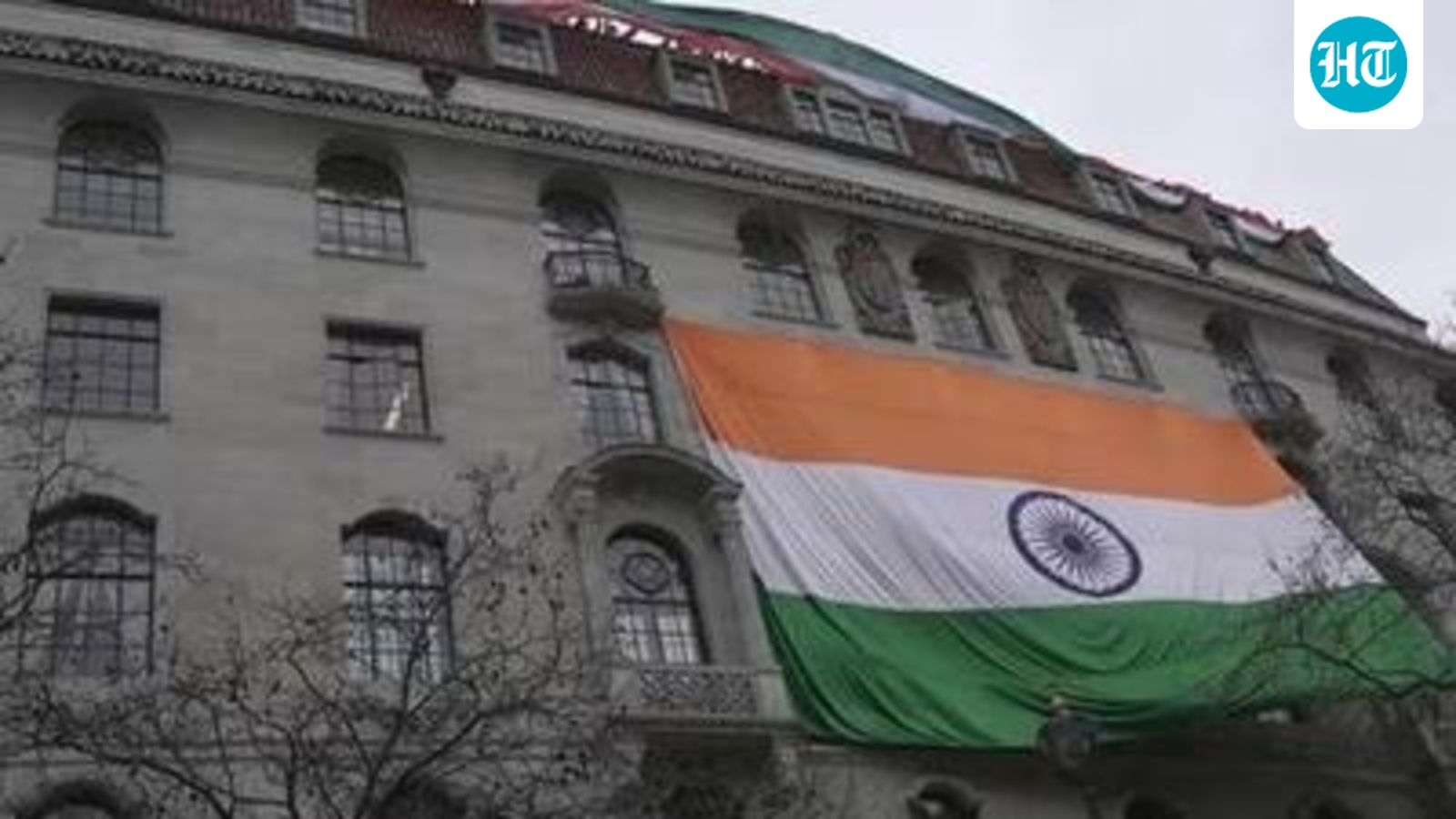
The case stems from the NIA’s extensive investigation into two separate incidents on March 19 and 22, 2023, when demonstrators gathered outside the Indian diplomatic mission in London. During these events, the Indian tricolor was pulled down and replaced with a Khalistani flag, while security personnel were subjected to physical assault.
Gaba, who was arrested at the Attari border in April 2024, faced accusations under the Prevention of Insults to National Honour Act, 1971, and Section 13(1) of the UAPA. His defense counsel, Advocate Arun Khatri, maintained that the 1971 Act is strictly confined to Indian territory and cannot be applied to actions occurring within the United Kingdom.
In its October 8 order, the Rouse Avenue court acknowledged that video evidence clearly depicts Gaba standing on an Indian flag that had been discarded on the ground. Despite confirming that the act occurred, the bench ruled that because the incident took place in London, the court lacked the jurisdiction to try him under the 1971 Act.
“Although this court is satisfied… that Gaba… has committed an offence under section 2 of the Prevention of Insults to National Honours Act, 1971, he cannot be tried for the said offence before this court,” the judge noted in the ruling.
UAPA Charges Upheld
While the court provided relief on the flag-insult charge, it found sufficient prima facie evidence to proceed with charges under the UAPA. The prosecution argued that the protests were part of a coordinated effort by extremist elements—allegedly led by the late radical figure Avtar Singh Khanda—to incite discord in retaliation for police operations in Punjab against separatist leader Amritpal Singh.
By participating in a demonstration where pro-Khalistan slogans were promoted, the court maintained that Gaba’s conduct falls within the ambit of activities aimed at undermining the sovereignty of India, thus satisfying the requirements for an UAPA trial.
Following the court’s decision, the defense has indicated that it intends to challenge the framing of UAPA charges in the high court, setting the stage for further legal arguments regarding the scope of anti-terror laws in cases involving foreign nationals.
Disclaimer: This content is auto-generated for informational purposes only.
Source: Read Original News