






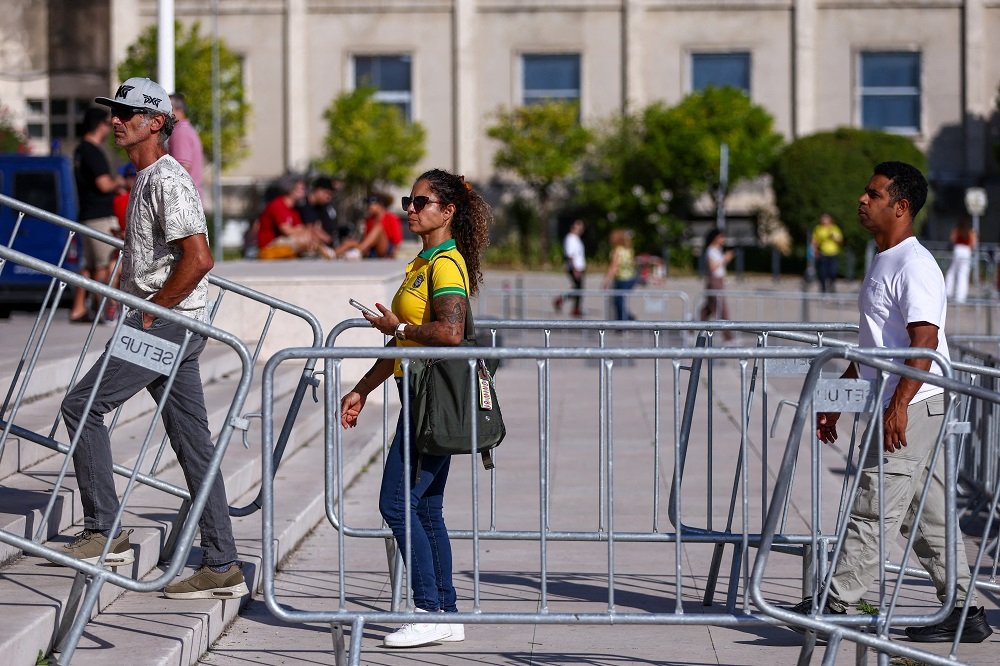
BRASÍLIA — Brazilians headed to the polls on Sunday in a high-stakes general election that has left the nation deeply divided. The contest, which pits incumbent leftist President Luiz Inácio Lula da Silva against Senator Flavio Bolsonaro, is unfolding against a backdrop of severe economic anxiety, mounting corruption scandals, and explosive accusations of foreign meddling.
Lula, 80, is fighting for a fourth term, framing the election as a fundamental battle between “democracy and denialism.” Opposing him is the 45-year-old Flavio Bolsonaro, who seeks to return his father’s right-wing movement to power. The elder Bolsonaro is currently serving a 27-year sentence for plotting a coup following his 2022 election defeat, a conviction his son has promised to overturn through amnesty if elected.
The campaign has been heavily influenced by the “Trump factor.” With the U.S. presidential administration imposing aggressive tariffs on Brazil—which Lula characterizes as an attempt to influence the vote—tensions between Brasília and Washington have reached a boiling point. While Donald Trump has not issued a formal endorsement, he has publicly praised the senator and hosted him at the White House, signaling a potential shift in regional alliances should the younger Bolsonaro prevail. Security and access to Brazil’s vast critical mineral reserves remain central themes, as the U.S. seeks to counter Chinese influence in the sector.
Economic concerns have largely overshadowed traditional policy debates. Despite moderate improvements in employment and inequality, voters are grappling with high living costs, surging household debt, and pervasive gang violence. While Lula has countered by expanding welfare programs and proposing debt relief, Flavio Bolsonaro has campaigned on a platform of market-friendly reforms, including spending cuts and privatization. Alberto Ramos, a chief economist at Goldman Sachs, noted that the candidates offer diametrically opposed fiscal paths: a state-led model under Lula versus a shift toward austerity and a stronger fiscal anchor under Bolsonaro.
The race has been further destabilized by the collapse of Banco Master. The fraud investigation surrounding the bank’s former head, Daniel Vorcaro, has implicated high-ranking figures, including members of the Supreme Court and Flavio Bolsonaro himself. The senator is currently under investigation for money laundering linked to the case, though he maintains his innocence. The scandal has plunged the judiciary into a crisis of legitimacy, with some in Congress already calling for the impeachment of Supreme Court Justice Alexandre de Moraes.
With both leading candidates rejected by roughly half of the electorate and minor candidates struggling to gain traction, polls indicate a dead heat. If no candidate secures more than 50% of the vote on Sunday, a runoff between the top two contenders will be held on October 25.
Beyond the presidency, voters are also electing members of the lower house and the Senate, where the balance of power will determine the feasibility of any future impeachment efforts or legislative reforms, marking a critical turning point for Latin America’s largest democracy.
Disclaimer: This content is auto-generated for informational purposes only.
Source: Read Original News