








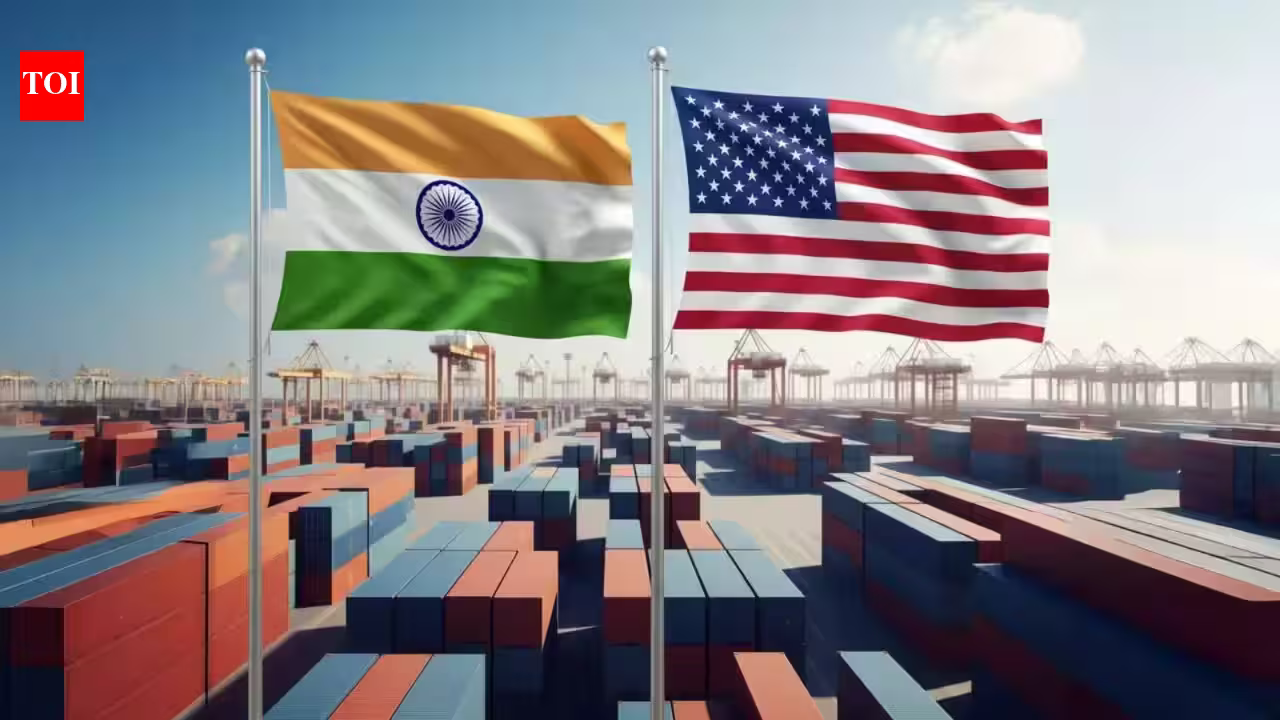
The Strategic Pivot in India-US Trade Relations
The recent signals from the Indian Ministry of Commerce regarding the finalization of the India-US trade deal mark a significant milestone in the bilateral economic architecture of the two nations. Commerce Secretary Rajesh Agrawal’s recent statement suggests that the framework for preferential market access is reaching maturity. This development is not merely a bureaucratic formality; it represents a fundamental shift in how India navigates global trade barriers.
For decades, India has operated on Most-Favoured-Nation (MFN) tariffs, a system designed for standardization. However, the modern global economy, dominated by complex supply chains and bilateral preferential agreements, requires a more nuanced approach. The US, which utilizes a different structure involving executive tariffs, necessitates a custom-built architectural bridge to allow for preferential market access. By working on a framework that creates specific differentials, India is positioning itself to gain a competitive edge in key sectors, ensuring that its exports enjoy better terms in the world’s largest economy. As businesses on both sides express confidence in the current direction, the agreement is set to move beyond traditional trade disputes and into a more collaborative phase of long-term economic integration.
Broadening the Horizon: Beyond IT and ITeS
While India has long been celebrated as the global hub for Information Technology (IT) and Information Technology-enabled Services (ITeS), the reliance on these two pillars is increasingly viewed as a limitation to sustainable growth. Current data reveals that IT services account for approximately 50% of India’s services exports, with professional services adding another 30%. This concentration exposes the national export basket to sector-specific global volatility.
The vision articulated by the Ministry of Commerce is clear: diversification is the key to resilience. By targeting high-value sectors such as global financial services, where India currently holds a relatively small 1% market share—amounting to roughly $8 billion—the government is pushing for a shift toward more complex, digitally-delivered service models. With the global financial services market valued at approximately $670 billion, the headroom for growth is substantial. The strategy is to leverage the country’s existing digital public infrastructure, such as the Unified Payments Interface (UPI), to move from being a back-office service provider to a lead participant in the global value chain for financial services.
Fintech as a Catalyst for Global Financial Inclusion
India’s fintech sector is uniquely positioned to drive this transformation. The success of indigenous digital payment and lending systems has provided a roadmap for what can be achieved at population scale. Beyond the domestic market, there is a clear strategic imperative to export these technological frameworks to the Global South. By offering scalable solutions in digital payments, insurance, and trade finance, Indian fintech firms can tap into emerging markets that are currently underserved by traditional financial institutions.
A critical focus area for this expansion is the cost of remittances. Currently, the cost for Indian migrant workers to send money home hovers between 5% and 6%. The government estimates that bringing this down to 3% could result in an additional $5 billion circulating within the Indian economy. When extrapolated to the global migrant population, a similar reduction could liberate nearly $30 billion in capital. This movement is supported by the rapid growth of the global cross-border payment market, which is projected to reach over $350 billion by 2032. India’s ability to export the technology that underpins these transactions—low-cost, secure, and instantaneous—will define its role in the future of global finance.
Export Resilience and Supply Chain Management
The Indian export narrative is currently defined by a resilient performance despite global logistics headwinds. Despite concerns regarding rising freight costs and geopolitical instability impacting shipping routes, India recorded export growth exceeding 15% in the first four months of the fiscal year. This performance suggests that the underlying demand for Indian goods remains robust and that domestic industry has managed to mitigate the effects of logistics-driven inflation.
The government’s proactive stance in working with exporters to ensure access to shipping containers and minimize cargo delays has been instrumental in this success. By addressing these structural bottlenecks, the administration is providing a stable environment for manufacturers to plan their international outreach. Furthermore, as India finalizes free trade agreements with nations like Chile and pursues stronger ties with New Zealand, the focus remains on ensuring that Indian businesses are not just participants, but beneficiaries of these deals. These trade agreements are designed to reduce the friction of international commerce, allowing Indian SMEs to integrate more effectively into the global supply chain.
The Scaling Ambition: From E-commerce to Global Services
Looking toward the future, the ambition to scale India’s services and e-commerce exports is significant. Currently, India manages about $5 billion in e-commerce exports within a global market that is valued at $1 trillion. This gap represents one of the largest untapped opportunities for the Indian digital economy. The plan is to bridge this by facilitating the integration of domestic small-scale producers into the global digital marketplace, supported by modernized trade frameworks.
The ministry’s track record is supportive of this growth trajectory, having inked nine trade agreements over the past five years involving economies with a combined GDP of $60 trillion. Additionally, the proliferation of Memorandums of Understanding (MoUs) with 23 countries regarding digital public infrastructure underscores India’s shift toward becoming an exporter of digital governance models. The Commerce Secretary’s projection of increasing financial services exports from $8 billion to a potential $60–80 billion is ambitious, but it is built on the foundation of the country’s demographic dividend, technological maturity, and a deliberate move away from low-value service exports toward high-margin financial and technological solutions.
In conclusion, India’s trade strategy is entering a state of maturity. By finalizing a crucial agreement with the US, actively seeking to diversify its export portfolio, and leveraging its homegrown fintech expertise to solve global challenges like remittance costs, India is positioning itself as a cornerstone of the future global economy. The transition from a services-heavy exporter to a diversified, tech-forward economic powerhouse is the central theme of this new era of Indian trade diplomacy.
Disclaimer: This content is auto-generated for informational purposes only.
Source: Read Original News