








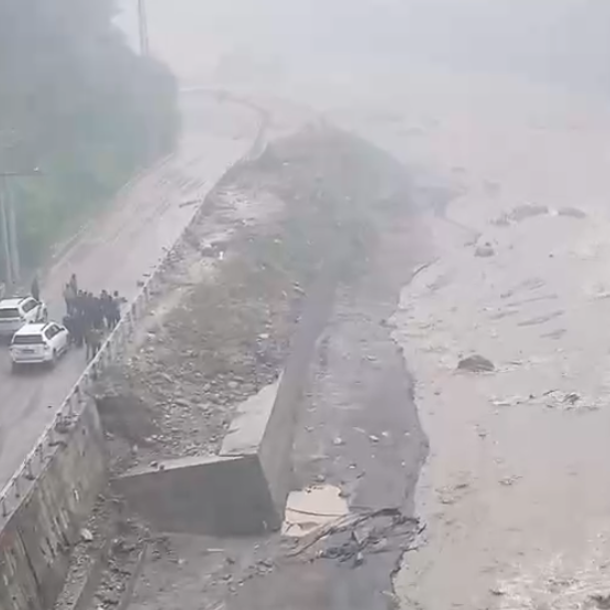
Massive Mudslide Triggers Deadly Flash Floods Along China-Nepal Border; Hundreds Missing
A catastrophic mudslide along the rugged Himalayan border between China’s Xizang Autonomous Region and Nepal has unleashed devastating flash floods, claiming hundreds of lives and leaving a vast number of people unaccounted for as rescue teams scramble to navigate the treacherous terrain.
The disaster, which struck a remote and mountainous region popular with both international trekkers and pilgrims, has prompted an urgent, large-scale search and rescue operation on both sides of the border.
Crisis in Xizang
In China’s Xizang Autonomous Region, authorities have confirmed at least three fatalities, with 558 people currently reported missing. In response to the unfolding emergency, regional officials have activated their highest-level disaster response protocol.
The Xizang emergency management authority has deployed a massive task force to the site, including 792 personnel and 152 specialized vehicles. Supporting the effort, the regional fire and rescue department has mobilized an additional 431 personnel and 72 vehicles. These teams are equipped with advanced search tools, including life scanners, speedboats, and trained search-and-rescue dogs. Furthermore, military troops and armed police have been dispatched to assist in what has become an all-out search for survivors buried beneath the debris.
Devastation in Nepal
The impact of the mudslide has been equally severe across the border in Nepal. Local officials have confirmed 162 deaths, though they expect this number to climb as rescue operations reach more isolated areas.
The disaster has dealt a heavy blow to Nepal’s tourism sector. According to the country’s Tourism Ministry, more than 400 tourists are reported missing, with approximately 340 of those identified as foreign nationals. The region is a high-traffic zone for hikers and religious travelers, complicating identification and rescue efforts.
Challenging Rescue Operations
Rescue operations are being hampered by the region’s extreme geography and the aftermath of the flooding, which has obstructed transport routes and communication lines. As the situation develops, international observers are closely watching the coordination between Chinese and Nepali authorities to manage the cross-border humanitarian crisis.
With hundreds still missing, the primary focus for both nations remains the location and recovery of survivors. Governments are urging families to remain patient as emergency crews work around the clock in challenging, high-altitude conditions.