








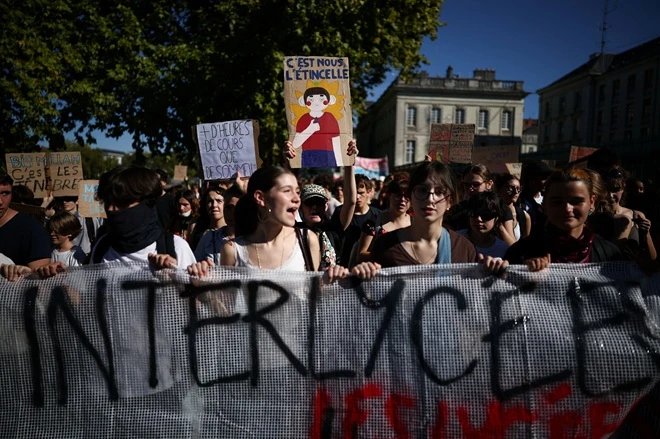
PARIS — A wave of youth-led unrest is rippling across Europe, as protests initially sparked by high school students in France have cascaded into a nationwide movement fueled by the rising cost of living and deep-seated economic anxiety.
What began as a localized cry for better educational resources—citing teacher shortages, crumbling infrastructure, and overcrowded classrooms—has rapidly transformed into a broader societal confrontation. As of October 17, French government officials estimated that 550,000 demonstrators had taken to the streets. While the movement was born from the grievances of students, it has since been joined by citizens across the nation struggling to keep pace with soaring consumer prices.
The unrest, however, has taken a volatile turn. Pockets of violence, including looting and arson, have terrorized local business owners and threatened the safety of residents. While authorities are grappling with the need to restore order—with some cities imposing night curfews—the scale of the movement has laid bare a profound disconnect between the French political establishment and the younger generation.
For those under 18 who lack the franchise, the streets have become the only available forum to voice their frustration. With youth unemployment hovering around 20 percent and the dream of financial independence thwarted by prohibitive rental costs, students argue that their education no longer provides a guaranteed pathway to stability.
President Emmanuel Macron has condemned the rioting, acknowledging the legitimacy of peaceful assembly and calling for dialogue with youth representatives. However, critics argue that the administration’s response remains insufficient. Macron’s tendency toward top-down policymaking—notably seen in the bypassing of a parliamentary vote for 2023’s controversial pension reforms—has exacerbated public distrust. By prioritizing fiscal austerity while offering few concrete solutions for the daily struggles of the working class, the government risks further alienation.
The contagion of anger has since spread beyond France, with similar protests breaking out in Belgium, Italy, and Albania. While the specific catalysts vary by nation, the common threads of economic stagnation, inflation, and a lack of faith in traditional politics remain consistent. As the European political landscape shifts, support for radical left and right-wing elements has surged, fueled by this deepening social divide.
The crisis serves as a stark warning to leaders across the globe. As nations attempt to balance the necessity of fiscal discipline with the urgent need to invest in future generations, the burden of governance is being tested. As the French government looks toward the upcoming presidential election, it faces a critical choice: continue the cycle of political finger-pointing, or engage in a transparent, serious dialogue about how to equitably distribute the burdens of a changing economy. Without a bridge to span this divide, the streets of Europe are likely to remain the front lines of a generational struggle.
Disclaimer: This content is auto-generated for informational purposes only.
Source: Read Original News