





The Challenge of Noble Metal Accumulation in Molten Salt Reactors
Molten Salt Reactors (MSRs) represent a significant departure from conventional solid-fuel nuclear power plants. In an MSR, the nuclear fuel is dissolved directly into a liquid salt coolant, creating a fluid mixture that circulates through the reactor core and heat exchangers. This design offers inherent safety advantages, including passive cooling capabilities and the ability to add fuel while the reactor is in operation. However, the chemistry of a liquid-fueled reactor presents unique material challenges, specifically regarding the build-up of metallic fission products.
As fission occurs within the molten salt, it generates a variety of byproducts. Among these are noble metals, such as palladium and tellurium, as well as semi-noble metals like silver. Unlike fission products that remain dissolved in the salt, these elements possess a chemical preference for their metallic, solid state. In the high-temperature environment of an MSR, these metals can precipitate out of the salt solution and adhere to the internal surfaces of the reactor loop, including piping, heat exchangers, and instrumentation ports. This accumulation, often referred to as “plating out,” creates maintenance hurdles, decreases thermal efficiency, and potentially interferes with the structural integrity of the internal components.
Leveraging Noble Gas Bubbles for Mitigation
A team of researchers led by Huihua Yang, representing a collaboration between Argonne National Laboratory and the Rensselaer Polytechnic Institute, has developed a refined approach to manage these contaminants. Their research focuses on utilizing noble gas bubbles—specifically helium—to intercept and transport these metal particles before they can attach to the reactor internals.
The core principle involves injecting controlled quantities of helium into the circulating molten salt. Because these metals have a physical affinity for gas-liquid interfaces, they tend to migrate toward the surface of helium bubbles rather than the solid surfaces of the reactor hardware. By maintaining a dispersion of tiny helium bubbles throughout the salt coolant, the reactor system can effectively capture metallic particles in suspension. Once attached to the gas bubbles, these contaminants can be directed through the reactor’s gas-handling system, which is already designed to remove noble gas fission products like xenon and krypton. This creates a dual-purpose purification loop that simplifies the removal of both radioactive gases and unwanted metallic solids.
Building on Half a Century of Nuclear Research
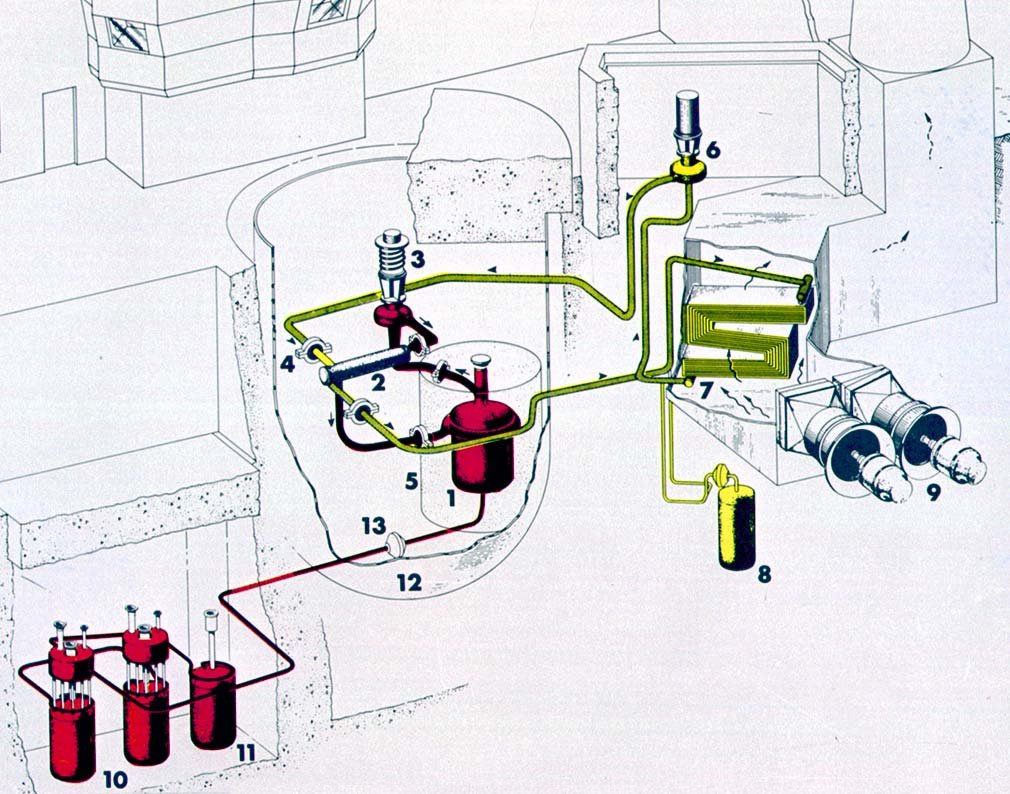
The concept of using gas sparging to manage contaminants in liquid salt is not entirely new; it draws heavily on data gathered during the US Molten Salt Reactor Experiment (MSRE) conducted decades ago. Historical observations from the MSRE indicated that gas injection played a critical role in the behavior of noble metal particulates within the coolant loop. However, modern computational capabilities have allowed contemporary researchers to better understand the fluid dynamics and surface interactions occurring at the microscopic scale.
The recent study by Yang and his colleagues provides essential simulation-based validation that was previously missing. By modeling the interactions between the helium bubbles and the noble metal particulates, the team demonstrated that specific bubble sizes and concentrations could significantly inhibit the deposition of contaminants. This provides a more predictable and scalable framework for future reactor operators, moving from empirical observation to precise engineering control. The simulations confirm that with an optimized concentration of helium bubbles, the build-up of metallic solids can be maintained at levels that are manageable for long-term reactor operation.
Operational Impact on Next-Generation Reactors
The implications for this technology are particularly significant for advanced nuclear designs, such as China’s Thorium Molten Salt Reactor (TMSR-LF1). These designs are currently being evaluated for high-end industrial applications, including the potential to power massive cargo ships. In a marine environment, the ability to minimize maintenance and reduce downtime is critical, as refueling or deep-cleaning a reactor core while at sea is physically impossible and economically prohibitive.
By reducing the rate at which metal precipitates clog the system, operators can extend the intervals between major maintenance overhauls. This increases the capacity factor of the reactor, ensuring it remains online for longer durations without requiring human intervention or expensive chemical processing of the salt. The integration of this helium-sparging technique aligns perfectly with the goal of “low-maintenance” nuclear architecture, moving MSR technology closer to the reliability required for commercial shipping and remote power grids.
Future Directions and Commercial Scalability
As the industry moves toward pilot plants and commercial deployment, the focus will shift from simulation to hardware implementation. Engineering the hardware to inject and recover helium bubbles consistently without creating unnecessary turbulence or pressure drops in the salt loop will be the next step. Furthermore, researchers are looking at the specific chemical behavior of these metals across different salt compositions to ensure that the bubble-capture mechanism remains effective regardless of the specific fuel-salt chemistry employed.
The validation provided by this research serves as a foundation for standardizing maintenance protocols. By automating the extraction of these noble metals, the industry can further improve the sustainability of the fuel cycle. Rather than allowing metallic sludge to interfere with the reactor’s longevity, this approach turns a waste-management problem into a manageable part of the system’s circulating loop. As MSR technology continues to evolve, these findings offer a clear path toward more efficient, robust, and reliable nuclear energy generation, potentially positioning molten salt reactors as a viable, long-term alternative for heavy-duty power applications.
Disclaimer: This content is auto-generated for informational purposes only.
Source: Read Original News