







Infrastructure Evolution: The Mumbai-Ahmedabad High-Speed Rail Corridor
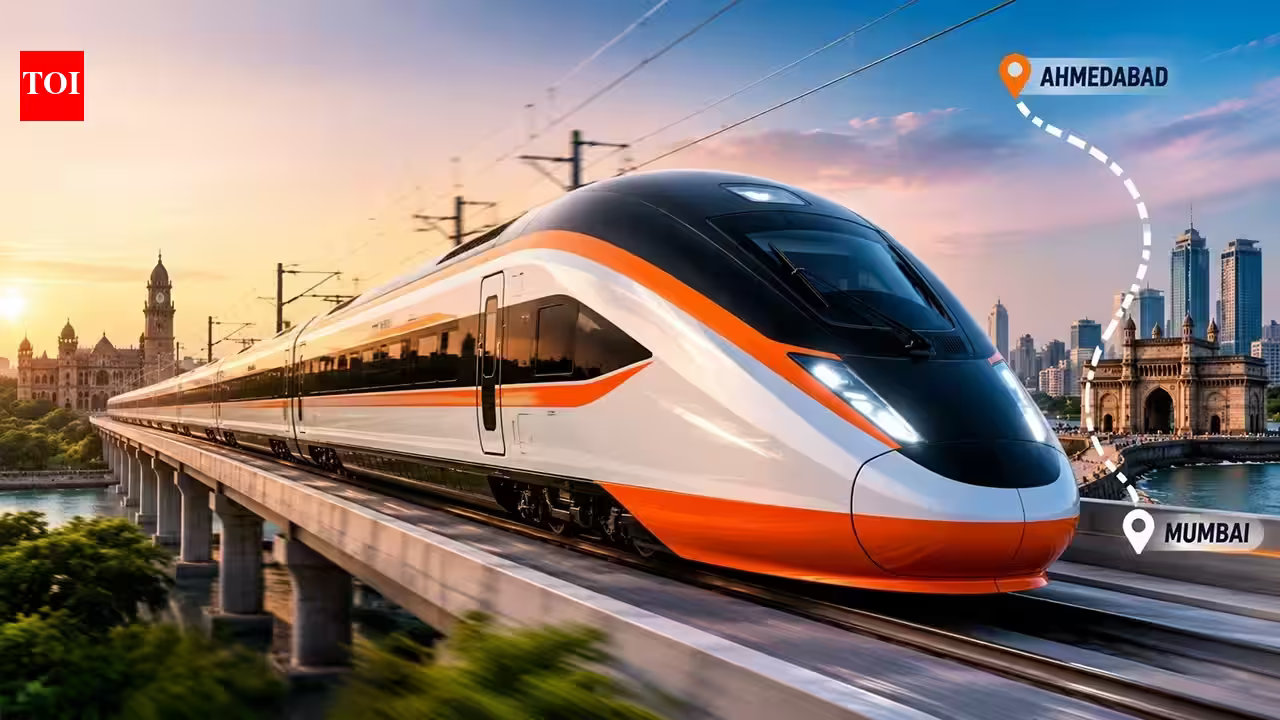
The landscape of Indian transportation is undergoing a structural transformation as the Mumbai-Ahmedabad High-Speed Rail (MAHSR) project, popularly known as the bullet train corridor, achieves critical technical benchmarks. The recent energisation of the 50-km Surat-Bilimora section marks a pivotal transition from civil engineering construction to electrical systems integration. This milestone, involving the activation of a 2 x 25 kV overhead traction system, signifies that the project has moved into a sophisticated testing phase that will eventually dictate the operational standards for high-speed rail in India.
The MAHSR project is not merely an upgrade to existing railway infrastructure; it represents the introduction of a completely new technological paradigm. By adopting global standards for high-speed rail electrification, India is positioning its logistics and transport sectors for a future defined by efficiency and rapid connectivity. The 508-km corridor is being built on an elevated viaduct for the majority of its route, an architectural necessity to ensure safety and bypass the land-use complexities characteristic of densely populated Indian corridors. As the project nears the Surat-Vapi operational timeline, stakeholders are closely monitoring how this high-velocity transit will influence the economic output of the Mumbai-Gujarat industrial belt.
Technical Advancements in Electrification
The decision to implement a 2 x 25 kV overhead traction system reflects a commitment to modern, internationally proven rail technology. Unlike conventional rail electrification, this system is engineered specifically for high-speed operations, ensuring reliable power delivery at high velocity. The integration of 14 traction substations positioned strategically along the 508-km route ensures that the load is balanced efficiently across the national grid. These substations serve as the nervous system of the project, receiving high-voltage power and transforming it into the specific current required for high-speed train sets.
Centralised monitoring is a hallmark of this infrastructure. A dedicated control centre will oversee the entire power grid, providing real-time telemetry and management capabilities. This level of automation is essential for a system designed to operate trains at speeds exceeding 300 km/h, where minimal fluctuations in power can impact safety and service consistency. For the Indian engineering sector, the deployment of this technology serves as a capacity-building exercise, training domestic workforce in the maintenance and operational intricacies of advanced, high-voltage traction systems. The progressive energisation strategy adopted by the railway ministry is a prudent approach to risk management, allowing technical teams to identify and resolve systemic issues on smaller segments before committing the entire grid to live operations.
Economic Implications for the Industrial Corridor
The Mumbai-Ahmedabad corridor is the backbone of India’s industrial and manufacturing sector. By significantly reducing transit time between major financial and industrial hubs, the bullet train is expected to create a “mega-region” effect. This phenomenon allows businesses to integrate their operations across state lines with unprecedented ease, effectively expanding the labor market and encouraging capital investment in areas that were previously considered “remote” for daily commuters.
The adjustment of the operational deadline for the 100-km Surat-Vapi stretch to the final quarter of 2027 acknowledges the complexities of large-scale project management. In the context of the Indian economy, where infrastructure delivery often faces delays due to regulatory and land acquisition hurdles, the focus on completing specific viable segments is a strategic pivot. By prioritizing the Surat-Vapi corridor, the government aims to demonstrate the feasibility of the system to the public and potential future partners. This early-launch model provides an opportunity to stress-test the rolling stock and station management protocols in a controlled environment, reducing the operational risk for the eventual full-route launch.
Public Safety and Long-term Operational Compliance
As the project shifts toward live electrification, public safety has emerged as a primary focus for the railway ministry. The introduction of high-voltage lines through populated regions necessitates rigorous public awareness campaigns. The nature of overhead traction equipment—which is inherently dangerous to those unauthorized to be near it—requires the implementation of strict physical barriers and monitoring protocols.
Furthermore, the integration of noise mitigation technology, such as the installation of approximately 94,000 noise barriers along the viaduct, demonstrates a responsible approach to urban planning. High-speed rail travel generates significant aerodynamic noise and structural vibrations; addressing these factors during the construction phase is essential for ensuring that the corridor receives local community support. For businesses involved in the supply chain and construction of these safety components, the MAHSR project represents a sustained market for specialized engineering solutions. The emphasis on compliance and safety standards, as outlined by the ministry, will likely set the baseline for future high-speed rail projects proposed across other regions of India.
Future Outlook and Scaling High-Speed Rail
The MAHSR project serves as a pilot for the future of Indian railways. While the current focus remains on the Mumbai-Ahmedabad link, the lessons learned from the electrification, viaduct construction, and project management will dictate the speed and cost-effectiveness of subsequent corridors. The reliance on the national grid also highlights the importance of energy infrastructure planning, as future high-speed routes will necessitate similar power guarantees.
For investors and industry participants, the bullet train project is a clear indicator that the Indian government is prioritizing high-velocity connectivity as a tool for economic expansion. The phased energisation process is a prudent move, mitigating technical risks and ensuring that when the project becomes fully operational, the system is robust and reliable. As India continues its push toward global industrial competitiveness, the success of the bullet train will act as a litmus test for the country’s ability to execute massive, technologically advanced infrastructure projects on schedule. The current progress in the Surat-Bilimora section is a testament to the technical progress being made, signaling that the vision of a high-speed India is transitioning from a policy document to a tangible, electrified reality.
Disclaimer: This content is auto-generated for informational purposes only.
Source: Read Original News