







Prime Minister Burnham Falls Victim to Impersonation Scam, Raising National Security Concerns
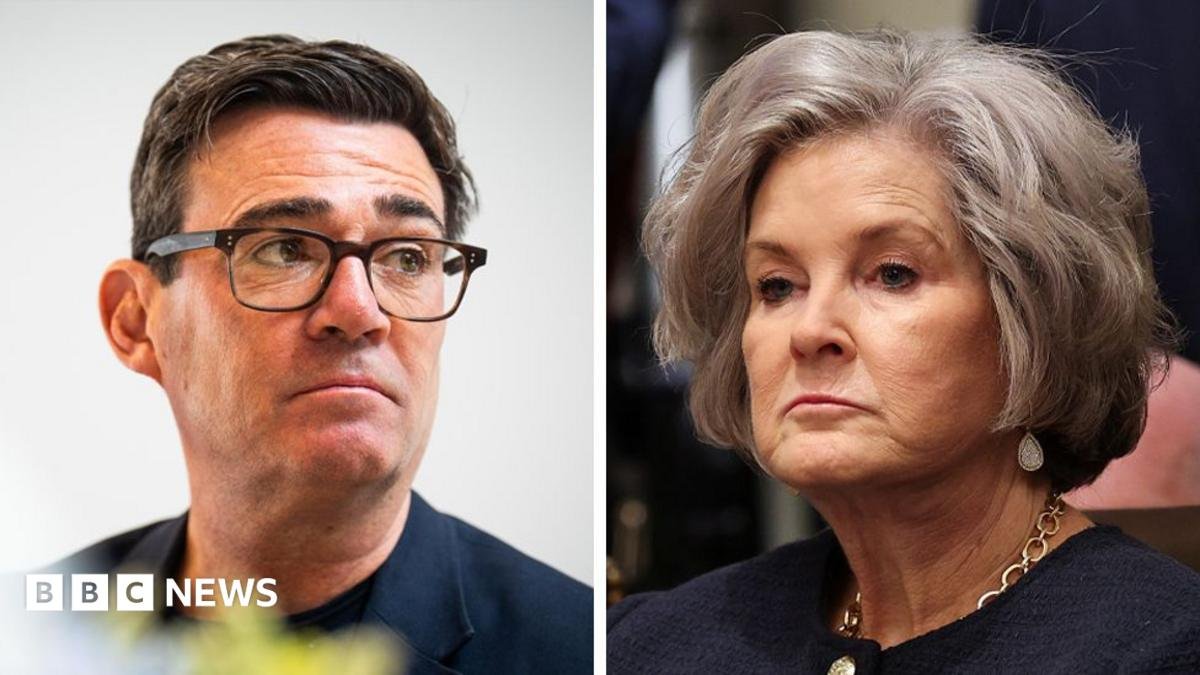
London, UK – Prime Minister Andy Burnham found himself at the center of a potential national security breach after exchanging messages with an individual impersonating Susie Wiles, the chief of staff to US President Donald Trump. The incident, first brought to light by Politico, has prompted Downing Street to remain tight-lipped on the details, citing national security protocols.
Sources close to the investigation indicate that Prime Minister Burnham communicated with the imposter claiming to be Wiles for a brief period before his suspicions were aroused. "Only a few messages" were exchanged, according to officials, before the illegitimacy of the contact became apparent. These communications are understood to have been in the form of text messages, with no direct conversation taking place. Crucially, insiders stress that "no messages of significance" were exchanged, and the communications were "quickly reported to the appropriate authorities" once their suspicious nature was recognized.
Downing Street has refused to disclose the timeline of these exchanges, the exact number of messages involved, or the platform used, whether it be WhatsApp or another messaging service. A government spokesperson reiterated the official stance: "We do not comment on national security matters."
The incident gains further intrigue given a previous security concern involving the real Susie Wiles. A White House official informed the BBC that this latest impersonation attempt "had nothing to do" with Wiles’ phone being hacked last year. However, the BBC previously reported an FBI probe into the hacking of Wiles’ personal phone in May of the preceding year. At that time, impersonators exploited her contacts list to send messages to various high-ranking US officials, including senators, governors, and top business executives. It’s important to note that this past breach targeted her personal device, not a government-issued one.
Adding another layer to Wiles’ security challenges, she was also identified as a target of a cyber espionage unit linked to Iran’s Revolutionary Guards, a powerful arm of Iran’s armed forces, earlier in 2024.
This security scare for Prime Minister Burnham coincides with a separate but related effort by the UK government to enhance digital security for its senior officials. Currently, the personal mobile numbers of three Cabinet Ministers – Defence Secretary Wes Streeting, Justice Secretary Alex Norris, and Northern Ireland Secretary Chris Bryant – are being removed from various websites where they had been publicly available. A government spokesperson assured the public that "robust procedures are in place to ensure the security of sensitive information."
The incident involving Prime Minister Burnham underscores the growing sophistication of impersonation tactics and cyber threats targeting high-profile political figures globally. The swift detection and reporting of the suspicious contact are critical, but the fact that such an attempt reached the highest office raises questions about existing vetting processes and the continuous need for enhanced digital security protocols in government communications. The full extent of any potential damage or intelligence gathering from these exchanges, however, remains shrouded in the secrecy of national security.
For more information on the Prime Minister Burnham incident, please refer to the BBC’s coverage.