








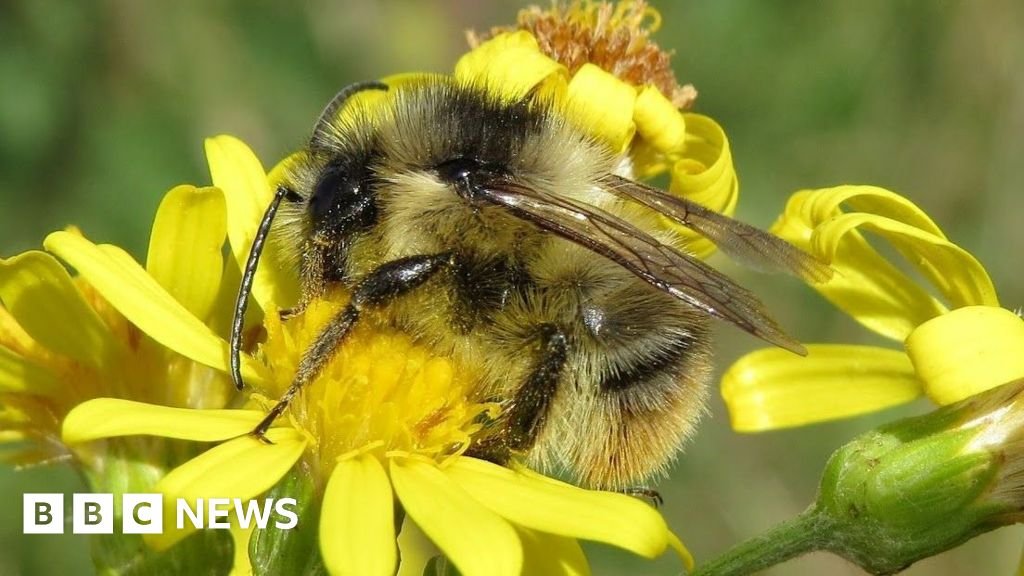
The derelict remains of a former oil refinery on Canvey Island have undergone a remarkable ecological transformation, emerging as a critical sanctuary for one of the United Kingdom’s most imperiled pollinators. Canvey Wick, a 34-hectare brownfield site in Essex, has become the focal point of an intensive conservation initiative aimed at stabilizing the population of the shrill carder bee (Bombus sylvarum).
Once slated for industrial development, the site was granted Site of Special Scientific Interest (SSSI) status in 2003 after surveys revealed an extraordinary density of rare invertebrates. Today, the reserve is being managed under the auspices of the national Species Recovery Programme, a government-backed effort designed to reverse the decline of threatened wildlife.
The shrill carder bee, recognizable by its distinct high-pitched buzz and a unique band of orange-gold hair across its abdomen, has suffered precipitous declines across the UK over the last century. Habitat loss, fragmented landscapes, and the reduction of flower-rich grasslands have pushed the species to the brink, leaving only a few isolated populations in coastal regions of South Wales and Southern England.
Marc Outten, the nature reserve’s manager, emphasized the significance of the project’s success to the long-term viability of the species. “Being involved in the Species Recovery Programme funded at Canvey Wick is incredibly rewarding, giving us a real opportunity to secure the future of one of the UK’s rarest bumblebees, the shrill carder bee,” Outten said.
The success of the Canvey Wick project challenges traditional notions of conservation, which typically prioritize pristine woodland or ancient meadows. In this case, the industrial heritage of the land has created a unique “mosaic” habitat. The concrete foundations, gravel pits, and scrubland left behind by the refinery provide diverse micro-habitats that support a high volume of nectar-rich forage plants, such as red bartsia, bird’s-foot trefoil, and various thistles. These plants are essential for the shrill carder bee, which requires a continuous supply of pollen and nectar throughout its active season, from late spring into autumn.
Managing the site requires a delicate balance. Without intervention, the scrubland would naturally succeed into dense thicket or woodland, which would effectively eliminate the open, sunny patches the bees require for nesting and foraging. Conservation teams are currently employing a strategy of rotational cutting and controlled vegetation management to ensure that the site maintains its open, sun-drenched character.
The Species Recovery Programme funding has allowed for targeted monitoring and habitat enhancement, which includes planting additional native wildflowers and managing water drainage to create damp nesting sites. These interventions are critical for the shrill carder bee, as they are particularly sensitive to fluctuations in moisture and temperature.
The work at Canvey Wick serves as a broader proof-of-concept for how industrial “wasteland” can be repurposed to address the biodiversity crisis. As the UK government works toward its targets for nature recovery, the model of identifying and protecting brownfield biodiversity sites is gaining traction among ecologists. By safeguarding the complex patchwork of habitats at Canvey Wick, managers are not only supporting the shrill carder bee but also creating a refuge for other rare species, including the five-banded tailed digger wasp and various ground-nesting solitary bees.
As the program progresses, the data collected from Canvey Wick will be used to refine conservation strategies for other shrill carder bee habitats across the country. While the species remains vulnerable, the targeted efforts at this Essex site represent a vital step toward ensuring that the distinctive hum of the shrill carder remains a part of the British landscape for generations to come.
Disclaimer: This content is auto-generated for informational purposes only.
Source: Read Original News