









Canada Vows Retaliatory Tariffs as Trade Deal with US Collapses
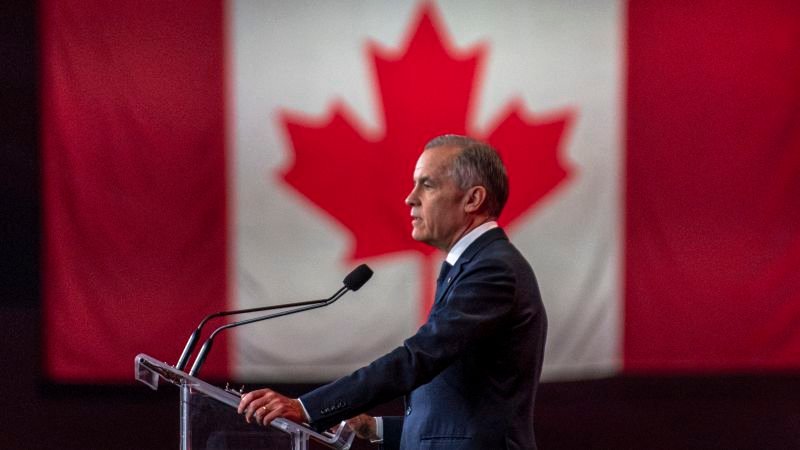
OTTAWA – The fragile state of North American trade relations took a sharp turn for the worse on Saturday, as Canadian Prime Minister Mark Carney announced a series of “dollar-for-dollar” retaliatory tariffs against the United States. The move comes after high-stakes negotiations between Washington and Ottawa failed to produce a final trade agreement, effectively reigniting a cross-border trade war.
The tit-for-tat measures, scheduled to take effect on September 8, will target a diverse range of US imports, including steel, dairy products, agricultural equipment, appliances, paper, pulp, and various electronics.
A Breakdown in Diplomacy
The collapse of the talks follows a week of intense, direct communication between President Trump, Prime Minister Carney, and senior trade officials. Although Trump had signaled early in the week that a deal was within reach, the agreement fell apart during the finalization stage.
“In recent days, the United States proposed new terms that were uneconomic, unfair, and undermined the net benefits for Canada, and called into question the reliability of any deal,” Prime Minister Carney stated during a press conference in Ottawa on Saturday. “In short, they asked too much, and they offered too little.”
US Trade Representative Jamieson Greer offered a contrasting account, claiming that Canada had “declined to finalize the trade deal” despite receiving an offer of the “best treatment of any major exporter” to the US market. Writing on X, Greer noted that the proposal included significant tariff reductions on autos, steel, and lumber. “New demands and walk backs of other commitments by Canada have upended the careful balance reached in the past days,” he added.
The Scope of the Conflict
The current standoff stems from a 50% tariff imposed by the US on approximately $20 billion in Canadian goods. While this figure represents only about 5% of the total value of annual imports from Canada, the escalation carries significant economic weight.
The dispute highlights long-standing friction over specific industries. Trump has frequently criticized Canadian supply management policies regarding dairy—which limit American access via quotas—and expressed frustration over provincial bans on US alcohol. Conversely, Canada has maintained a firm stance on its own sovereignty, with Carney explicitly stating that Canada would never grant the US "exclusive access" to its critical minerals.
A Controversial Legal Path
The US administration is leveraging an obscure 1930s-era law—Section 338 of the Smoot-Hawley Tariff Act—to justify the levies. The law, which has not been utilized in this manner before, allows the president to impose tariffs on foreign nations that are deemed to be discriminating against American commerce.
Unlike other trade statutes, this law does not appear to carry a time limit, meaning the new tariffs could remain in place indefinitely. Experts anticipate that the move will likely face swift legal challenges.
Economic Impact and Next Steps
While the immediate impact on American consumers is expected to be minimal, the return of a broader trade conflict creates uncertainty for businesses on both sides of the border. Carney emphasized that Ottawa would provide support for affected workers and businesses, building on nearly $25 billion in aid provided over the last 18 months.
"The new US tariffs are designed to hurt and divide us," Carney said. "They’re a miscalculation. They’re a miscalculation because Canadians will always take care of each other."
As of Saturday, the US government indicated that no further negotiations are planned. For now, both nations appear braced for a prolonged US-Canada trade conflict, leaving the future of their long-standing economic partnership in deep uncertainty.