









The Emergence of a Dedicated Home Intelligence Hub
Apple is set to redefine the residential computing experience with its latest hardware release. Scheduled for the “Welcome home” product launch on Tuesday, October 13, 2026, the company is preparing to unveil an entirely new category of device: a dedicated smart home command center. This hardware is engineered to move beyond the limitations of existing tablets or smartphone-based smart home control, offering a stationary, always-on interface designed specifically for shared household environments.
By consolidating control over security, media, and scheduling into a single, wall-mounted or tabletop unit, Apple seeks to streamline the domestic digital experience. Industry observers anticipate the device will fill a gap in the current ecosystem, functioning as a nexus for the Home app while leveraging localized AI to provide a more responsive interface than current mobile offerings.
Hardware Specifications and Design Philosophy
The device is built around a 6-inch square display, a form factor optimized for at-a-glance information rather than deep consumption. Reports indicate the unit will feature an A18 processor or newer, providing the necessary compute power for high-end on-device processing. This silicon is crucial, as it will handle the heavy requirements of Apple Intelligence, allowing the device to perform complex tasks without relying on cloud-based latency.
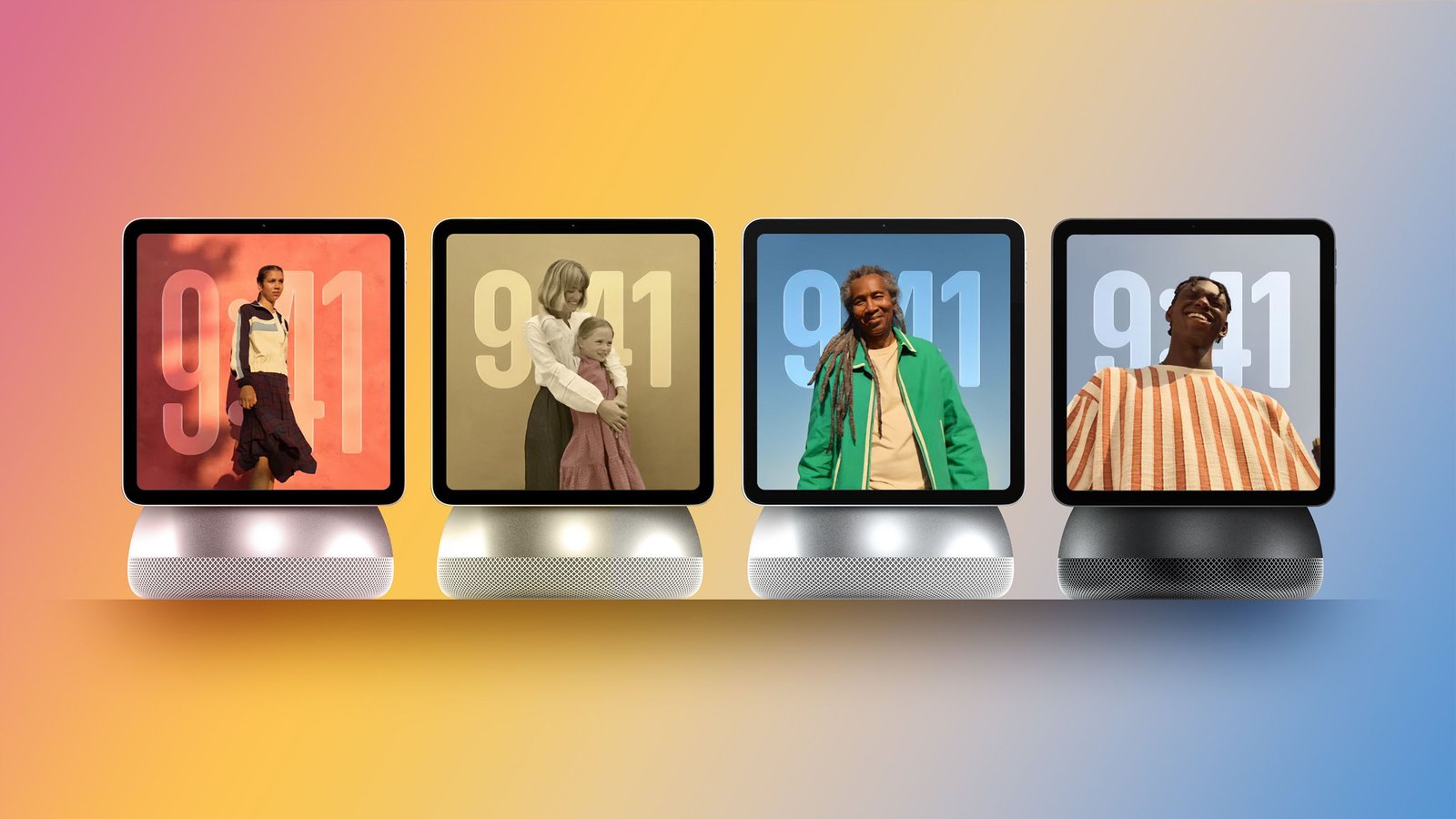
Designers have crafted two distinct physical configurations: a wall-mounted unit and a tabletop model. The latter features a dome-shaped speaker base, suggesting a focus on audio quality that rivals current standalone smart speakers. A key feature of the hardware is its proximity-sensing capability. As a user approaches or moves away from the hub, the interface scales its elements accordingly. This responsive design ensures that critical information remains legible from across the room, while interactive controls appear in higher fidelity when the user is within range.
Introducing homeOS and AI Integration
A cornerstone of this launch is the introduction of a new operating system, reportedly branded as homeOS. Unlike standard versions of iOS or iPadOS, this platform is stripped back to focus on the utility of a home controller. The user interface emphasizes clock faces, widgets, and persistent status monitoring, mirroring the functional priorities of a command dashboard.
The device serves as the primary host for the updated Siri AI. By embedding a dedicated Siri app, the hub supports advanced conversation history, allowing users to ask follow-up questions or manage multi-step workflows across different smart devices. Because the A18 chip handles these queries locally, users can expect instantaneous performance for core functions such as locking doors, adjusting lighting, or managing security cameras, even if the primary internet connection is momentarily unstable.
Functionality and Native Application Suite
At launch, the device will prioritize utility through a curated suite of native Apple applications. Users will have access to Calendar, Camera, Apple Music, Apple Podcasts, Apple News, Reminders, and Notes. This selection reinforces the device’s role as a family-centered productivity tool. For instance, the inclusion of the Camera app provides a centralized view for home security, while Calendar and Reminders ensure that household schedules are visible to all occupants.
One notable constraint at launch is the absence of a third-party App Store. By restricting the platform to first-party software, Apple is ensuring a uniform experience that prioritizes stability, privacy, and speed. This design choice prevents the clutter often associated with generic tablets and maintains the focus on the hub’s primary purpose: as a reliable tool for home management rather than a device for entertainment consumption or gaming.
Use-Cases and Impact on Smart Home Ecosystems
The primary use-case for this hardware is the seamless orchestration of the connected home. Through the integration of the Apple Home app, the hub acts as the definitive interface for smart locks, thermostats, lighting, and security systems. Its multi-user support is designed to recognize individual family members, allowing for personalized alerts and tailored suggestions based on who is interacting with the device.
Beyond mere control, the device functions as an ambient communication tool. The integration of FaceTime video calling, supported by the hardware’s built-in camera and speaker arrays, allows for high-quality interactions between residents and visitors. During downtime, the unit can transition into a digital photo gallery, serving as a decorative frame that cycles through curated libraries. This duality—switching between a high-utility command dashboard and an ambient, aesthetic display—positions the device as a permanent fixture in kitchens, living rooms, and bedrooms.
Strategic Positioning and Nomenclature
While early rumors have dubbed the hardware the “HomePad,” reflecting its identity as a hybrid between a HomePod and an iPad, official filings suggest a shift toward more distinct branding. Recent trademarks pointing to the term “HomeView” have fueled speculation, though the company may simply align the hardware under the “Apple Home” designation.
The launch of this device represents a strategic shift for Apple. By moving from a mobile-first philosophy to one that includes dedicated fixed-location hardware, the company is attempting to solve the fragmentation inherent in modern smart home management. By focusing on localized AI, specialized software, and a clean interface, Apple is positioning itself to dominate the living space. Reporters and industry analysts will gain their first look at the technology during the hands-on event in New York, where the practical implications of this hardware for the broader consumer market will become clear.
Disclaimer: This content is auto-generated for informational purposes only.
Source: Read Original News