






Historical narratives in the world of chess are undergoing a seismic shift, and as the 46th Chess Olympiad prepares to commence in Samarkand this September, the stark contrast between the sport’s two traditional superpowers has never been more visible. For decades, the biennial Chess Olympiad served as the quintessential stage for the Cold War, a cerebral battlefield where Soviet state-backed machinery clashed with American ambition. Yet, as the world gears up for the September 15–27 event in Uzbekistan, the geopolitical and competitive landscape of the game has been fundamentally rewritten.
The American Ambition: A Quest for History
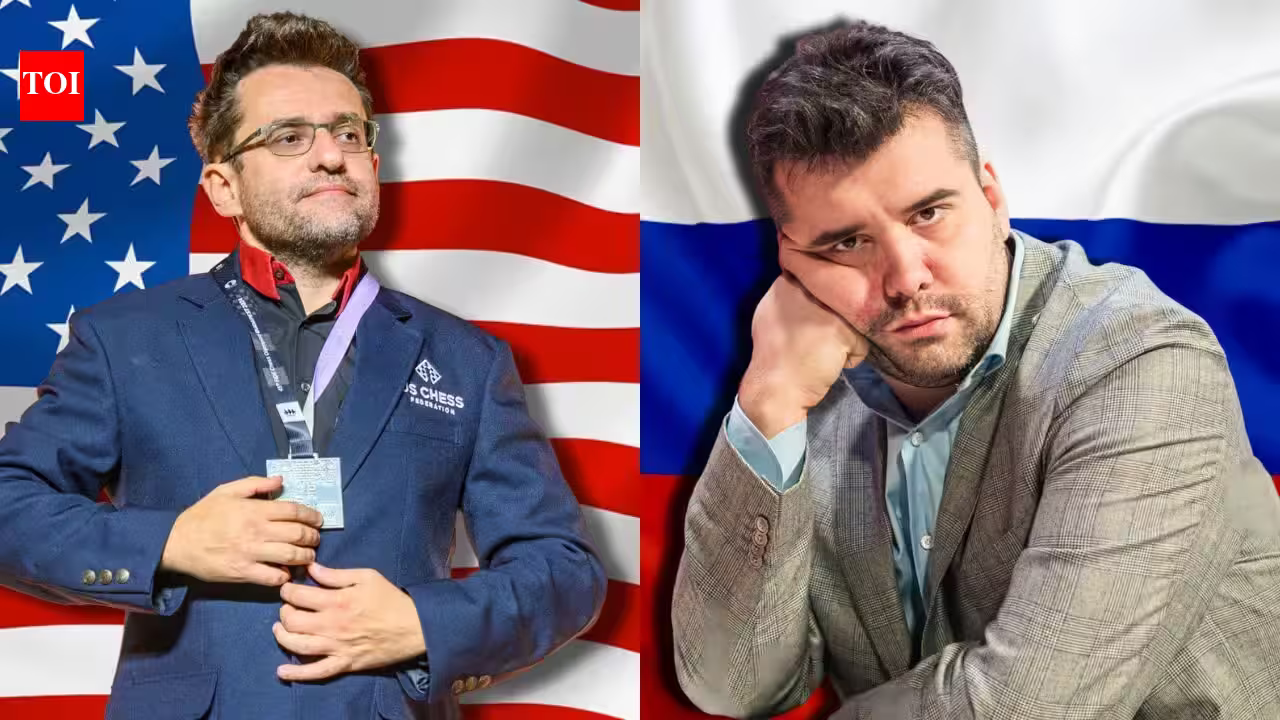
The United States, once the perpetual chaser of Soviet dominance, has emerged as the premier force heading into the Samarkand tournament. With a roster that reads like a “who’s who” of modern grandmaster talent—Fabiano Caruana, Wesley So, Hans Niemann, Awonder Liang, and the legendary Levon Aronian—the U.S. team is laser-focused on securing gold.
For Aronian, the stakes are deeply personal. Having represented Armenia in three gold-medal-winning campaigns before his high-profile switch to the United States in 2021, the veteran is chasing a rare milestone. At 43, Aronian is looking to cement his legacy as one of the few players in history to secure a fourth Olympiad title.
“I was thinking that it would be a good time to win an Olympiad because I don’t know if there are many people who have won four Olympiads,” Aronian shared in an exclusive interaction. “I haven’t checked. I would like to join that club.”
Aronian views the ongoing Global Chess League (GCL), where he competes for the Ganges Grandmasters, as the perfect crucible to sharpen his competitive edge. “There’s always tension in this tournament,” he noted. “It’s good to simulate that situation where everything depends on you.” Regarding the road to glory in Samarkand, Aronian remains wary of the field, specifically pointing to the surging talent of Uzbekistan, the perennial depth of China, and the strategic capabilities of Germany and Armenia.
The Russian Exclusion: A Geopolitical Fallout
In a jarring turn of events, the other half of the traditional chess rivalry remains entirely sidelined. For the third consecutive cycle, Russia will be absent from the Olympiad, marking a tragic departure from a history that saw the Soviet Union and its successor state rack up a combined eighteen gold medals throughout the late 20th century.
The absence is not a matter of qualification or skill, but of intense international friction. Following a formal complaint from the Ukrainian Chess Federation regarding tournaments held in occupied territories, the Court of Arbitration for Sport (CAS) ordered FIDE to suspend the Russian Chess Federation. The resulting fallout has even reached the sport’s administrative pinnacle; FIDE President Arkady Dvorkovich, a former Russian deputy prime minister, stepped back from his duties after being added to the European Union’s sanctions list.
For Ian Nepomniachtchi, the current Russian No. 1 and a two-time World Championship challenger, the exclusion is a bitter pill to swallow. “It’s very unfortunate,” the 36-year-old Grandmaster remarked during the GCL. “What makes it even worse is that we had very high hopes. Russian sport is getting back this year, with a lot of teams in other sports participating in World Championships. We would expect chess to be one of those too.”
Despite his disappointment, Nepomniachtchi expressed a weary hope for resolution, noting the bizarre inconsistency where other nations under similar scrutiny find ways to compete while Russia remains locked out. “Maybe the fact that [Dvorkovich] got onto the sanctions list early this summer brought some changes,” he added. “Hopefully things will get better; for sport, and not just for sport.”
A Tale of Two Realities
The contrast heading into Samarkand is startling. While Aronian and the U.S. squad spend their final days in high-stakes training and franchise league play to ensure their tactical sharpness, the brightest star of Russian chess is relegated to the sidelines, watching a competition unfold without him.
Historically, the Chess Olympiad was defined by a “proxy war” between Washington and Moscow—a struggle for intellectual superiority that both sides were at least permitted to fight. Today, the dynamic has evolved into something far more restrictive. As the pieces are set in Samarkand, the vacancy left by the Russian team acts as a permanent, silent reminder of how modern geopolitical tensions have finally succeeded in doing what the most brilliant grandmasters of the last century never could: keeping the rivals off the board entirely.
As the U.S. team arrives in Uzbekistan, they do so not merely as competitors, but as the favorites in a new era of chess, carrying the mantle of a sport that is struggling to balance its rich, polarized history with a fragmented and increasingly uncertain future.
Disclaimer: This content is auto-generated for informational purposes only.
Source: Read Original News