








U.S. Escalates Financial Pressure on China Over Iran Ties, Setting Stage for High-Stakes Summit
BEIJING — The geopolitical standoff between Washington and Beijing has intensified as the U.S. government moves to tighten the screws on entities suspected of aiding Tehran. In an aggressive pivot toward what officials have dubbed “Operation Economic Outcast,” the U.S. Treasury has issued a stark warning: any financial institution found facilitating Iranian sanctions evasion faces the prospect of being severed from the global U.S. dollar financial system.
This ultimatum places China’s state-backed banking sector in a precarious position. While Beijing has formally denounced the move as a violation of international law, its largest lenders remain deeply integrated into the American financial architecture, which remains the primary vehicle for global trade.
The “Economic D-Day”
U.S. Treasury Secretary Scott Bessent clarified the stakes on Monday, stating that banks involved in the ecosystem that “turns Iranian oil into money” would be targeted. For Beijing, the threat is not merely rhetorical. Before the current regional conflict, China accounted for approximately 90% of Iran’s crude oil exports, representing a critical pillar of Tehran’s economy and a significant portion of China’s energy imports.
Beijing’s response was characteristically defiant but cautious. A Foreign Ministry spokesperson stated on Tuesday that China would take “all necessary measures” to protect its domestic interests, while reiterating its opposition to unilateral sanctions that lack United Nations Security Council authorization.
The CIPS Alternative: A Geopolitical Hedge
As the threat of exclusion from the U.S.-led system looms, experts are closely watching China’s Cross-Border Interbank Payment System (CIPS). Developed by the People’s Bank of China since 2012, CIPS was designed to provide an alternative for yuan-denominated settlements.
“The emerging financial system isn’t necessarily one in which countries abandon the USD,” said Peter Alexander, managing director of the Shanghai-based consultancy Z-Ben. “It is a geopolitical hedging instrument.”
While CIPS transaction volumes have seen a modest uptick since the onset of the Russia-Ukraine war, it remains a secondary player compared to the SWIFT network. Data shows the U.S. dollar continues to dominate, accounting for over 50% of global payments, whereas the yuan currently captures roughly 3.1%.
A Delicate Diplomatic Balance
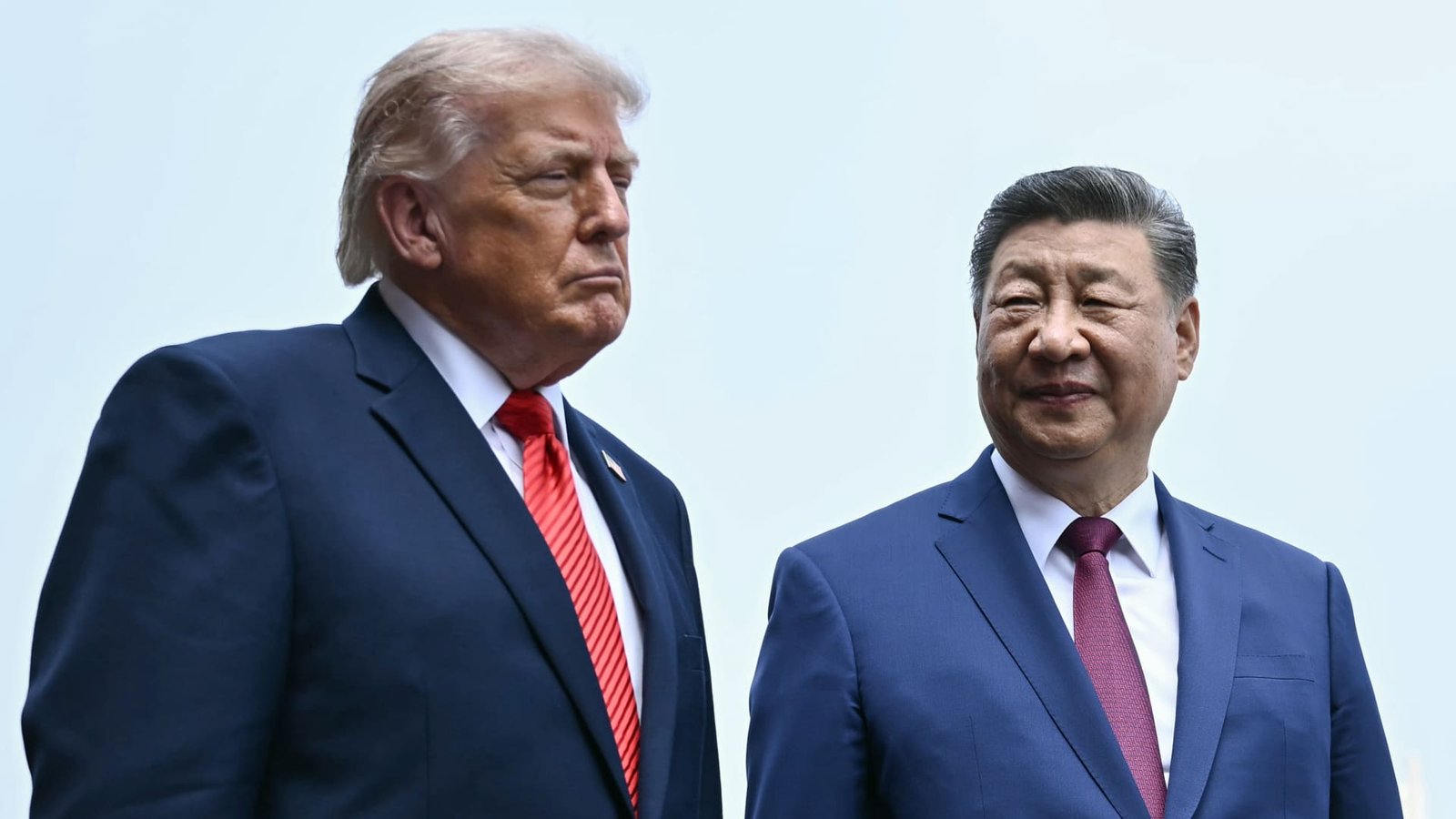
The looming threat of sanctions comes at a delicate moment, with a high-level summit between President Donald Trump and President Xi Jinping scheduled for next month. Analysts suggest that neither power is eager to trigger a full-scale financial decoupling before the leaders meet.
“The core of the China-U.S. relationship is more about the Taiwan situation; the China-Iran tie is not nearly as close as outsiders have imagined,” said Dan Wang, China director at the Eurasia Group. She noted that Beijing has largely pulled back from state-backed infrastructure investment in Iran since 2018.
However, the risk of escalation remains high. Economists warn that if the U.S. chooses to target a major Chinese lender, Beijing could retaliate by leveraging its control over critical minerals—a sector essential to American manufacturing.
Ultimately, observers are waiting to see if these threats translate into concrete action. While the Trump administration has ramped up the rhetoric surrounding sanctions evasion, the mutual reliance of the world’s two largest economies remains a powerful constraint. As Alexander noted, the fundamental question for the coming weeks is not what Washington could do, but rather what it will do as it navigates the thin line between containment and total economic confrontation.