








The Shift Toward Googlebook OS on Existing Hardware
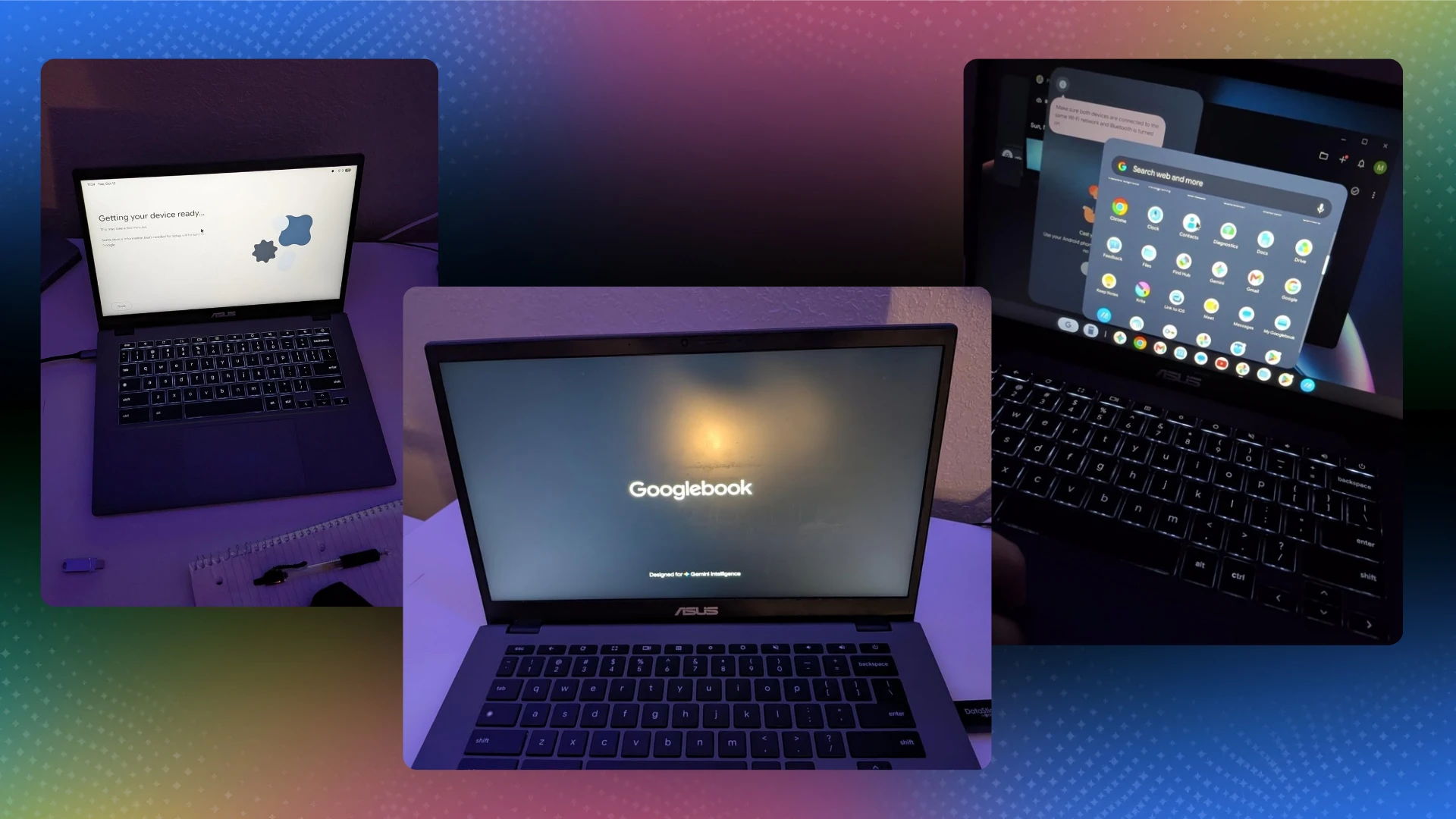
The debut of the Googlebook platform has ushered in a new era for desktop computing, sparking significant curiosity regarding its compatibility with existing hardware. While Google remains tight-lipped about formal transition paths for current Chromebook users, the enthusiast community has taken matters into its own hands. Recent reports from the Reddit community indicate that Googlebook OS, the successor to traditional ChromeOS, has been successfully booted onto existing ASUS Chromebook Plus hardware, defying initial expectations regarding system requirements and overhead.
This development serves as a critical proof-of-concept for the new operating system. By moving toward an Android-based architectural foundation, many analysts feared that Googlebook OS would become too resource-heavy for legacy devices or modest mobile processors. However, early field tests suggest that the platform is exceptionally well-optimized, potentially breathing new life into devices that were previously constrained by older software stacks.
Performance Metrics and System Fluidity
One of the primary concerns for hardware enthusiasts was whether the transition to a more complex, agentic-driven operating system would result in sluggish performance. The test subject—an ASUS Chromebook Plus powered by an Intel Core i5-1235U processor with 16GB of LPDDR5 RAM—provided a high-performance baseline. Surprisingly, the user experience reported by the community is one of heightened fluidity compared to standard ChromeOS.
Initial impressions highlight that the system feels remarkably responsive, with the user noting that the OS appears to handle multitasking and interface animations with minimal latency. Even with a heavier foundation, the optimization work appears to focus on maintaining a lightweight footprint. This suggests that Google has engineered the operating system to prioritize efficient resource allocation, ensuring that the software remains performant across a wider spectrum of hardware configurations, including those with 8GB of RAM.
Leveraging Google Antigravity for Portability
Achieving this level of functionality on unsupported hardware was not a trivial task. The process relied heavily on Google Antigravity, a set of agentic AI tools designed to assist in software deployment and configuration. By utilizing these tools, the developer was able to bridge the gap between the Googlebook OS recovery image and the specific firmware architecture of the ASUS Chromebook Plus.
While the current build is highly experimental, the success highlights the power of modern automated development tools. The process involved dissecting an official recovery image and remapping necessary drivers to interface with the host machine. Although essential hardware components such as audio, Wi-Fi connectivity, and cross-device integration currently face compatibility hurdles, the ability to successfully execute the kernel is a significant milestone. It demonstrates that the software is modular enough to eventually be adapted for a variety of x86-based machines, provided that the driver support can be consolidated.
The Emergence of the gbrunch Repository
Building on the foundation laid by previous community projects, developers are already organizing to create a more stable environment for unofficial installs. The project, currently dubbed “gbrunch,” is being modeled after the long-standing “Brunch” framework that previously allowed users to install full versions of ChromeOS on generic Windows-based hardware.
The goal of this initiative is to create a standardized repository that automatically handles the complex task of injecting necessary drivers and patching the system to ensure stability on unofficial hardware. This represents a significant shift for the modding community, moving from isolated, one-off experiments to a collaborative, open-source approach. As this repository matures, it is likely to offer a more accessible method for power users to test the Googlebook OS environment without requiring advanced knowledge of kernel compilation or manual hardware patching.
Implications for the Future of Desktop Computing
The realization that Googlebook OS can operate effectively on existing Intel-based Chromebooks carries profound implications for the hardware ecosystem. It indicates that the core architecture of the new platform is not exclusively locked to proprietary silicon or specific, next-generation device constraints. This architectural flexibility is a strong indicator that Google intends to support a wide range of devices as the platform scales.
For existing owners of high-performance Chromebooks, this is a promising sign that their hardware may remain relevant for longer than originally anticipated. By demonstrating that the new software can fly on mid-range, 12th-Gen Intel hardware, the enthusiast community has effectively challenged the narrative that a massive hardware upgrade is necessary to experience the latest features of the Googlebook ecosystem. While official support remains the gold standard, the rapid progress made by developers ensures that users will have alternatives to explore the next generation of cloud-integrated computing well ahead of official deployment schedules.
Disclaimer: This content is auto-generated for informational purposes only.
Source: Read Original News