








Beyond the Facade: India’s Education Crisis Sparks Fresh Calls for Reform
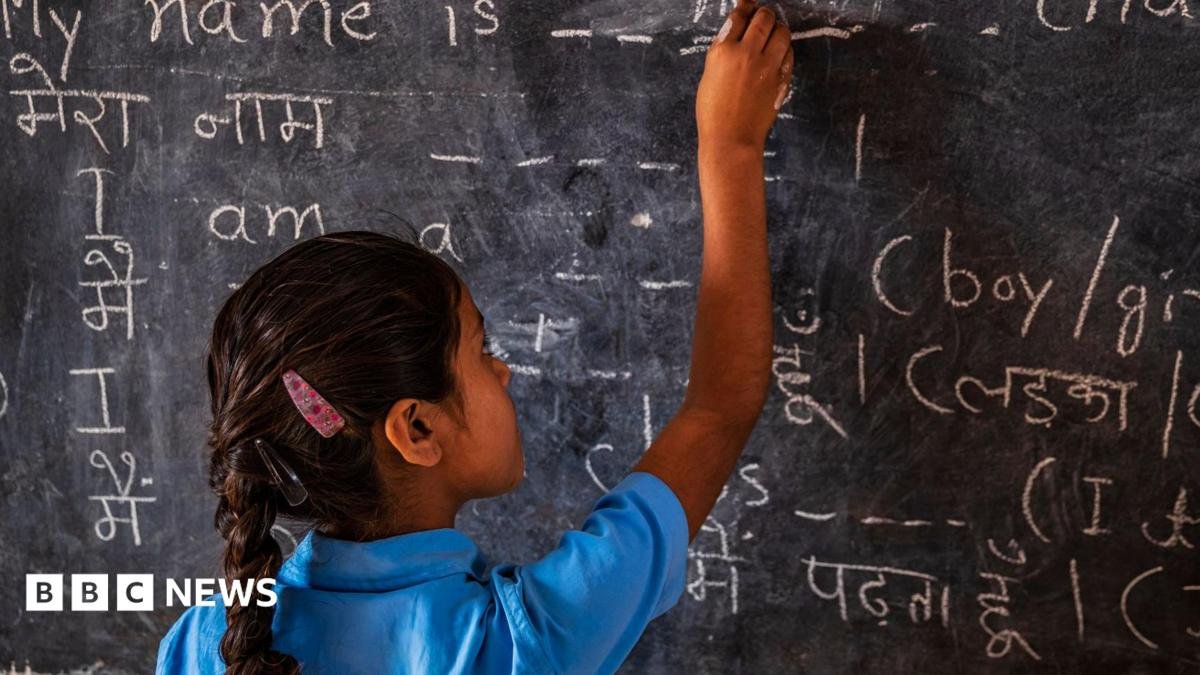
FARIDABAD, INDIA – At first glance, the government-run primary school in Khedi Kalan village appears to be in sound condition. Its exterior, recently treated to a fresh coat of paint, stands as a symbol of institutional stability. However, stepping inside reveals a stark, decaying reality that mirrors the broader, systemic crisis facing India’s public education sector.
Outside the school gates, the road is perpetually marred by stagnant, sludge-filled potholes. Inside, the structural integrity of the facility is failing. Satpal Narwat, a local social worker, points to the peeling plaster of the ceilings—a warning of the neglect that permeates the building.
"It looks new from the outside, but it’s crumbling from inside," Narwat says. The statistics of neglect are staggering: half of the school’s eight toilets are unusable, serving as trash receptacles, and four of the nine classrooms have been shuttered indefinitely because they are deemed too dangerous for children to occupy. During the monsoon season, the remaining functional spaces often flood, leaving students with nowhere to sit.
A Systemic Deficit
The situation in Khedi Kalan is far from an isolated incident; it is a microcosm of a national crisis. Across India, rural schools are frequently starved of funding and left to deteriorate.
While the Indian government’s National Education Policy (NEP) recommends an expenditure of 6% of GDP on education, current spending languishes at just 4.1%. This figure barely meets the minimum threshold set by UNESCO, falling significantly behind international peers. Nations such as France, Germany, Australia, and Brazil allocate over 5% of their GDP to education, while countries like Sweden and Belgium invest even more.
This chronic underfunding has contributed to a mass migration away from public institutions. According to official data, 94,000 government schools have closed between 2014-15 and 2024-25. While a government think-tank, Niti Aayog, attributes some of these closures to systemic streamlining, it simultaneously concedes that declining enrollment is largely driven by a growing preference for private schooling among families who have lost faith in the state system.
The Rise of the #SchoolThikKaro Movement
Frustration over these systemic failings has reached a boiling point, fueling the momentum of the "Cockroach Janta Party" (CJP). The online satirical movement, which recently gained global attention for protests that contributed to the resignation of Education Minister Dharmendra Pradhan, has launched a new campaign: #SchoolThikKaro (Fix The School).
The CJP’s activism follows a year of intense turbulence in Indian education, marked most notably by the cancellation of the NEET—India’s largest medical entrance exam—after a massive question paper leak. The scandal, which forced nearly two million students to retake the test, was linked to more than 20 student suicides, igniting public outrage over the integrity and accessibility of the country’s academic system.
For Abhijeet Dipke, the founder of CJP, the #SchoolThikKaro campaign is about more than just building repairs; it is about social mobility and equality.
"Government schools, especially in rural India, have been neglected for many decades," Dipke told the BBC. "Children who grow up in villages don’t have equal opportunities, and they often end up working on farms or as daily wage laborers."
Dipke argues that the current state of infrastructure denies rural children the same competitive edge afforded to their urban counterparts. By forcing a spotlight onto the crumbling ceilings and abandoned classrooms, the movement hopes to pressure authorities into fulfilling their promise to provide equal education for all, ensuring that a child’s future is not determined by the decay of their classroom.