






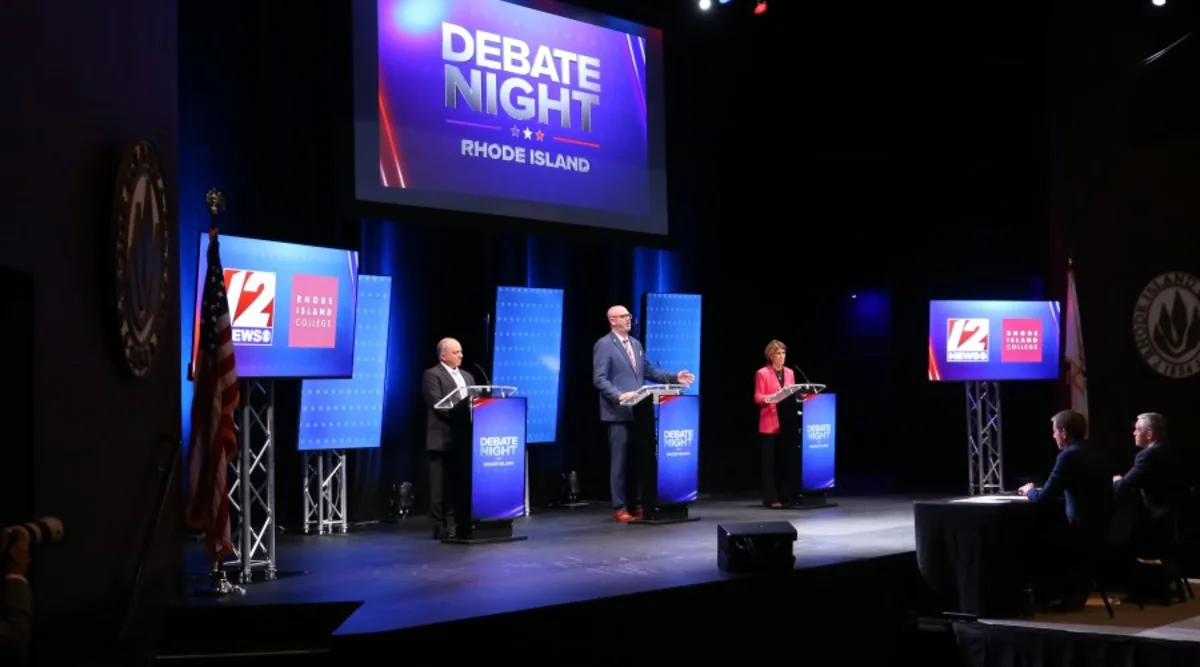
PROVIDENCE, R.I. — With just two weeks remaining before Election Day and early voting already underway, the race for Rhode Island governor intensified Tuesday night as the three major candidates took the stage for a critical live debate hosted by 12 News.
Democrat Helena Foulkes, Republican Aaron Guckian, and independent candidate Ken Block squared off in a high-stakes exchange, offering voters a final opportunity to evaluate their competing visions for the state. The debate, moderated by 12 News staff, covered a range of pressing concerns, including the state’s housing shortage, healthcare reform, the implementation of automated license plate readers, and long-term fiscal stability.
Housing emerged as a central pillar of the night’s discussion. Following a recent 12 News/Emerson poll that identified the issue as a top concern for the electorate, the candidates were pressed on their strategies to address a crisis that has left the state struggling to meet its “Housing 2030” goals. Each candidate sparred over potential solutions, reflecting the urgency felt by residents currently grappling with limited inventory and rising costs.
The debate also touched on the controversial use of automated license plate readers, such as those produced by Flock Safety. As police departments across the state navigate new, formal guidelines recently issued by outgoing Gov. Dan McKee, the candidates offered differing perspectives on the balance between public safety and individual privacy. The discussion highlighted a fundamental disagreement over whether the technology represents a necessary tool for law enforcement or an overreach that should be curtailed.
Fiscal policy remained a recurring theme throughout the evening, with candidates addressing the state budget and the future of public sector pensions. Given that public pensions remain one of the most significant line items in the state budget, the candidates were forced to confront the difficult choices surrounding taxpayer-funded retirement systems and overall state spending.
In a segment dedicated to healthcare, the candidates were asked to identify a single, actionable change they would implement as governor to meaningfully improve the lives of the average patient. The responses underscored divergent approaches to managing the state’s healthcare landscape, ranging from systemic regulatory changes to targeted patient-focused initiatives.
The evening concluded with final, one-minute closing statements from each candidate, serving as a last appeal to undecided voters.
With early voting currently active, the debate functioned as a vital yardstick for voters to measure the candidates’ priorities before casting their ballots. The event provided a final, vivid snapshot of the ideological divide shaping this year’s gubernatorial contest.
For those who missed the live broadcast, the full debate remains available on the WPRI website. As the general election approaches, voters are encouraged to monitor 12 News for continued coverage and ongoing updates.
Disclaimer: This content is auto-generated for informational purposes only.
Source: Read Original News