






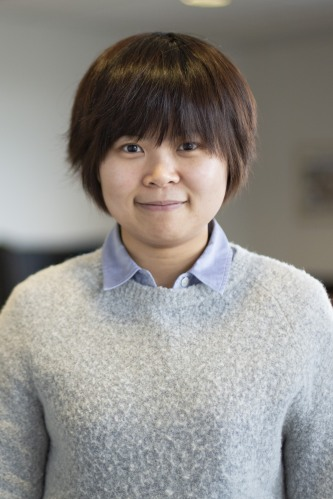
Li joined CityU last month as an assistant professor in the School of Energy and Environment after leaving the University of Pennsylvania. She told the South China Morning Post that Hong Kong’s position at the intersection of climate science, innovation and global connectivity was its biggest attraction.
“As a climate scientist trying to address this global climate challenge, it is hard for me to imagine a more exciting place to be right now,” she said.
Although leaving the U.S. meant walking away from more than a decade of professional relationships, Li said she ultimately concluded Hong Kong was the “best choice” because it offered “ample opportunities for climate research [and] sustainable energy.”
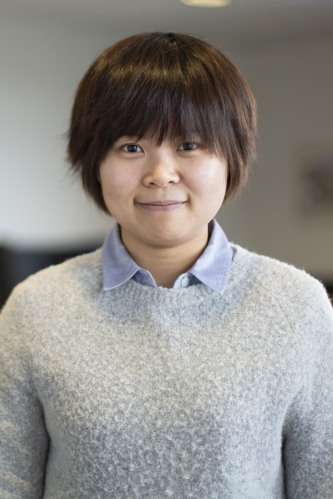 |
Climate scientist Li Xueke. Photo courtesy of Brown University |
Her decision was also shaped by growing uncertainty surrounding U.S. climate research, including President Donald Trump’s administration’s proposal in December 2025 to dismantle the National Center for Atmospheric Research, a major center for global Earth system science.
Li said climate scientists were deeply disappointed by the proposal, adding that the researchers’ union had written to the National Science Foundation, which sponsors the center, urging it to “make every effort not to shut it down.” A federal judge blocked the move in June.
She is among a growing number of researchers relocating to Asia as the U.S. research environment faces mounting political and financial pressure. Trump’s administration has terminated grants for climate-related research and sought to dismantle a leading federally funded climate research center.
“The opportunity for us to do climate science is less than before. It is very hard … especially for us running computational, state-of-the-art climate models.”
She said climate researchers need stable funding to keep their work going, but “unexpected changes” have left them struggling. “This is an unhealthy environment for climate scientists.”
Li’s research focuses on climate variability, extreme weather and their effects on the environment and society. Her work combines data analysis and climate modeling, with applications for the maritime industry.
She plans to use AI to improve climate models, which she said are limited by “coarse resolution” because researchers must balance detailed geographic data with long-term simulations. More accurate models could help shipping operators better plan navigation windows and routes.
As she establishes her laboratory at CityU, Li plans to expand her research on how climate change drives extreme weather events.
After arriving in Hong Kong in late May, she said experiencing the city’s humid heatwave firsthand reinforced the connection between climate science and everyday life. It also strengthened her interest in how humid heatwaves evolve under climate change and affect human health and urban resilience.
Li earned a bachelor’s degree in engineering from Taiyuan University of Technology in 2011 and a master’s degree in cartography and geographic information systems from the University of Chinese Academy of Sciences in 2014.
She moved to the U.S. the same year and completed a doctorate in geography at the University of Connecticut in 2019. She later worked as a postdoctoral research associate at Brown University until 2022 before joining the University of Pennsylvania’s Department of Earth and Environmental Science in 2023 as a postdoctoral fellow. She became a research associate there last year.
Despite relocating, Li said she intends to continue working with researchers in the U.S.
“Climate science has no boundaries. It is really encouraging that we can still collaborate with peers and mentors in the U.S.,” she said.