







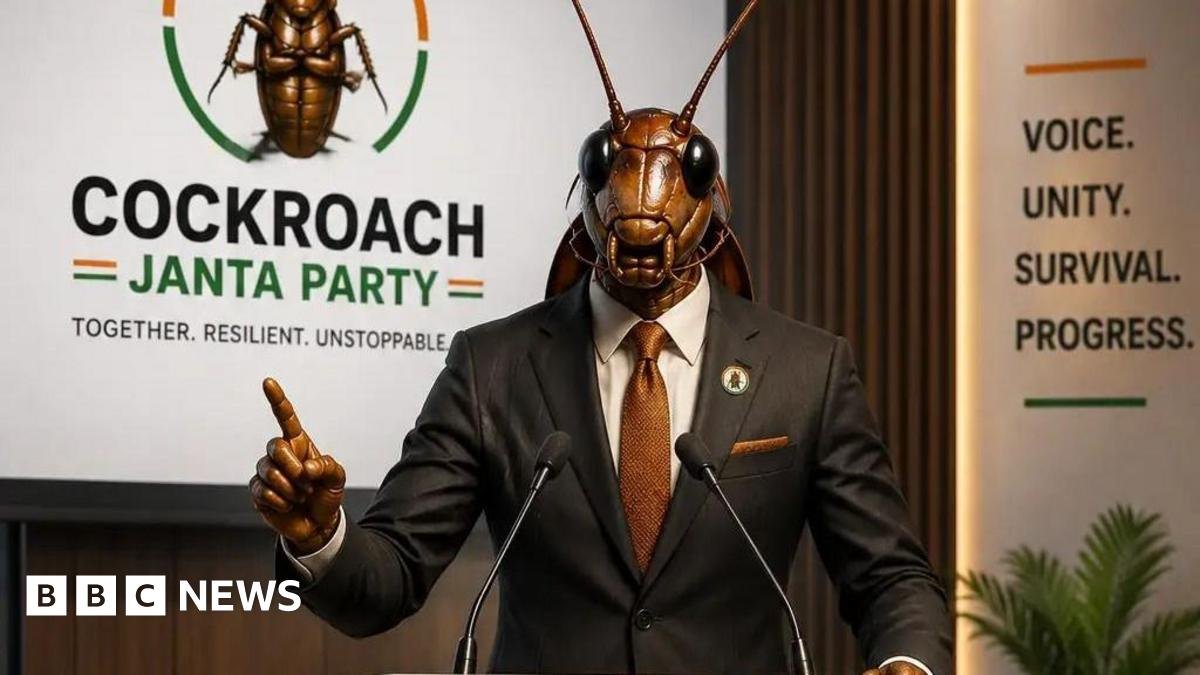
And yet, buried inside the humour are recognisable political claims: accountability, media reform, electoral transparency and expanded representation for women. They sit alongside self-deprecating jokes about doomscrolling, unemployment and general political burnout.
The tone, somewhere between parody and sincerity, is part of its appeal. The jokes land because the frustrations underneath them are familiar: around jobs, inequality, corruption and political alienation.
Many have pointed out that even the choice of mascot makes sense. The cockroach is not heroic or aspirational, but something more basic: resilient, adaptable and capable of surviving hostile conditions with very low expectations.
Of course, this blurring of humour and politics is hardly new.
In Italy, comedian Beppe Grillo channelled anti-establishment humour into the Five Star Movement, while in Ukraine Volodymyr Zelenskyy went from playing a fictional president on television to becoming a real one. In the US, the Donald Trump era has sparked repeated arguments about whether satire itself has begun to collapse under a political reality that often already feels like parody.
India’s version takes a more online form: a meme-driven, insect-themed movement shaped by hashtags, burnout and ironic despair.
At first glance, it seems unusual. But it is not entirely out of place in Indian politics.
Politicians here have long embraced the power of spectacle, from meditating in Himalayan caves to switching parties amid scenes of legislators being bundled into buses or holed up in hotels.
Online campaigns rely on carefully choreographed viral videos and punchy slogans designed for maximum reach.
Against that backdrop, an insect-themed political movement feels oddly plausible.
It also helps explain why it spread so quickly – not necessarily because young Indians want another political party, but because many are searching for a language to express their frustration.
“I think CJP is just the beginning,” Dipke said. “Young people are fed up with the current political system, and more youth organisations will come forward.”
Others, however, are more sceptical, saying the party is likely to fade as quickly as it emerged.
Either way, the CJP has already done something unusual in Indian politics: it has briefly made some young people feel seen.
In earlier eras, youth political anger produced manifestos. In 2026, it sometimes produces meme parties with insect mascots.
With inputs from Ashay Yedge, BBC Marathi