







BEIJING — Coco Gauff, the two-time Grand Slam champion and a titan of the modern tennis circuit, has been forced to shift her focus from the court to the digital trenches after being subjected to a virulent wave of racist abuse following her victory at the China Open on Monday.
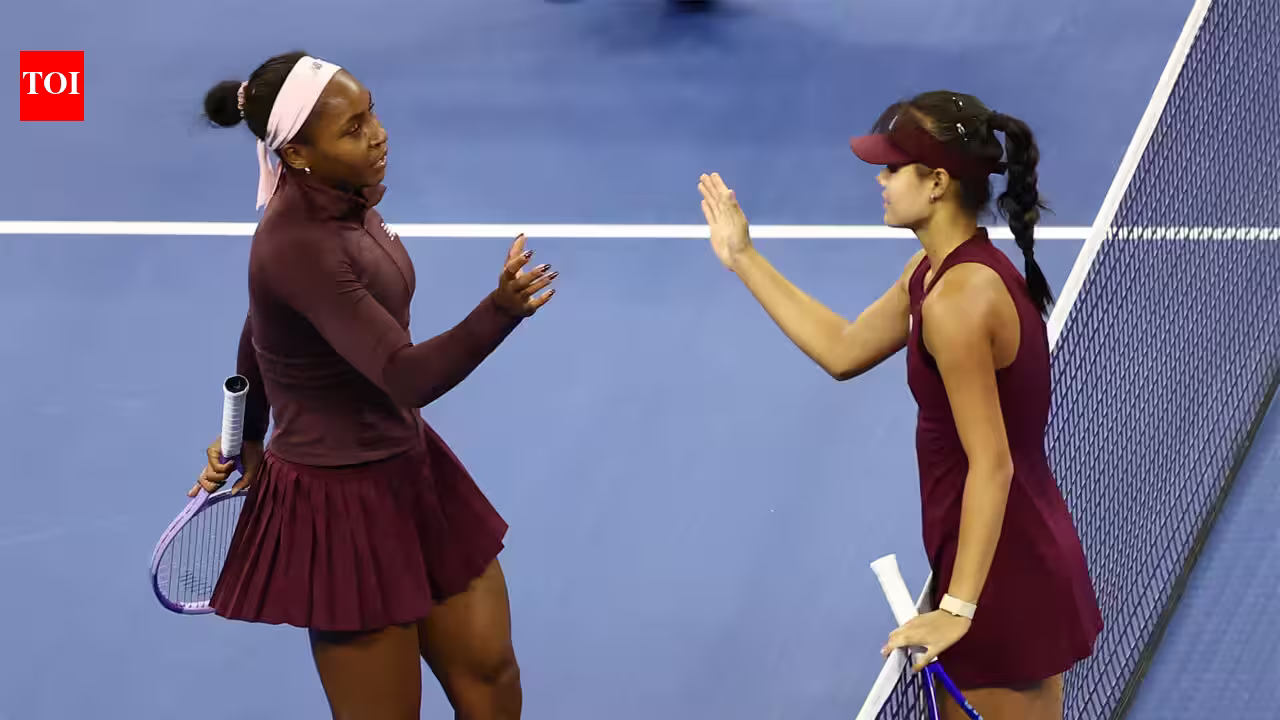
The 22-year-old American successfully navigated a challenging match against 16-year-old wildcard entrant Sun Xinran, securing a 7-5, 6-1 victory to advance to the fourth round. However, what should have been a professional critique of on-court mechanics quickly devolved into a dark reminder of the vitriol athletes face in the social media era. Gauff took to the platform X (formerly Twitter) early Tuesday to draw a firm line, declaring, “You can dislike me or disagree about what happened without being racist.”
A Flashpoint of Controversy
The source of the online furor stems from a pivotal moment late in the first set. With Sun Xinran holding the momentum and seemingly poised to put away a winner, Gauff abruptly stopped play. The catalyst was a malfunctioning advertising board at the side of the court, which began to flicker during the middle of the rally.
Following the interruption, the chair umpire conducted a video review—a standard protocol in modern professional tennis designed to handle incidents where external distractions potentially impede fair play. The official ruling was that the point should be replayed. Gauff ultimately won the replay and harnessed that momentum to hold serve, leveling the set at 5-5 and effectively breaking the spirit of the young Chinese debutante.
For many fans, the tactical pause was viewed as a savvy use of the rules; for others, it was perceived as an opportunistic disruption. But for a faction of the internet, the disagreement regarding the ruling served as a pretext for a torrent of racial slurs and derogatory personal attacks directed at the American star.
Gauff Hits Back
Addressing the abuse directly, Gauff offered a measured but firm response to the vitriol. She made it clear that while she respects the passion of the fan base, there is no room for bigotry in the conversation.
“The amount of racist comments/direct messages I’ve received in the last few hours is insane,” Gauff stated. “Lastly, I’m not a cheater or a thief.”
Gauff defended her decision-making, emphasizing that she was acting entirely within the established parameters of the WTA rulebook. Players are entitled to request video reviews for incidents that constitute a hindrance, and the umpire’s decision to replay the point was an affirmation that the distraction was sufficient to warrant a reset.
Empathy for a Rising Star
Despite the heat of the controversy, Gauff remained deeply empathetic toward her opponent, Sun Xinran. The 16-year-old, who recently claimed the US Open junior title, was visibly emotional following the loss. The pressure of playing her first-ever WTA Tour match in front of a home crowd in Beijing clearly took its toll, a dynamic Gauff knows all too well.
“Xinran is an incredible talent and player,” Gauff remarked. “I apologized for the situation at the end of the match and she completely understood. I didn’t like to see her so emotional as I’ve been there, and I really understand what it’s like. But this is the beginning of an incredible career. It was an honor to share the court in front of her home crowd.”
Gauff’s career trajectory—rising to the fourth round of Wimbledon at just 15 years old—allows her a unique perspective on the fragility and intensity of a young prospect’s debut. By extending an olive branch to Sun, Gauff sought to separate the nature of the on-court officiating from her character, hoping to move past the manufactured drama.
The Growing Threat of Online Abuse
The incident involving Gauff has brought the broader issue of athlete safety to the forefront of the tennis world. The WTA, along with organizations like World Tennis, has expressed significant alarm regarding the escalation of toxicity on digital platforms.
In 2025 alone, monitoring systems utilizing artificial intelligence identified over 12,000 instances of abusive posts and direct messages aimed at players and match officials, a sharp increase from the 8,000 recorded the previous year. The WTA has invested in AI-driven protection measures to shield its athletes from such harassment, but the sheer volume of hate suggests that the problem is becoming an systemic hurdle for the sport.
As the tournament continues in Beijing, the focus remains on Gauff’s performance on the court and her ability to sustain a deep run. However, the events of Monday night serve as a sobering reminder of the scrutiny athletes endure. By calling out the racism head-on, Gauff has once again proven she is not just a champion within the lines of a tennis court, but a figure who refuses to remain silent in the face of injustice. Whether she can keep her composure and rhythm to capture another title will be the primary storyline for the remainder of the week, but for now, the conversation remains anchored on the importance of respect in the sport.
Disclaimer: This content is auto-generated for informational purposes only.
Source: Read Original News