





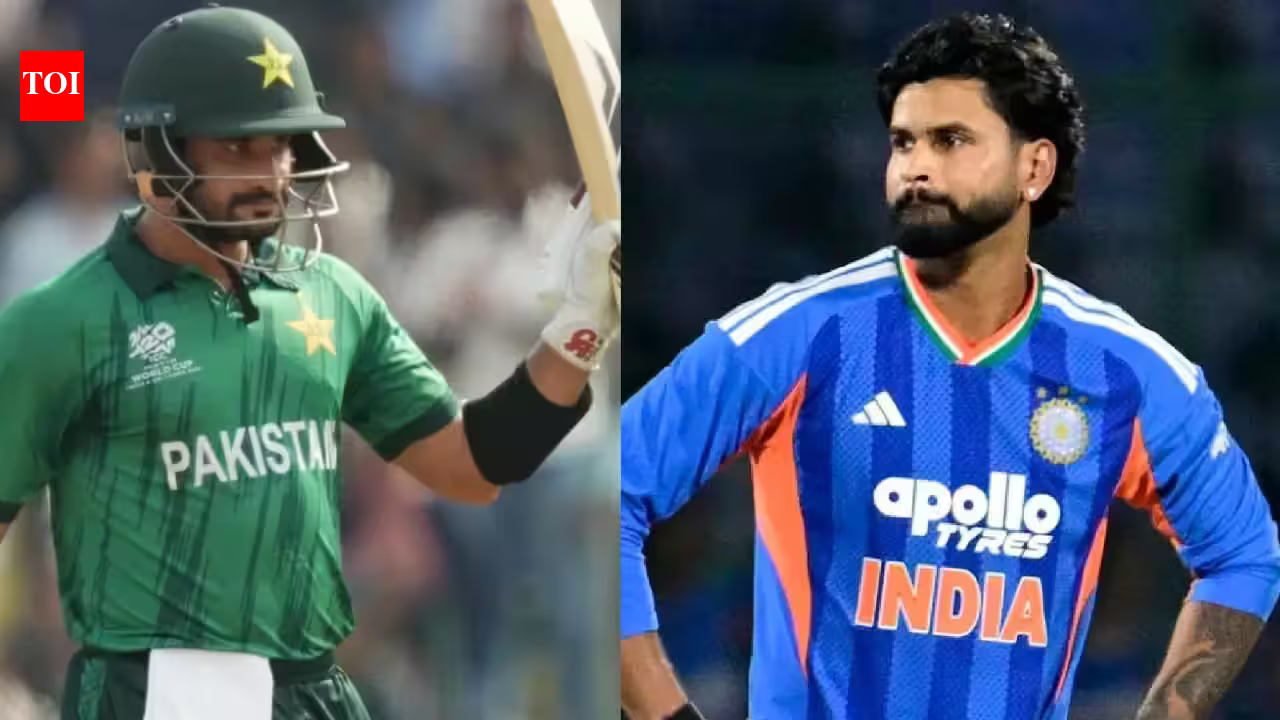
Tensions beyond the boundary ropes took center stage in Nisshin, Japan, on Saturday, as the men’s cricket final at the Asian Games commenced with a symbolic and stark departure from sporting tradition. In a highly anticipated gold-medal showdown between arch-rivals India and Pakistan, captains Shreyas Iyer and Sahibzada Farhan opted to forgo the customary pre-match handshake during the toss, marking yet another chapter in a deepening geopolitical divide reflected on the cricket pitch.
The visual, captured clearly by live cameras, saw both leaders head toward the center of the pitch to conduct the toss formalities. While the coin was tossed and the decision made—with Iyer opting to bat first—the usual show of sportsmanship was pointedly absent. This silence at the coin flip has become the new normal for encounters between these two cricketing giants, continuing a protocol established during last year’s Asia Cup.
A Pattern of Reserved Engagement
The decision to avoid physical contact during the pre-game greeting is not a sudden development, but rather a deliberate policy that has been strictly adhered to since September of the previous year. Against the backdrop of persistent cross-border tensions and the volatile atmosphere surrounding regional military developments—most notably the discourse surrounding Operation Sindoor—the Indian cricket establishment has adopted a stance of professional distance.
While international cricket is often hailed as a bridge between nations, the current climate has forced a pivot toward a more guarded approach. Since the policy was first implemented during the 2023 Asia Cup, Indian sides participating in both International Cricket Council (ICC) and Asian Cricket Council (ACC) tournaments have consistently bypassed the traditional handshake. What was once a routine pleasantry has been transformed into a silent, high-stakes signal of the geopolitical gravity that surrounds any India-Pakistan fixture.
Tactical Stability for Team India
Beyond the ceremonial tension, the narrative on the field remained focused on India’s pursuit of regional dominance. Entering the gold-medal match with confidence, the Indian management opted for consistency, naming an unchanged playing eleven from their previous fixture. The side continues to place its faith in the explosive young talent at the top of the order, with 15-year-old batting sensation Vaibhav Sooryavanshi once again tasked with setting the tempo alongside the aggressive Abhishek Sharma.
The batting lineup boasts significant depth and experience, with Shreyas Iyer steering a middle order anchored by the likes of Sanju Samson and Ishan Kishan, while the lower-middle order remains bolstered by the power-hitting capabilities of Tilak Varma and Shivam Dube. India’s bowling attack looks equally formidable, with spearhead Jasprit Bumrah leading a diverse unit featuring the spin wizardry of Ravi Bishnoi, Washington Sundar, and the seasoned all-round prowess of Axar Patel.
Pakistan’s Path to the Podium
On the opposing side, Sahibzada Farhan led a Pakistan team hungry to claim the ultimate prize in Japanese conditions. With a squad featuring the versatile Arafat Minhas and the spin-bowling threat of Abrar Ahmed, Pakistan entered the fray with a balanced XI capable of punishing any complacency from the Indian side. Their path to the final has been paved with resilience, and for Farhan, the responsibility of captaincy on such a grand stage presented the perfect opportunity to make a statement, regardless of the atmosphere at the toss.
The Stakes of the Asian Games
This clash marks the first time in history that an India-Pakistan men’s cricket match has been contested at the Asian Games, elevating the significance of the encounter to unprecedented levels. With the Indian women’s cricket team having already secured their place in history by clinching the gold medal after a clinical victory over Sri Lanka, the pressure was firmly on the men’s squad to mirror that success and complete a golden sweep for India in the sport.
As the match unfolded in the pristine facilities in Nisshin, the intensity was palpable. The lack of a handshake served as a stark reminder that while the game of cricket remains governed by the laws of the MCC, the spirit in which it is played is often shaped by the turbulent realities of the world outside the stadium walls. As fans across the globe tuned in, the focus remained fixed on the cricket—a pursuit of excellence, a struggle for supremacy, and a quest for that coveted Asian Games gold medal, played out in a stadium where every delivery carried the weight of national pride.
Whatever the final scoreline, the image of the two captains standing meters apart, refusing the traditional hand-to-hand greeting, will remain the defining visual of the 2024 Asian Games cricket final—a testament to a rivalry that remains, for better or for worse, the most captivating and complex spectacle in world sport.
Disclaimer: This content is auto-generated for informational purposes only.
Source: Read Original News