






Stirling Castle is a ‘top priority’ for renovation work
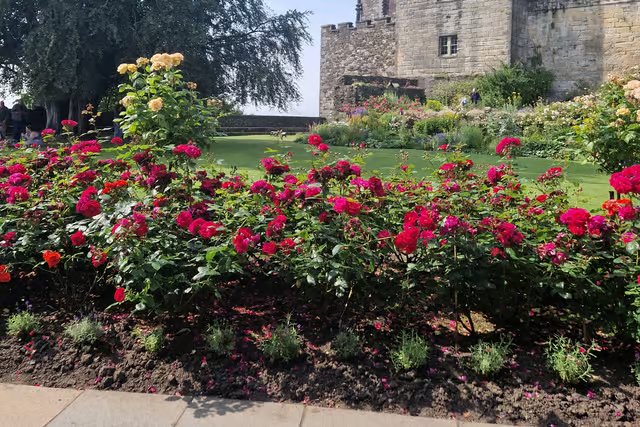
Once the power centre of the Stuart dynasty and the childhood home of Mary Queen of Scots, the mighty Stirling Castle has held high its place in Scottish history for hundreds of years.
A recent board meeting of the heritage body saw issues raised about health and safety risks at the castle – and said staff were looking into costs of necessary repairs and improvements, including historic renovation on the Great Hall, structural repairs and essential works on “ageing” electrical infrastructure.
HES admitted the castle, which is its second-busiest site after Edinburgh Castle with 600,000 visitors a year, was facing “ongoing challenges” and said it had asked the board for funding “historic fabric repairs” across the site.
The board minutes stated: “Concerns were also raised regarding the condition of Stirling Castle (notably marketing and engagement and health and safety risks), which the executive confirmed is a top priority within current funding constraints. A fuller understanding of capital requirements is still being developed.”


A spokesperson for HES said a number of routine maintenance projects at Stirling Castle had been indentified with a funding request due to be considered by the board.
“ These included a mixture of historic fabric repairs across the site including the Great Hall, structural repairs to buildings and infrastructure, upgrades to aging mechanical and electrical services including areas such as visitor lighting, as well as upgraded education spaces and visitor interpretation.
“This is part of a regular cycle and builds on recent project investments at site including a refresh of our main giftshop, roof repairs across site and upgrades to further elements of electrical infrastructure”, the spokesperson added.

“Sites like Stirling Castle face a number of ongoing challenges, such as ageing facilities, climate change and inflation in construction costs. The castle is our second busiest site, with 600,000 visitors a year, and we want to continue to meet and exceed their expectations when they visit. It was important that our board were fully sighted on the level of the activity under discussion and we will begin our next planning and funding bid cycle in the coming months,” the statement said.
Stirling Castle dates back to the early 1100s. Until the Union of the Crowns in 1603, almost every Scottish monarch had either lived in the castle, or been crowned or died there. The buildings which make up the Inner Close, a square formed of the principal buildings for royal occupation, include the King’s Old Building, which was built for King James IV in 1496, while the great Hall was constructed in 1503.
Jocelyn Cunliffe, chair of the Architectural Heritage Society of Scotland (AHSS), said HES was likely to have carried out a fabric condition report which had uncovered the problems. Stirling Castle’s Great Hall underwent a 10-year, £8.5 million refurbishment in 1999.
She said: “Clearly some things have been identified that need to be carried out across the site, including to the Great Hall. Now, we’re at least 25 years out from the major repairs, and it is likely the services will need an overhaul.”
She warned that AHSS had previously raised concerns about HES focusing on visitor experience rather than ensuring historic buildings undergo regular repair schedules.
“From the perspective of the Architectural Heritage Society of Scotland, there are properties in care that generate revenue, and ones that don’t. Edinburgh and Stirling castles are the big hitters. HES says Stirling Castle is their second busiest site with 600,000 visitors a year and they want to continue to meet and exceed their visitor expectations.
“But the AHSS sometimes takes issue with Historic Environment Scotland when they’re spending more money on the visitor experience and interpretation material than they are on keeping the fabric in a good state of repair. So, it’s a question of where do you spend your money? From an AHSS point of view, we’re very much fabric first.”
Ms Cunliffe pointed to potential upgrade of visitor lighting, which she said could be lighting for safety, floodlighting or linked to interpretation facilities such as handheld electronic guides and touchscreen devices.
She said: “We’re not saying there shouldn’t be any interpretation, but we do think that HES is inclined to go for high-tech solutions which cost a lot of money to maintain and they may become obsolete when technology changes.
“Those experiences all cost money and HES probably argues that they’re all part of visitor expectations nowadays and they may be, but equally, visitors can experience a space without that sort of interpretation if money is in short supply.”
The board papers also revealed a rise in admission prices are being considered, adding that members believed any increase should be invested back into the specific properties, particularly at Stirling and Edinburgh Castles.
The minutes stated: “Board members noted the importance of reinvesting revenue, particularly into key properties like Edinburgh Castle and Stirling, and suggested ringfencing income from pricing changes.”
Ms Cunliffe said: “It does worry me that they are pricing themselves beyond the pocket of Scottish families. They’re appealing to international visitors, who are more used to paying for admissions at a fairly high level.
“I worry about them saying, ‘Oh, well, we’re going to put the price up and use the money for repairs’. That doesn’t seem right to me. The repairs should be funded from the Scottish Government block grant or other funding sources.”