







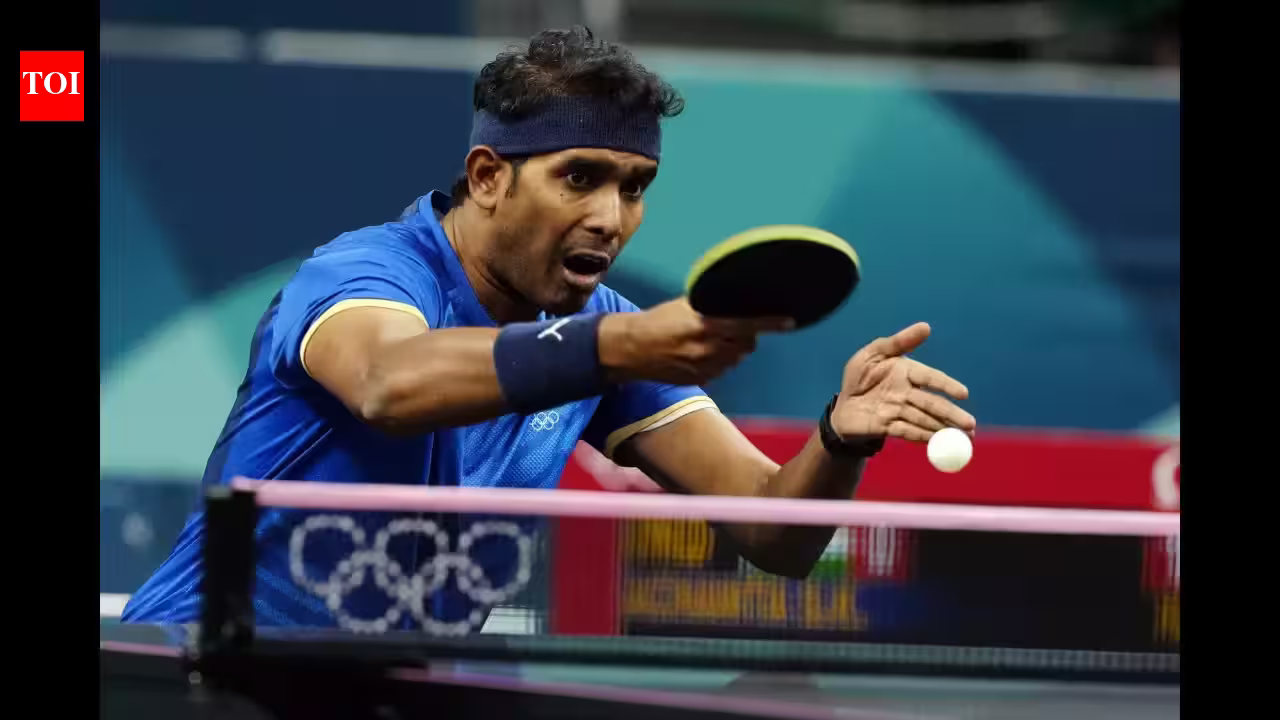
NAGOYA — With the countdown to the Aichi-Nagoya Asian Games officially underway, the conversation surrounding the quadrennial event has veered from pure athleticism to the logistics of endurance. As reports circulate regarding the unconventional athlete village arrangements—which include converted shipping containers and a docked cruise liner—India’s deputy chef-de-mission, legendary table tennis star Achanta Sharath Kamal, has stepped forward to quell potential unrest, insisting that his contingent is not only prepared for the challenge but has essentially “trained” for it.
The logistical reality of the 2026 Games sees the host nation managing a vast influx of competitors, with roughly 4,000 to 5,000 athletes slated to reside on the luxury cruise liner Costa Serena at Nagoya Port, and another 2,000 housed in modular shipping containers at Garden Pier. While these arrangements have drawn criticism from several international delegations concerned about cramped living conditions and athlete comfort, the Indian Olympic Association (IOA) is taking a pragmatic, proactive approach.
Strategic Preparation: The SAI Simulation
According to Sharath Kamal, the transition to these unique living quarters will not be the culture shock that some have feared. Under the guidance of the Sports Authority of India (SAI), the Indian delegation has taken the unusual step of creating mock-ups of these environments on domestic campuses.
“For the players, by the direction of the Sports Authority of India, we have had some containers built in various SAI campuses, where the athletes got an experience to stay in containers,” Sharath explained. By providing this domestic rehearsal, the IOA aims to minimize the stress of the environment, allowing the athletes to focus entirely on their competitive goals rather than adjusting to unfamiliar surroundings upon arrival in Japan.
Sharath, who also serves as the vice-chair of the IOA’s Athletes Commission, acknowledged that while the athletes have been well-briefed, the administrative staff may face a steeper learning curve. “The players know what to expect. We have educated them very well. And I am pretty sure they will get accustomed quite quickly,” he said. “The bigger concern is for officials who didn’t get that same exposure, but the priority remains clear: the focus is on performance.”
A Focus on the Podium
Beyond the logistics of the athlete village, the 44-year-old veteran is keeping a keen eye on India’s medal prospects. As a cornerstone of Indian table tennis, Sharath is projecting a strong showing for the 10-member squad, which includes five men and five women. Having witnessed the evolution of Indian table tennis firsthand, he is setting the bar high, publicly targeting at least one, if not two, podium finishes.
“Last time, we got one medal in women’s doubles. And prior to that, we got two bronze medals in 2018,” Sharath noted, reflecting on the rising trajectory of the sport in the country. “My expectation is to win at least one medal, if not two.”
The confidence in the squad’s potential is rooted in the success of the younger guard. Sharath specifically highlighted the men’s doubles pair of Manav Thakkar and Manush Shah, who have been a standout duo on the international circuit.
“The men’s doubles pair of Manush and Manav, they are doing extremely well. They were world number two at one point in time. They are in the top four now. And they have a good chance of winning a medal,” he explained. With the table tennis competition set to run from September 20 to 28, the pressure is on these specific pairings to deliver when it matters most. Furthermore, Sharath remains optimistic about the team championships, describing them as “always quite an open event” where momentum can dictate the outcome of high-stakes matches.
Adaptation as an Athletic Skill
In professional sports, the ability to adapt to external conditions—whether it be weather, crowd noise, or, in this case, housing—is often the differentiator between a gold medalist and a footnote. Sharath Kamal’s insistence that his athletes are prepared is more than just a logistical update; it is a psychological signal to the team. By framing the container living as an experience they have already mastered, the leadership is removing the “excuse” of discomfort.
As 501 Indian athletes and 265 officials prepare to descend upon Aichi-Nagoya, the message from the leadership is clear: the unconventional nature of the village is a secondary consideration. The primary mission remains the pursuit of medals. With a mix of veterans and surging young talent, India enters these Games with a measured, disciplined, and thoroughly prepared approach, aiming to turn the unusual conditions of the Aichi-Nagoya Games into just another obstacle overcome on the road to the podium.
Disclaimer: This content is auto-generated for informational purposes only.
Source: Read Original News