









US Legislative Move Sparks Trade Concerns for India Over Russian Energy Imports
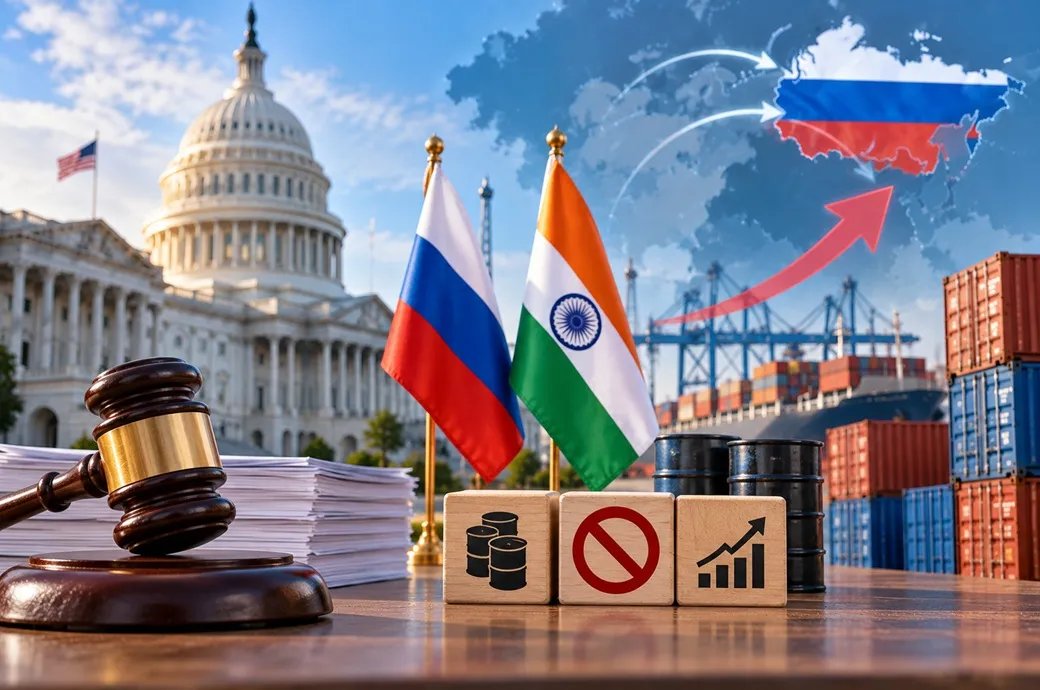
The landscape of India-US trade relations faces potential turbulence as the US House of Representatives moves closer to enacting the ‘Lindsey O Graham Sanctioning Russia and Iran Act of 2026.’ In a narrow 214-211 procedural vote on Tuesday, the House cleared the path for a final vote on the legislation, which grants the US President broad authority to impose retaliatory tariffs of up to 100 per cent on nations that maintain significant energy trade with Russia.
The bill, which previously secured an overwhelming 86-11 endorsement in the Senate last August, is designed to choke off funding for Russia’s war efforts by targeting its energy sector and those who facilitate the Kremlin’s ‘shadow fleet’ of oil tankers. If passed by the House and signed into law, the legislation would allow the White House to penalize the world’s five largest purchasers of Russian crude oil and natural gas, as well as countries deemed to be enabling sanctions evasion.
Implications for India’s Energy Strategy
For New Delhi, this legislative development carries significant economic implications. India has consistently relied on Russian crude as a cornerstone of its energy security strategy, particularly since the onset of the Ukraine conflict. In the fiscal year 2026 alone, Russia supplied 30.3 per cent of India’s total crude imports, amounting to a staggering $40.8 billion.
While the bill does not mandate an immediate 100 per cent tariff on Indian goods, it creates a powerful legal framework for the Trump administration to levy such duties at its discretion. The political climate in Washington remains charged; a faction of Democratic lawmakers, led by Steny Hoyer and Marcy Kaptur, attempted to include a specific provision in the House to explicitly name India, China, and several other nations as targets for these high tariffs. Although the House Rules Committee opted not to move forward with that specific amendment, the inclusion of broad, discretionary powers in the final text remains a point of contention for global trade partners.
Diplomatic and Economic Balancing Act
The looming vote, expected this Wednesday, places Indian policymakers in a complex position. The legislation is framed as a tool for “economic pressure,” yet critics—both in the US and abroad—have warned that granting such expansive tariff authority to the President could trigger global trade volatility and disrupt established supply chains.
Opponents of the bill within the US Congress argue that the legislation grants excessive executive discretion, potentially weakening the oversight role of the legislature in trade policy. These concerns are shared by various stakeholders who fear that the “secondary-tariff” provision could be used as a blunt instrument to coerce foreign governments into realigning their energy policies.
As the bill heads toward a final vote, the Indian government will likely continue its delicate diplomatic balancing act. New Delhi has maintained that its purchases of Russian oil are driven by the necessity of ensuring affordable energy for its vast population, a stance it has consistently communicated to Western counterparts. Whether the US administration will utilize these new authorities to penalize strategic partners remains an open question, but the legislative progress of the Act serves as a stark reminder of the geopolitical risks inherent in India’s current energy import configuration.
Disclaimer: This content is auto-generated for informational purposes only.
Source: Read Original News