







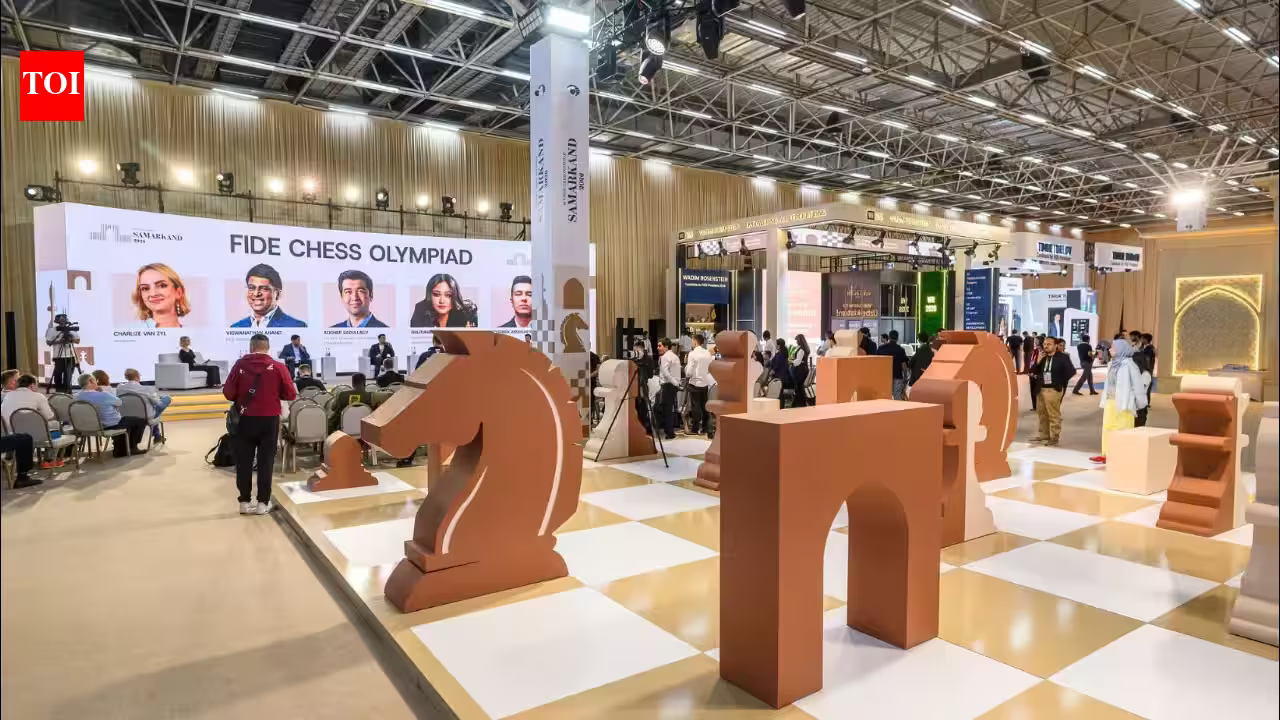
SAMARKAND — The historic city of Samarkand is set to transform into the global epicenter of chess as it prepares to host the 46th Chess Olympiad. With a record-breaking 399 teams descending upon Uzbekistan, the biennial team event promises an unparalleled display of tactical brilliance and high-stakes tension. For the host nation, this is more than just a tournament; it is a momentous homecoming for a squad eager to reclaim the title they famously secured on Indian soil four years ago.
However, the path to gold is paved with formidable obstacles, chief among them being the defending champions: India.
A Rivalry Defined by Tactical Precision
The rivalry between Uzbekistan and India has become the defining narrative of modern team chess. Their recent encounters have been nothing short of legendary. In both the 2022 and 2024 editions, Uzbekistan demonstrated a unique ability to stymie India’s momentum, holding them to draws that sent shockwaves through the chess world.
These matches have been characterized by an intensity that even legends of the game struggle to describe. During the Budapest Olympiad two years ago, former world champion Vladimir Kramnik—serving as a team mentor—famously lauded the clash as “real chess.” His assessment stemmed from the near-perfect accuracy displayed by both sides, as the match featured no major blunders, even as other teams withered under the pressure exerted by India’s top board, D Gukesh, and the relentless precision of Arjun Erigaisi.
As they prepare to clash in Samarkand, the pressure on the Uzbek squad is twofold: the weight of defending their home turf and the daunting task of dismantling an Indian juggernaut that has only grown stronger with time.
The Burden of Brilliance: Gukesh’s Crucible
For world champion D Gukesh, the 46th Olympiad offers a dual-purpose mission. While his primary focus remains helping the Indian men’s team defend their gold medal, the tournament serves as a high-pressure “dress rehearsal” for his upcoming World Championship title defense against Javokhir Sindarov in Geneva, beginning November 24.
Gukesh’s ascent has been meteoric, punctuated by individual gold medals in the last two Olympiads. However, at just 18 years old, the weight of his historic world crown seems to have added a layer of complexity to his play. Coaches and observers note that the team atmosphere in Samarkand may be exactly what the young prodigy needs to recalibrate. By stepping back into the collective spirit of the Indian tricolour, Gukesh has the chance to shed the singular pressure of his world title and rediscover the fearless, aggressive form that propelled him to the pinnacle of the sport.
The Uzbek Ambition and the Changing Guard
Under the expert guidance of captain Rustam Kasimdzhanov—the former second to Viswanathan Anand—the Uzbek team has evolved into a powerhouse of modern chess. Their current lineup is spearheaded by Javokhir Sindarov, who enters the event as the host nation’s highest-rated player with a blistering rating of 2778.
“It was unimaginable that we would host an event of this magnitude six-seven years ago,” said Nodirbek Abdusarttorov, the 21-year-old Uzbek star, during Tuesday’s pre-tournament press conference. “But thanks to the support and hard work of players, it is made possible.”
The confidence within the Uzbek camp is palpable, reflecting a nation that has moved from being a surprise contender to a genuine superpower in the classical format.
The Battle of the Seeds: USA and India
While the focus remains on the defending champions and the hosts, the open section of the Olympiad is wide open. Intriguingly, despite boasting the most lethal trinity in world chess—Gukesh, R Praggnanandhaa, and the consistently in-form Arjun Erigaisi—India enters the tournament as the second seed.
The top-seeded spot belongs to the United States. Their roster reads like a “who’s who” of world-class grandmasters, featuring the tactical brilliance of Fabiano Caruana, the defensive iron of Wesley So, and the veteran creativity of Levon Aronian. This coalition of global talent, representing the US, remains the statistical favorite, but as the last two cycles have proven, the Olympiad is rarely decided by rating points alone.
Women’s Division: India’s Moment to Shine
In the women’s section, the landscape is distinct. With Russia currently barred from international team competitions and China opting not to send their full-strength contingent, the Indian women’s team has emerged as the clear favorites.
Led by the experienced K. Humpy, alongside the high-flying World Cup winner Divya Deshmukh and world championship challenger R. Vaishali, the Indian squad possesses a depth that few other nations can replicate. After clinching double gold across both sections in the last edition, the Indian contingent faces the highest expectations in their history.
As the clock ticks down to the first round in Samarkand, one thing is certain: the world of chess is about to witness a historic 11-round war of attrition. Whether the Uzbeks can harness the home crowd to reclaim their throne, or if India’s golden generation can cement their dynasty, the 46th Olympiad is destined to be a masterclass in sport.
Disclaimer: This content is auto-generated for informational purposes only.
Source: Read Original News