








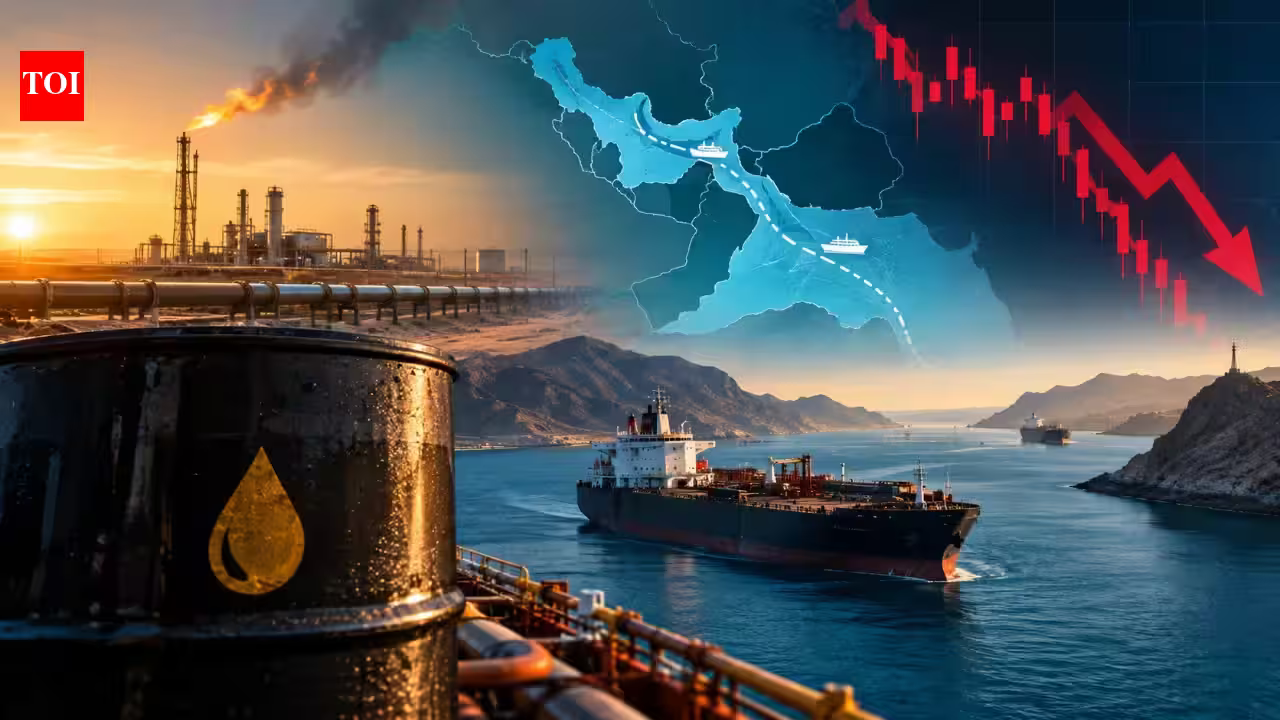
The Geopolitical Sensitivity of Global Crude Markets
The global energy landscape is currently defined by a heightened state of sensitivity to supply chain interruptions in the Middle East. Recent fluctuations in Brent and West Texas Intermediate (WTI) crude prices underscore the fragility of global oil logistics. When prices dip by over one percent in response to logistical adjustments—such as Saudi Arabia arranging alternative shipment routes through Oman—it signals a market that is hyper-aware of every minor shift in export reliability.
The core of this market tension lies in the strategic geography of oil transit. For decades, the global economy has relied on specific pipelines and maritime corridors to move crude from production fields to international markets. When these routes face physical threats—such as the recent drone-based damage to the Saudi East-West pipeline—the immediate market reaction is a “geopolitical risk premium.” This premium is essentially a surcharge that buyers are willing to pay during times of uncertainty to secure energy assets. However, as demonstrated by the recent price correction, this premium is highly elastic. The moment evidence emerges that major producers are mitigating disruptions, the market recalibrates downward.
Logistical Resilience and the Oman Bypass
Saudi Arabia’s pivot to ship-to-ship transfers off the port of Sohar in Oman represents a calculated effort to maintain flow continuity. By utilizing Oman as a transit hub, Saudi Aramco is effectively demonstrating the resilience of its logistics network. This tactical adjustment is critical because the East-West pipeline, which typically bypasses the Strait of Hormuz to reach the Red Sea port of Yanbu, serves as a vital safeguard for global energy security.
For energy markets, the ability of a producer to pivot between delivery mechanisms is a core measure of stability. While the damage to the pumping stations created a temporary bottleneck, the swift move to alternate routes prevents a full-scale supply shock. For the global market, this is a signal of endurance. Nevertheless, the reliance on such bypasses highlights an uncomfortable truth: the infrastructure designed to provide redundant capacity is itself susceptible to targeted disruptions. As Saudi authorities work to restore full pipeline operations, the market remains in a state of cautious observation, waiting to see if capacity can truly be restored within the stated six-week window.
The Persistent Vulnerability of the Strait of Hormuz
Even with alternative routes operational, the Strait of Hormuz remains the single most significant “choke point” in the global energy infrastructure. Approximately twenty percent of the world’s daily oil consumption passes through this narrow waterway. Any geopolitical tension that threatens to restrict traffic through this corridor triggers immediate volatility in prices, regardless of the status of regional pipelines.
The recent deployment of US military support to secure movements through the Strait reflects the international community’s recognition of this vulnerability. For oil-importing nations, including those in Asia, the stability of this waterway is not merely a regional concern but a fundamental necessity for economic growth. As long as the risk of disruption to this maritime passage remains elevated, the global oil market will struggle to reach a stable baseline. Even when news of Saudi shipments via Oman eases immediate price pressure, the underlying risk premium remains embedded in the market structure, waiting for the next signal of either resolution or escalation.
Implications for the Indian Energy Economy
For India, the world’s third-largest oil importer, these global dynamics carry profound domestic consequences. Since India relies on imports for over 80 percent of its crude oil requirements, fluctuations in the price of Brent directly influence the country’s trade deficit, inflation, and retail fuel prices.
When Saudi Arabia experiences supply disruptions, Indian refiners are forced to weigh the impact of higher procurement costs against the necessity of ensuring energy security. Historically, India has sought to diversify its energy basket to mitigate such risks, looking toward sources in the United States, Russia, and West Africa. However, the geographic proximity of Middle Eastern suppliers remains a logistical advantage that cannot be fully replicated. A disruption in the Red Sea corridor or the Strait of Hormuz carries an immediate ripple effect on India’s cost of living and industrial input costs.
Indian energy policymakers monitor these geopolitical developments with extreme focus. A prolonged rise in crude prices complicates the Reserve Bank of India’s inflation management efforts and pressures the fiscal deficit. Consequently, the Indian government’s approach to energy security has shifted toward a dual-track strategy: engaging in diplomatic efforts to ensure the safety of vital shipping lanes while simultaneously accelerating the transition toward renewable energy and building strategic petroleum reserves to act as a buffer during temporary market spasms.
Market Sentiment and the Role of Inventory Data
While geopolitical events grab headlines, technical market data—specifically the inventory reports from the United States—continues to play a stabilizing role. The recent Energy Information Administration (EIA) data, showing a smaller-than-expected decline in US crude inventories, offered a secondary layer of information for traders. When analysts compare API estimates with official EIA data, they look for discrepancies that signal underlying shifts in supply and demand.
In the current environment, the divergence between inventory reports often creates short-term volatility. Investors are currently trying to balance the risk of physical pipeline destruction against the reality of domestic inventory levels. If global supplies are seen as tight, inventory draws are scrutinized for signs of a deeper shortage. Conversely, if inventories remain robust, the market is more likely to shrug off minor geopolitical tensions. The fact that the oil market reacted to the Saudi supply news by reversing recent gains suggests that traders are prioritizing supply flow logistics over long-term inventory scarcity.
Looking Ahead: Geopolitics as a Permanent Variable
The modern energy market has evolved into an environment where traditional supply and demand metrics are frequently secondary to geopolitical maneuvering. The ability of major producers to maintain export volumes through crisis management, combined with the intervention of global naval powers in trade routes, creates a complex ecosystem for price discovery.
For businesses and nations alike, the takeaway is that volatility is the new normal. The “premium” on oil will not vanish as long as the infrastructure connecting fields to refineries is vulnerable to conflict. Moving forward, the focus must shift from purely optimizing price to ensuring supply chain redundancy. For economies like India, this implies a continued commitment to diversifying supply sources and strengthening domestic storage capabilities. In an era of unpredictable energy supply lines, resilience—not just cost-efficiency—will remain the most critical metric for long-term economic stability.
Disclaimer: This content is auto-generated for informational purposes only.
Source: Read Original News