




Cyclone Arnab Strikes Southeastern India: 100,000 Evacuated as Storm Makes Landfall
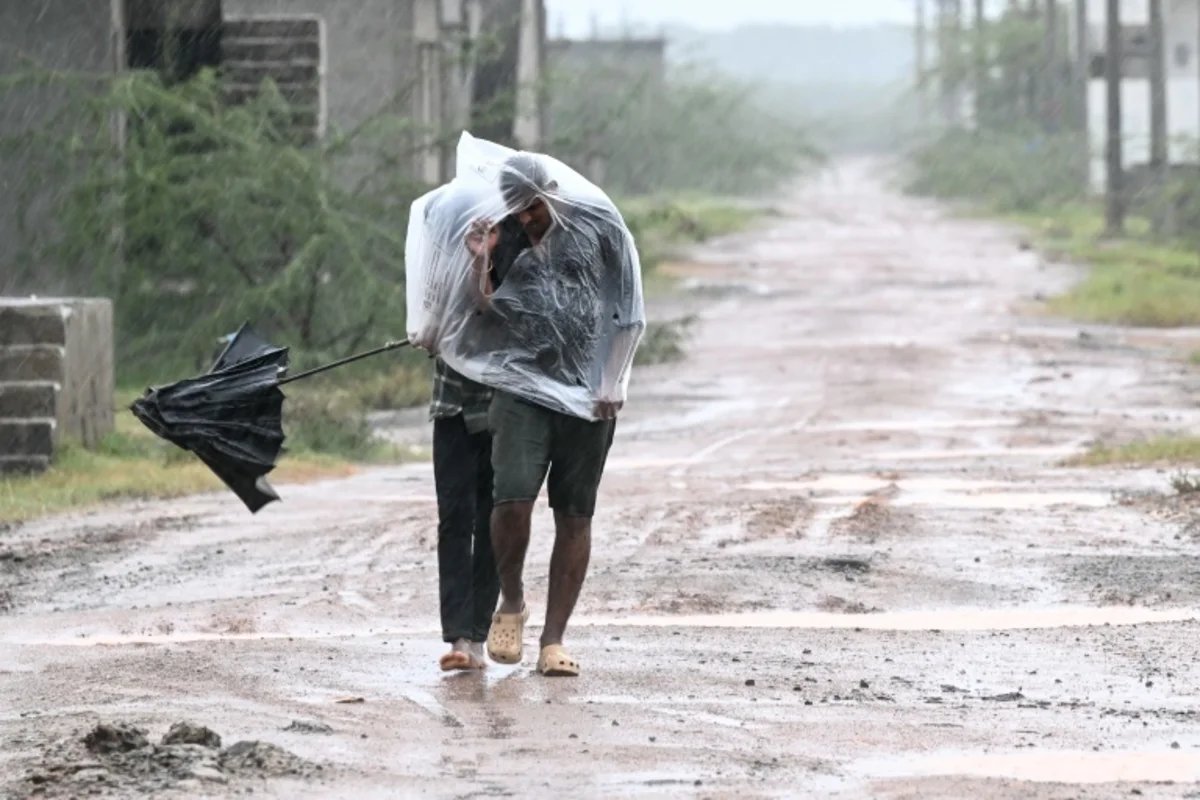
Ferocious winds and torrential rainfall battered India’s southeastern coastline on Wednesday as Cyclone Arnab officially made landfall. The weather event, classified as a “very severe cyclonic storm” by the India Meteorological Department (IMD), triggered a massive humanitarian response, forcing nearly 100,000 residents across Andhra Pradesh and Odisha to flee their homes for higher ground.
A “Very Severe” Category Storm
The IMD reported that Arnab crossed the coast between Bapatla and Visakhapatnam, packing sustained wind speeds of 125 to 135 kph, with terrifying gusts reaching up to 150 kph. Meteorological experts noted that the system is currently interacting heavily with the land surface, causing widespread instability.
The impact was immediate and visceral. In the port city of Kakinada, located near the eye of the storm, trees were uprooted by gale-force winds while massive waves hammered the shoreline. Local residents described a scene of unprecedented ferocity. Kotesh Kumar, a 35-year-old local, remarked that while the region has weathered storms in the past, the current intensity and the rapid rise of water levels are unlike anything he has experienced in his lifetime.
Massive Evacuation Efforts
In a race against time, authorities mobilized state resources to ensure public safety. Andhra Pradesh Chief Minister Nara Chandrababu Naidu emphasized that the government’s primary directive was the protection of every life. Consequently, 50,000 individuals were relocated to emergency shelters in Andhra Pradesh, with a further 48,000 people evacuated in Odisha.
For many, the transition to state-run shelters was a necessary escape from rising floodwaters. Sixty-five-year-old Rajeshwari, a resident near Kakinada, explained that the persistent flooding of her home left her with no choice but to accept government assistance. “Our homes get flooded, and we have to stay in the water,” she said, noting that state-provided transport was a vital lifeline for her community.
Regional Cascading Effects
The threat posed by Cyclone Arnab extends far beyond the Indian coastline. The storm’s reach has triggered emergency protocols in neighboring nations. In Sri Lanka, officials ordered the closure of schools as the Department of Meteorology issued warnings regarding potential flash floods and hazardous mudslides.
Further inland, the Himalayan nation of Nepal is on high alert. Disaster management authorities have warned that as the storm system moves toward the mountains, it brings a dangerous risk of heavy snowfall, intense snowstorms, and potential avalanches. The warning is particularly grave for Nepal, a country still struggling to recover from the devastating floods of August 26, which resulted in over 1,400 deaths and left thousands missing. Tourists currently in high-altitude regions have been strongly advised to remain in secure locations.
Warning of Widespread Destruction
The IMD has issued grim projections for the affected regions, warning of the “total destruction” of thatched dwellings, the collapse of critical power and communication infrastructure, and significant damage to standing agricultural crops. The Ministry of Civil Aviation has also confirmed that flight operations to and from Andhra Pradesh and Odisha are facing significant disruptions.
While the Bay of Bengal and the northern Indian Ocean are historically prone to cyclones, meteorologists point to the El Nino weather phenomenon—which has led to global warming and record-breaking sea temperatures—as a driving force behind the increased intensity of this current storm season. As Arnab continues to churn inland, authorities remain in a state of high alert, bracing for the aftermath of one of the season’s most powerful weather systems.
Disclaimer: This content is auto-generated for informational purposes only.
Source: Read Original News