








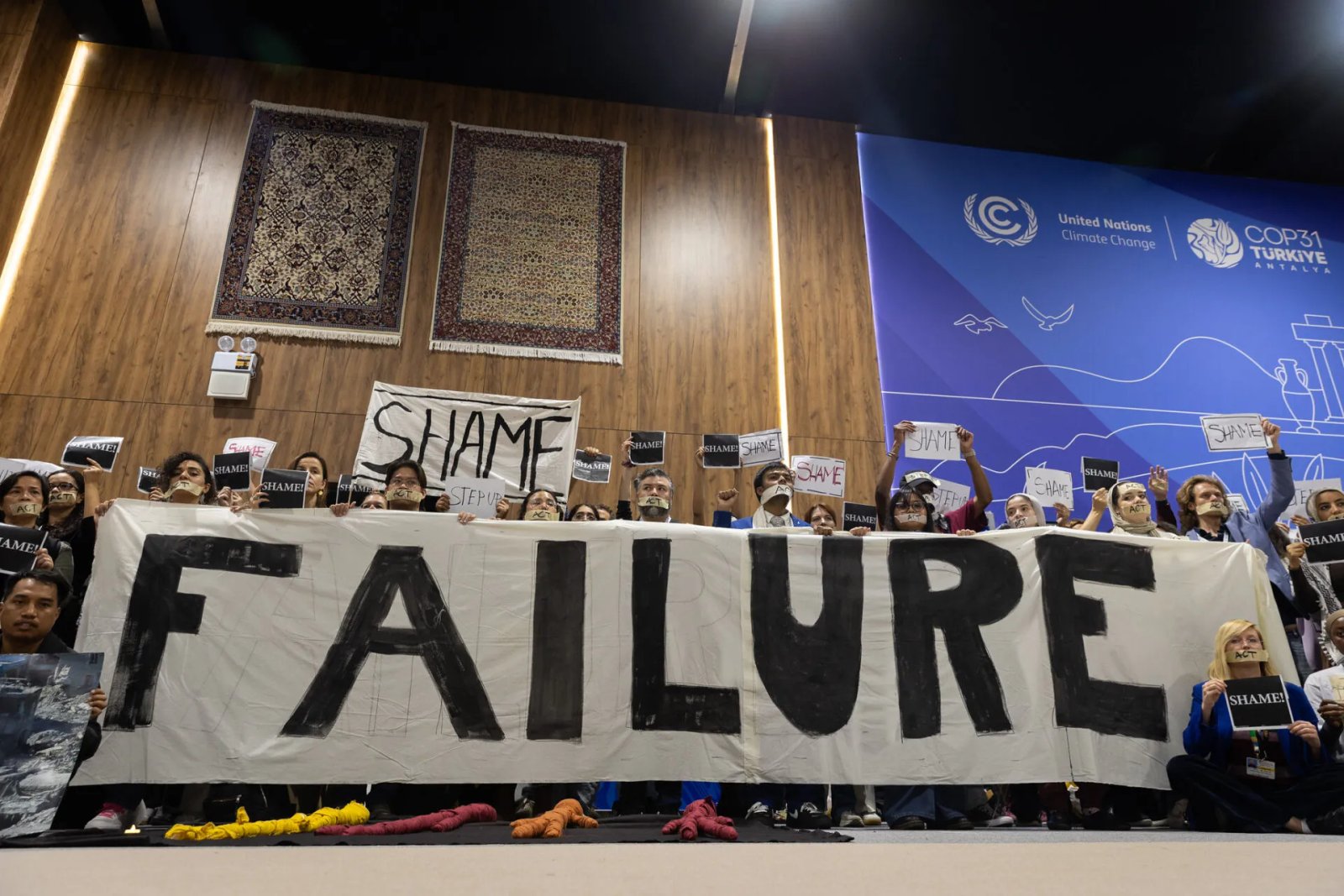
ANTALYA – In an unprecedented breakdown of international climate diplomacy, the COP31 UN climate summit concluded on Sunday without a high-level decision document, marking the first time such a deadlock has occurred since 2000. Following a record-breaking 44 hours of overtime, the conference failed to produce a unified path forward, leaving the global climate agenda in a state of deep uncertainty.
The collapse centered on a fierce dispute over the inclusion of fossil fuel language. While many nations fought for a clear mandate to phase out the energy sources driving global warming, a coalition of oil-producing states successfully pushed to scrub such references from the final draft. A last-ditch compromise proposed by co-presidents Türkiye and Australia—which made only a vague, indirect reference to the previous COP28 “UAE Consensus”—was ultimately rejected by a bloc of nations including the European Union, the United Kingdom, and various Pacific island states.
Ireland’s Climate Minister Darragh O’Brien, speaking for the EU, stated firmly, “We will not accept a COP that greenwashes fossil fuels.”
The rift left COP31 President Murat Kurum with no choice but to concede on Sunday afternoon. Declaring that there was no agreement, he expressed frustration that certain nations had failed to show the necessary commitment. UN Secretary-General António Guterres echoed the sentiment, expressing “deep disappointment” and issuing a stark warning that the 1.5°C threshold of the Paris Agreement is effectively slipping out of reach. “Science tells us an overshoot above that level is now inevitable,” Guterres said, adding that fossil fuels “must go the way of the dinosaurs.”
For vulnerable nations, the failure is far more than a diplomatic disappointment—it is an existential threat. Vanuatu and other Pacific island representatives expressed outrage at the lack of ambition, noting that rising sea levels and climate-driven disasters are already incurring massive economic and human costs. Civil society organizations were equally scathing, with observers from Power Shift Africa describing the event as the “worst COP ever” and a “failure of political leadership.”
The final, rejected text had been stripped of meaningful climate action goals, including the abandonment of a previously discussed $120 billion adaptation finance target and the omission of specific health-related climate risks. While some delegates pointed to minor commitments on grid electrification as a silver lining, these were overshadowed by the lack of consensus on the core issue of mitigation.
Under standard UNFCCC procedures, the unresolved agenda items will now automatically carry over to COP32 in Addis Ababa, Ethiopia, in 2027. However, as global temperatures continue to climb—with 2026 cementing its place as part of the warmest 12-year period on record—the diplomatic stalemate in Antalya has cast a long, dark shadow over the future of international climate cooperation.
Disclaimer: This content is auto-generated for informational purposes only.
Source: Read Original News