








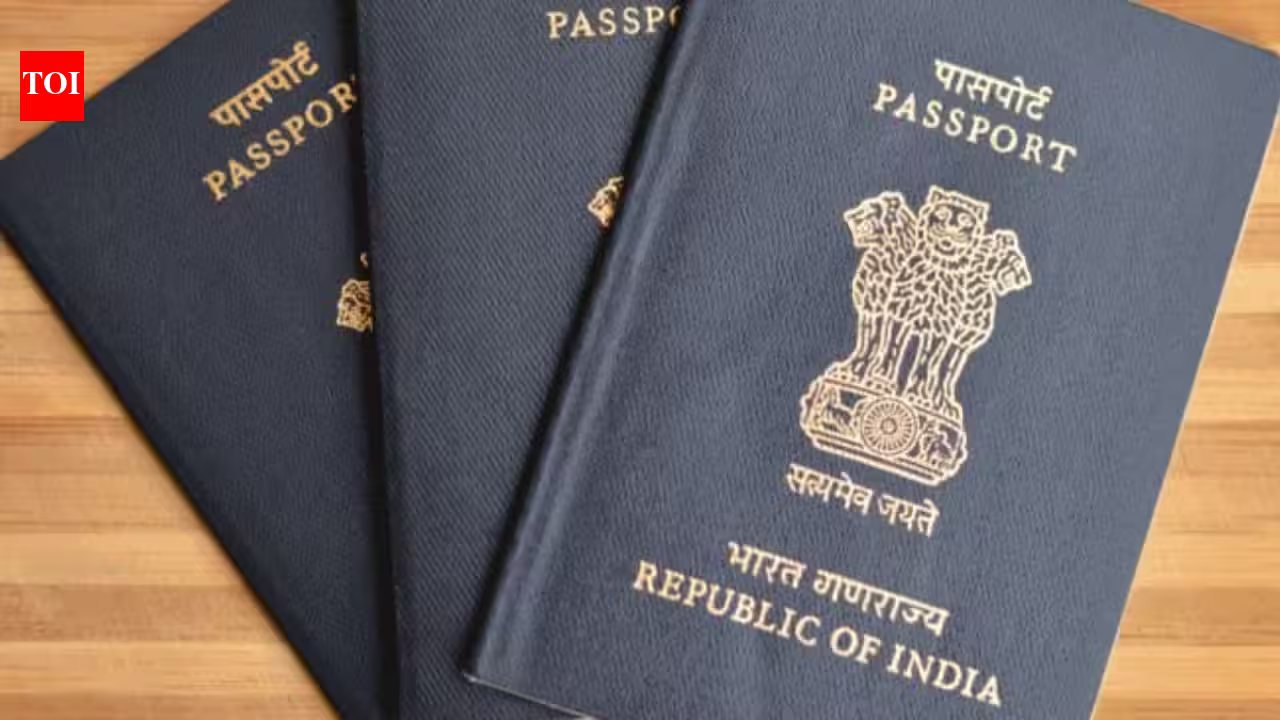
Delhi High Court Upholds Passport Fee Hike for NRIs, Dismissing Legal Challenge
The Delhi High Court on Wednesday delivered a significant verdict regarding the cost of travel documentation for citizens living abroad, dismissing a Public Interest Litigation (PIL) that sought to challenge the central government’s decision to increase passport fees for Non-Resident Indians (NRIs).
The bench, led by Acting Chief Justice Nitin Wasudeo Sambre and Justice Sanjay Sharma, ruled that the hike does not constitute an arbitrary or excessive financial burden. The court specifically noted that a 67% increase—implemented after a gap of 14 years—cannot be classified as “unreasonable or exorbitant” given the significant time elapsed since the previous fee adjustment.
The Basis of the Legal Challenge
The petition, filed by the Pravasi Legal Cell, had argued that the pricing structure for passport issuance was discriminatory. The organization contended that there was a stark disparity between the fees charged to resident Indians and those levied on the diaspora. According to the plea, while domestic applicants pay approximately Rs 2,500 for a standard passport, NRIs are now required to pay roughly Rs 11,900.
The petitioners sought judicial intervention, arguing that this differential pricing placed an undue strain on Indian citizens residing overseas. They suggested that such a sharp escalation in costs hindered the ability of many NRIs, particularly those in lower-income categories, to maintain valid travel documentation and stay connected to their home country.
Court Maintains Policy Non-Interference
In its judgment, the High Court clarified that it was not the role of the judiciary to micromanage administrative policies of this nature. The judges emphasized that the authority to determine and revise service fees, including those related to travel documents, resides squarely within the policy domain of the central government.
The court observed that since the fee structure had remained unchanged for over a decade, an adjustment to account for inflationary pressures and administrative costs is within the government’s mandate. By refusing to intervene, the bench affirmed that the government possesses the executive discretion to structure its fee schedules without being subjected to judicial oversight, provided the measures are not fundamentally unconstitutional or discriminatory in a legal sense.
Government’s Rationale for Adjustment
While the government did not argue the merits of the specific price point in court, such revisions are typically framed as efforts to modernize consular services and streamline the issuance processes at Indian missions worldwide. The 14-year hiatus cited by the court underscores the government’s stance that the current hike serves as a necessary catch-up measure to align passport fees with contemporary operational costs.
This ruling provides legal clarity for the Ministry of External Affairs, which oversees the distribution of passports through its network of embassies and consulates. For the NRI community, the dismissal of the PIL confirms that the current fee schedule will remain in effect, upholding the government’s prerogative to set administrative charges for its diplomatic and consular services.
Disclaimer: This content is auto-generated for informational purposes only.
Source: Read Original News