








Delhi Schools Overhaul Class 9 Curriculum: Vocational Education, Third Language, and AI Mandated from 2026-27
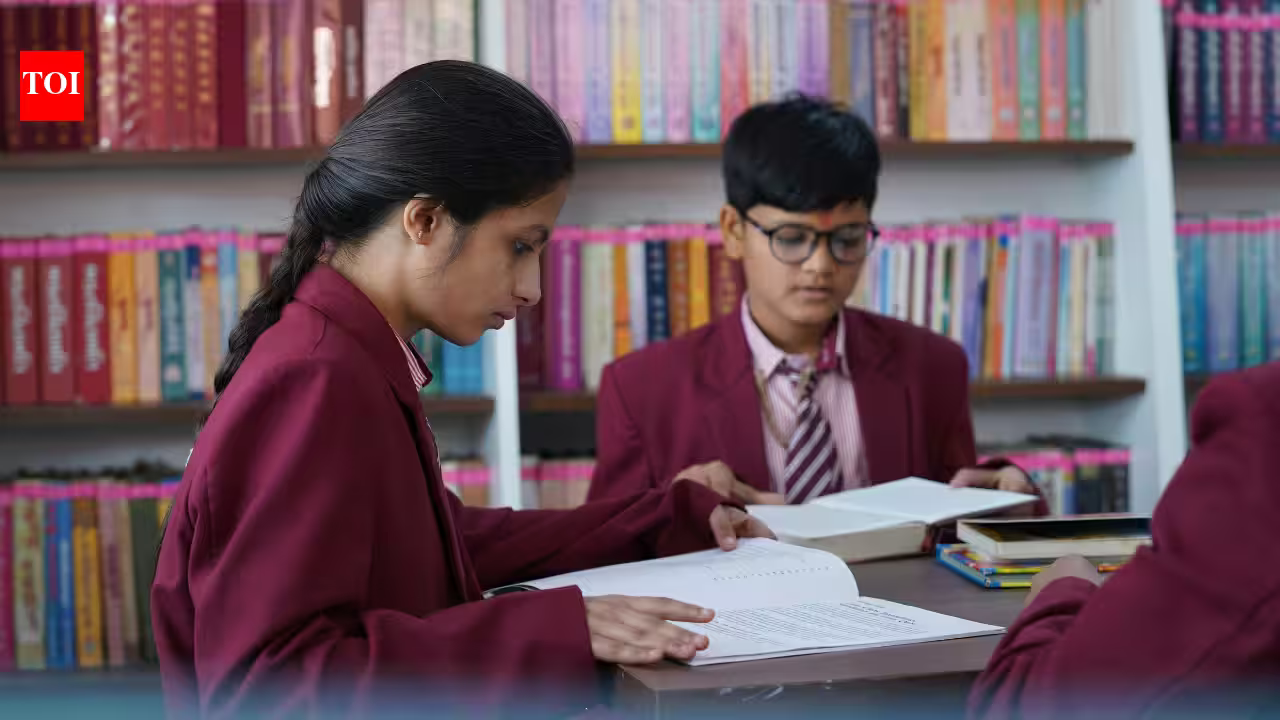
NEW DELHI – In a significant paradigm shift, Delhi schools are set to implement a sweeping overhaul of their Class 9 academic and assessment structure, effective from the 2026-27 academic session. Spearheaded by the Directorate of Education, these comprehensive changes aim to move beyond traditional textbook-based learning, embracing a more holistic, skill-based, and multidisciplinary approach aligned with the National Education Policy (NEP) 2020. Key mandates include making vocational education and a third language compulsory, alongside the introduction of advanced mathematics and science assessments, and foundational modules in Artificial Intelligence (AI) and computational thinking.
The revamped framework dictates that Class 9 students will now undertake six core subjects: Language-1, Language-2, Mathematics, Science, Social Science, and Vocational Education, also known as Kaushal Vikas. These six subjects will collectively determine a student’s promotion to Class 10. The mandatory inclusion of vocational education is a crucial step towards equipping students with early exposure to practical skills and workplace-oriented abilities, directly echoing the NEP’s emphasis on vocational learning.
Mandatory Third Language with a Twist
Adding another layer to the linguistic landscape, a third language, referred to as R3, will also become compulsory for Class 9 students. This R3 will be one of the three languages students studied in Class 8, ensuring continuity in their language learning journey. However, unlike the six core subjects, R3 will serve as a qualifying subject, assessed solely at the school level. Marksheets will indicate a "qualified" or "not qualified" status.
While failure to qualify in R3 will not immediately impede promotion to Class 10 (provided all other promotion criteria are met), a critical caveat exists: students must clear the Class 9 third-language assessment while in Class 10. Crucially, such students will be barred from appearing for the Class 10 Board examination until this third-language requirement is fulfilled, underscoring its long-term importance.
Advanced Academic Pathways and the End of Basic/Standard Math
For academically inclined students seeking to delve deeper into subjects, the new framework introduces an optional pathway for advanced Mathematics and Science assessments. While all students will sit for regular Math and Science exams, those desiring a greater challenge can opt for "Mathematics Advanced," "Science Advanced," or both. These advanced examinations, carrying 25 marks and lasting one hour, will prioritize higher-order thinking and the application of concepts over rote learning. It’s important to note that scores from these advanced assessments will not factor into promotion decisions or overall aggregates; however, achieving at least 50% in an advanced examination will be officially recorded on the student’s marksheet, recognizing their exemplary effort.
Simultaneously, the existing system of "Mathematics Basic" and "Mathematics Standard" for Class 9 will be discontinued from the 2026-27 session. This move streamlines the mathematics assessment approach for the incoming batch, while the existing arrangement will continue for Class 10 students in 2026-27 to avoid abrupt changes for those already in the system.
Holistic Development with Arts, Physical Education, and AI
The curriculum revamp extends beyond core academic subjects. "Individuals in Society," Art Education, and Physical Education and Well-Being have been made compulsory curricular areas, with their assessment conducted at the school level. Furthermore, anticipating the demands of the future workforce, modules in Computational Thinking and Artificial Intelligence will be introduced across schools during 2026-27. The Directorate has also announced that AI and Computational Thinking will transition into a compulsory subject from the 2027-28 academic session, signaling a proactive effort to integrate technology education early in students’ academic lives.
Rigorous Promotion Criteria
The Directorate of Education has also laid down precise criteria for promotion to Class 10. Students must secure a minimum of 33% separately in both internal assessment/practical components and external examinations for each of the six main subjects. Additionally, they must obtain at least 25% in the annual examination to be eligible for promotion. The rules retain provisions for grace marks and compartment examinations. Students failing in up to three of the six main subjects will be granted an opportunity to appear for a compartment examination. Those who fail to meet these conditions, even after compartment exams, will be classified as ‘Essential Repeat’ and will be required to repeat Class 9.
This comprehensive overhaul signifies a pivotal moment for education in the capital. The new Class 9 academic structure represents a concerted effort to foster competency-based, multidisciplinary, and skill-oriented learning, preparing students not just for examinations, but for the diverse challenges and opportunities of the 21st century.