








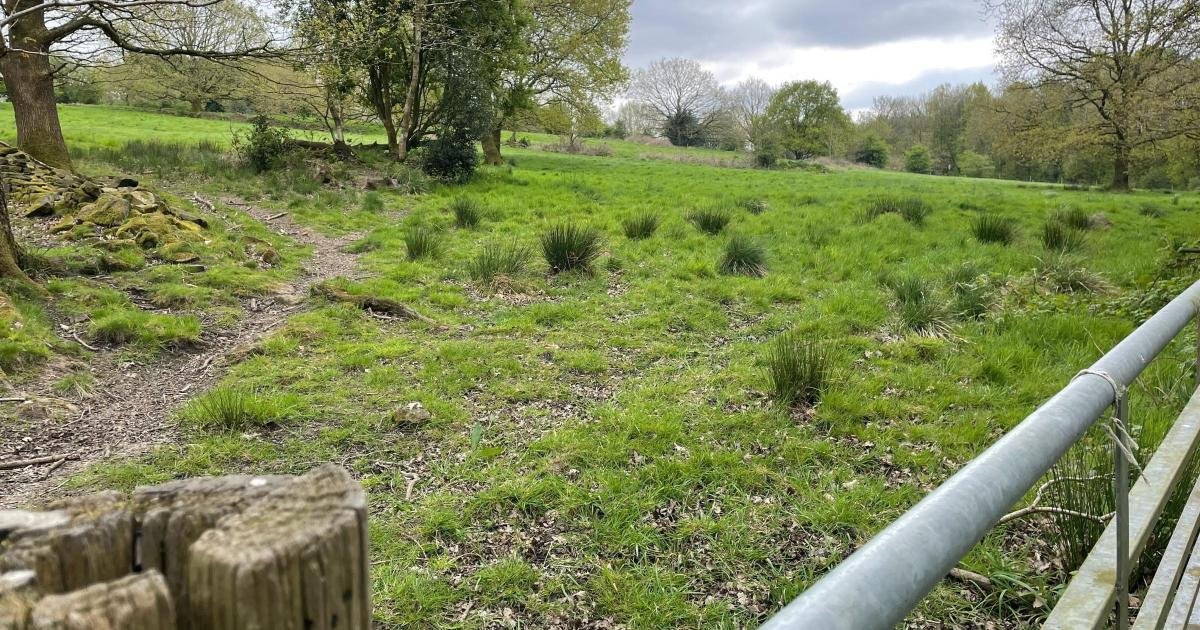
The proposals relate to land east of Walmersley Road and could see up to 350 homes built, along with commercial space, a retail centre, a mobility hub, and areas of public open space.
Bury Council issued a screening opinion in May, concluding the development should be subject to an Environmental Impact Assessment (EIA).
At the time, the authority raised concerns over its scale, potential “urbanising effect”, historic landfill use nearby, and possible impacts on transport, noise and air quality.
However, in a newly submitted scoping report, applicants Hollins Strategic Land, Maldune Ltd and Belbeck Investments Ltd have pushed back strongly against that requirement.
The developers argue that updated technical studies show any impacts can be addressed through standard planning processes rather than a full environmental assessment.
A report, submitted to the council on Monday (June 29), states: “The proposed development is unlikely to have significant effects on the environment, as such, there should not be a requirement for EIA in these circumstances.
“Any impacts associated with the proposed development are capable of being assessed and where necessary, mitigation can be provided… without the need for Assessment under EIA Regulations.”
The scheme includes a pledge that half of the homes would be affordable, a point likely to carry weight amid ongoing housing pressures in the borough.

Despite this, the council’s original concerns remain a key issue, including the scale of development and its potential effect on the surrounding landscape, as well as environmental factors such as traffic and air quality.
In their report, the applicants acknowledge those concerns but insist they have been addressed.
On transport, they claim there would be “negligible to minor impacts with no significant adverse residual effects”, while air quality is described as having “no likely significant effects identified.”
Noise from the nearby M66 motorway has also been assessed, with the report stating impacts on residents would be “minimal” with standard mitigation measures in place.
One notable point of disagreement relates to land contamination.
While the council’s screening opinion referenced historic landfill use, the developer says the landfill site lies outside the application boundary and adds: “no land at or adjacent to the site has been determined as Contaminated Land.”
The report goes on to challenge the basis of the council’s decision, arguing that there is insufficient evidence to justify a full EIA.
It states: “The council has not to date provided clear and robust evidence that significant effects on the environment are likely to occur.”
Developers are now asking the council to reconsider its position in light of evidence and potentially withdraw or revise the requirement for a full environmental assessment.
They said: “The applicant respectfully requests that the council review whether the proposal continues to constitute EIA development.”
If the council maintains its stance, the applicant has indicated it will proceed with a more limited and “proportionate” environmental statement focusing only on key issues.
The outline planning application has been submitted and is currently awaiting approval, with only access being considered at this stage.
All other details would be decided in later applications if the scheme is approved.
The plans have already led to some concern among the community.
Speaking in May, Christopher Woodward, 46, said he had moved to the area for the ‘quiet’. He works from home in computer security so, if the homes are built, he said he would ‘see them all day long’.
He added: “I enjoy walking my dog over there, I enjoy seeing deer over there in the morning and all kinds of wildlife. Having that amount of properties there and that amount of cars on this road as well, which gets quite busy at times.
“I’m not over the moon with the idea. It would actually force me to consider moving, to be honest. I paid what I would consider a premium for the quieter lifestyle.”
Steve Edgar, 55, works as a project manager. He said he thinks it would be difficult to ‘find anybody’ in the area who would be happy about the plans.
He added: “There are loads of other areas available for building. There are loads of brownfield sites within the Bury area. We looked at the land register, and there were something like 12,000 spots available, if places were just redeveloped.
“The other thing is the trees, across the road, they shield loads of noise, they help with things like the air pollution and stuff like that, so we think they could get cut down.
“I don’t think it’s needed. I don’t think we actually need more houses here; there’s lots of developments going on across Bury already or in the surrounding areas. It just feels it’s totally unnecessary.”
Mr Edgar also raised concerns over whether local services would be able to cope with such a large increase in residents, saying: “What about the hospitals and the medical care, GPs? It’s difficult enough to actually get an appointment as it is.
“If you are building 350 houses, you need to build all the medical provisions, the welfare support, the schooling, education, and those things don’t exist, so where will the people go?”
The latest application, including contention over the EIA, will be reviewed by Bury Council planners at a later date.