





From Conservative Roots to Artistic Liberation: Dia Mirza Opens Up About Her Defining Moments in Bollywood
In a career spanning over two decades, Dia Mirza has evolved from a fresh-faced newcomer into one of the most thoughtful and nuanced actors in the Hindi film industry. While her debut in Rehnaa Hai Terre Dil Mein (2001) catapulted her to fame, the actor recently shared that her path to self-assurance was paved with intense, often daunting, personal challenges.
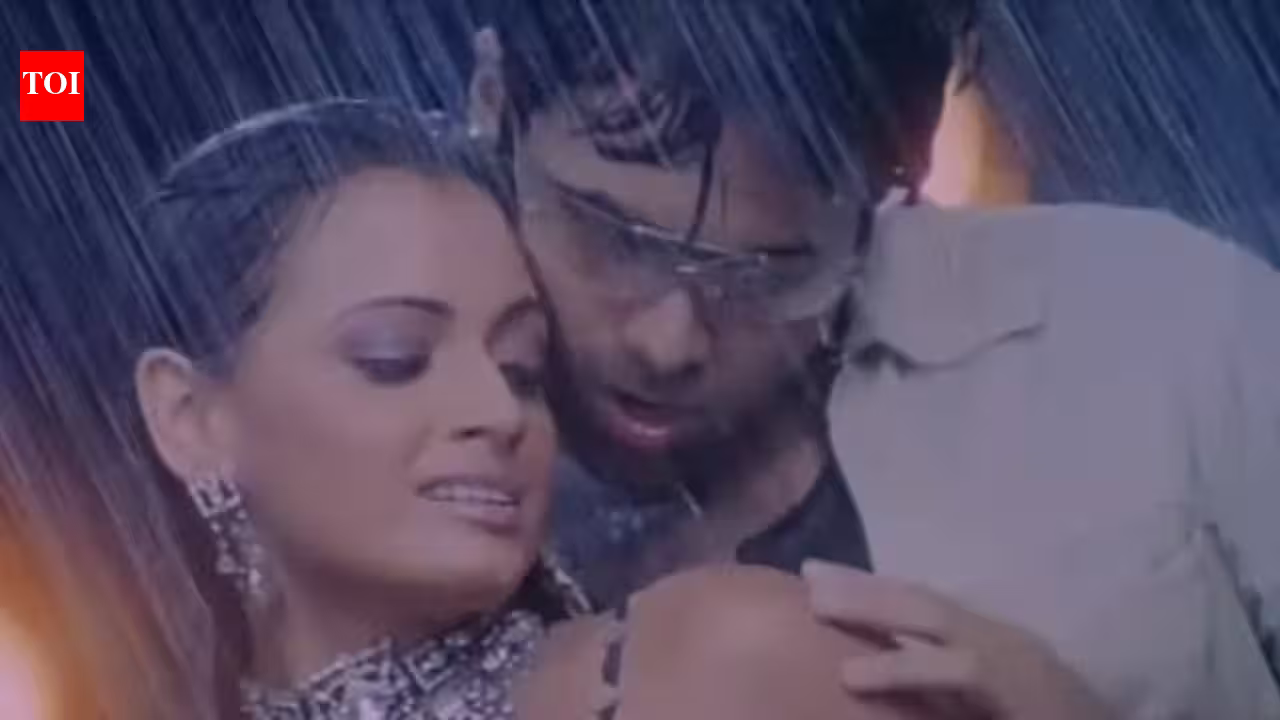
Reflecting on her 25-year journey, Mirza recently opened up about a pivotal moment during the filming of the 2004 movie Tumsa Nahin Dekha, which co-starred Emraan Hashmi. For the actor, who was raised in a conservative household in Hyderabad, the film—specifically the song “Mujhe Tumse Mohabbat Hai”—served as a major catalyst for personal and professional growth.
An Unlikely Turning Point
Discussing the shift in how bold characters are perceived and portrayed in mainstream cinema, Mirza told Bollywood Bubble that her experience on the set of Tumsa Nahin Dekha—a film inspired by the Hollywood classic Pretty Woman—was transformative.
“I was a girl who came from a very conservative background,” Mirza shared. “I wasn’t so confident in my body. That film made me really confident… it really unshackled me.”
The actor revealed that the song required her to step far outside her comfort zone, forcing her to confront deep-seated insecurities. The most challenging aspect was the performance itself, which required her to appear on screen in lingerie in front of a massive crew.
“It was possibly one of the most difficult things that I’ve ever done,” she confessed. “I had to strip bare, almost down to underwear and a bra, in front of hundreds of men on set.”
Professionalism Over Insecurity
Mirza credits the environment fostered by choreographer Vaibhavi Merchant and the rest of the production team for making her feel secure enough to undertake the scene. However, she emphasized that the true breakthrough occurred internally. She reached a point where her commitment to the character’s truth superseded her personal anxieties about the setting.
“It didn’t matter to me whether there were 500 people or 1,000 people in the room,” she explained. “By then, I had become so aware of how important it is to find an actor’s character truth and what you are conveying through a character.”
A Legacy of Growth
Looking back at her career, Mirza views these early, nerve-wracking experiences as essential building blocks for the artist she is today. Rather than dismissing her early struggles as mere obstacles, she recognizes them as necessary steps in her evolution.
“If I’m able to bring nuance and texture, or a lived truth, to a moment, it comes because of the things that I have been able to overcome within myself over this journey,” she stated.
For fans and critics alike, this candid reflection serves as a reminder that the polish seen on the silver screen often hides a complex, ongoing process of self-discovery. As she continues her work, Dia Mirza remains dedicated to the idea that an actor’s work is never truly finished, and that vulnerability is perhaps the most powerful tool an artist can possess.