







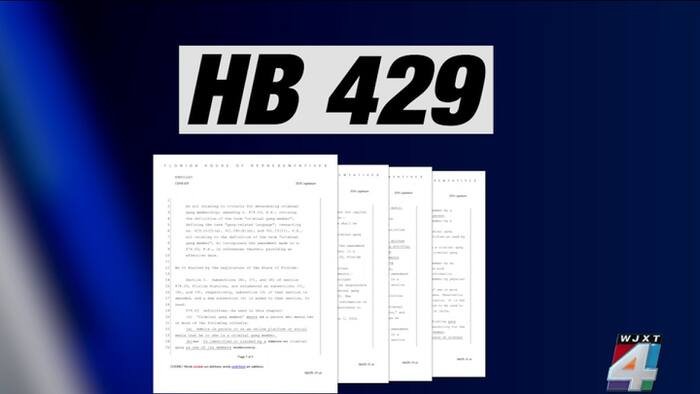
JACKSONVILLE, Fla. – A sweeping change to Florida’s criminal statutes took effect on Oct. 1, significantly expanding the ability of law enforcement to use social media activity as evidence in gang-related criminal investigations.
The new mandate, established under House Bill 429, aims to modernize how authorities track and prosecute gang activity in an era where criminal organizations increasingly leverage digital platforms to recruit members, coordinate logistics, and broadcast illicit operations.
Rep. Jessica Baker, the architect of the social criteria added to the bill, emphasized the necessity of the update. “Today, gangs recruit, they organize, and they promote criminal activity openly and intentionally on social media,” Baker said.
Beyond integrating digital evidence, the legislation lowers the threshold for authorities to define gang association. Previously, the law required evidence that an individual had been observed with a known gang member at least four times. That threshold has now been halved to two instances, making it easier for prosecutors to establish formal gang affiliation.
The Jacksonville Sheriff’s Office (JSO) has welcomed the shift, noting that gangs remain a persistent threat in the region. According to JSO data, there are currently 26 active gangs operating in Jacksonville, consisting of 536 identified members and associates. Of that group, 347 are considered active, 47 are currently awaiting trial, and 140 are incarcerated.
Jose Cheeseborough, Commander of the Specialized Investigation Section for JSO, explained that while the law allows for a broader look at digital footprints, it does not criminalize social media use in isolation.
“It is not a crime just to be a member of a gang,” Cheeseborough said. “However, if you are committing crimes in the furtherance of that gang, that is illegal.”
Under the new guidelines, detectives are trained to look at the “totality of circumstances” rather than relying on a single post. Evidence such as flashing weapons, displaying specific gang signs, or using coded emojis in social media posts and music videos can now be presented in court to demonstrate premeditation or criminal coordination. The effectiveness of this approach was recently highlighted in the high-profile murder trial of Jacksonville rapper Julio Foolio, where digital tracking and social media activity were instrumental in proving premeditation and gang involvement.
However, the legal community is expressing caution regarding the potential for overreach. Defense attorney Gene Nichols warned that the new, lower threshold for association could lead to increased penalties for individuals caught in the wrong environment.
“If the wrong people are committing crimes and you get associated with committing that crime with that individual and they are a member of a gang, then it absolutely enhances the punishment that you can receive,” Nichols said.
Law enforcement officials maintain that the law serves as a critical warning. “Unfortunately, it can cost you,” Cheeseborough said. “Just be careful who you’re hanging out with, and choose the right path.”
Disclaimer: This content is auto-generated for informational purposes only.
Source: Read Original News