





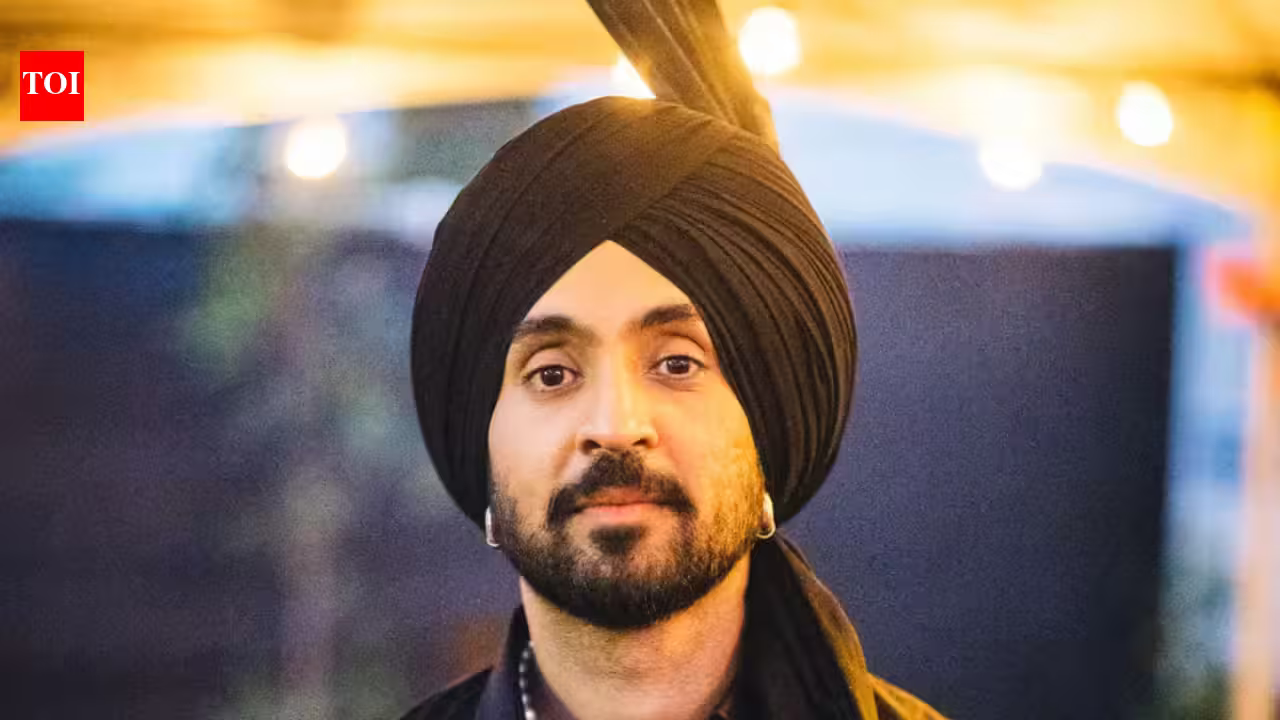
The global phenomenon that is Diljit Dosanjh shows no signs of slowing down. From headlining Coachella to selling out stadiums across North America, Europe, and India, the Punjabi superstar has become a cultural juggernaut. However, as his Dil-Luminati tour rolls through India, the singer is finding that his massive popularity comes with a unique set of regional hurdles.
In a move that has sparked widespread debate across the entertainment industry, authorities in Indore have officially barred the singer from performing four of his most iconic tracks during his upcoming concert on November 15. The songs—‘Patiala Peg’, ‘5 Tara Theke’, ‘Jeb Vicho Feem’, and ‘Jatt Fire Karda’—have been flagged by district officials, who argue that these numbers run counter to the sensibilities of a younger audience. As the concert approaches, fans are left wondering how this will impact the high-octane energy that has defined the tour so far.
The Indore Mandate: What’s Being Left Out?
The decision was not made in a vacuum. According to reports, the District Child Protection Officer issued formal directions to the concert venue’s management, effectively striking the four songs from the evening’s setlist. The core of the issue lies in the content: ‘Patiala Peg’ and ‘5 Tara Theke’ are celebrated for their infectious beats, but their lyrics heavily romanticize alcohol consumption. Similarly, ‘Jeb Vicho Feem’ and ‘Jatt Fire Karda’ touch upon themes of narcotics and weapon-heavy bravado—topics that have historically been staples of the Punjabi music genre but are now coming under heavy scrutiny from local administrative bodies.
This directive places a significant burden on the production team. For a performer like Diljit, whose live shows are intricately choreographed to the rhythm and storytelling of his discography, cutting out four major hits isn’t just about shuffling a playlist; it’s about recalibrating the entire narrative arc of a concert that thrives on crowd participation and sing-alongs.
A Legal Precedent: The 2019 High Court Directive
This intervention in Indore is not an isolated incident of artistic censorship. The authorities leaned heavily on a pivotal July 22, 2019, order from the Punjab and Haryana High Court. That landmark ruling mandated that police forces across Punjab, Haryana, and Chandigarh take proactive steps to prevent the promotion of liquor, drugs, and violence in live performances.
The legal logic is centered on the impressionable nature of children. Since the Indore concert allows entry for children as young as five, the administration is prioritizing a “child-safe” environment. The court’s initial reasoning, which the Indore officials are now citing, suggests that the glorification of lifestyle choices through music has a tangible, negative impact on youth culture. By enforcing these restrictions, the local government is essentially holding the artist accountable for the environment he creates in a public arena.
The Catalyst: Who Initiated the Complaint?
Behind every major regulatory crack-down on artistic expression, there is usually a voice pushing for change. In this instance, the impetus came from Chandigarh-based activist Dr. Punditrao Dharenavar. Dr. Dharenavar has long been a vocal critic of the trend in Punjabi music that equates alcohol and violence with status and pride.
His complaint went beyond just the song list. In his appeal to the authorities, Dr. Dharenavar argued that even performing the songs with modified or “cleansed” lyrics would be insufficient, as the cultural association remains. Perhaps most notably, he also petitioned for a ban on Diljit inviting children onto the stage during the performance. This request reflects a broader desire to protect minors from being exposed to an environment that, in his view, promotes an unhealthy lifestyle.
The “Bandolier” Controversy: Policing the Aesthetic
Perhaps the most surprising part of Dr. Dharenavar’s complaint is the challenge against Diljit’s stage aesthetic. Specifically, the activist requested a stop to the singer wearing crossed silver bullet belts—bandoliers—during his shows. These metallic silver cartridges have become a signature visual element for Diljit during his tours, often serving as a nod to traditional Punjabi folklore and the “Jatt” aesthetic.
By targeting the visual presentation as much as the lyrical content, the complaint underscores how deeply the scrutiny into Diljit’s performance has gone. It is no longer just about the words being sung; it is about the entire iconography of the show. For an artist who prides himself on high-fashion stage outfits and carefully curated imagery, being forced to strip away parts of his “look” represents an unprecedented level of interference in his creative vision.
The Future of Live Punjabi Music
This incident in Indore serves as a litmus test for the future of Punjabi live music in India. Diljit Dosanjh is undeniably the biggest ambassador of the genre, and if his massive, stadium-filling concerts are subject to such intense local regulation, it sets a precedent for every other artist in the industry.
Will this lead to a new era of “sanitized” setlists across India? Or will it push artists to be more creative in how they express their cultural identity without violating local ordinances? While fans in Indore may be disappointed that they won’t hear ‘Patiala Peg’ in its full glory, the incident highlights a growing tension between traditional creative freedom and the evolving public demands for cultural accountability.
As for the Dil-Luminati tour, the show will go on. Diljit has proven himself to be a master of adapting to his audience, and his fans are likely to show up in record numbers regardless of the setlist changes. Whether this leads to a permanent shift in how live Punjabi music is performed or is simply a temporary bump in the road remains to be seen. But one thing is clear: the conversation around what is “appropriate” for a concert stage is only just beginning.
Disclaimer: This content is auto-generated for informational purposes only.
Source: Read Original News